


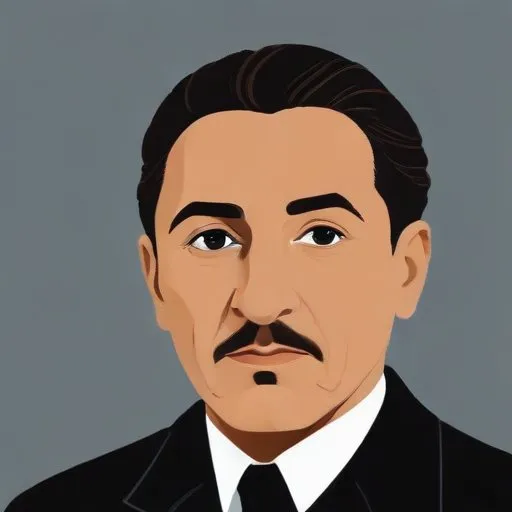
An Italian literary figure, celebrated for his lyrical and introspective writings that explored the human condition, love, and the search for meaning. His works are characterized by a unique blend of poetry and prose.
Giovanni Comisso was a renowned Italian writer of the 20th century, celebrated for his vivid storytelling, poetic prose, and penchant for adventure. His literary works are a testament to his experiences as a sailor, soldier, and traveler, which infused his writing with a sense of wonder and authenticity.
Born on October 3, 1895, in Treviso, Italy, Comisso's early life was marked by a curiosity for the world beyond his hometown. During his adolescence, he met sculptor Arturo Martini, who introduced him to the works of Arthur Rimbaud and Friedrich Nietzsche, shaping his literary sensibilities. In 1915, Comisso enlisted in the Telegraph Corps of Engineers and participated in World War I, an experience that would later influence his writing.
In the aftermath of the war, Comisso became involved in the Fiume enterprise (1919-1920), a pivotal experience that shaped his development as a writer. He then embarked on a series of travels, sailing along the Adriatic coast and exploring Europe and North Africa as a correspondent for various newspapers. His wanderlust took him to Paris, where he lived for a time with his friend, the painter Filippo De Pisis.
Comisso's writing is characterized by its lyricism, introspection, and sense of social commentary. His works often explored the human condition, delving into themes of despair, disappointment, and anxiety, yet tempered by a deep appreciation for beauty, harmony, and the natural world. Through his writing, Comisso conveyed a profound sense of empathy and understanding, fostering a deeper connection between the individual and the collective.
As a writer, Comisso was deeply influenced by his contemporaries, including Eugenio Montale, Umberto Saba, and Gianfranco Contini. His own literary contributions have been recognized for their innovative style, which blended elements of poetry, novel, and essay to create a unique narrative voice.
Throughout his life, Comisso maintained a deep connection to his native Veneto region, eventually settling in Zero Branco, where he wrote some of his most celebrated works. After his mother's death in 1954, he returned to Treviso, where he continued to write until his passing on January 21, 1969.
Giovanni Comisso's literary legacy extends beyond his own works, influencing generations of Italian writers and cementing his place as one of the most important literary figures of the 20th century. His writing continues to inspire readers with its beauty, nuance, and profound exploration of the human experience.
Giovanni Comisso's life was a testament to the power of adventure, curiosity, and creativity. Through his writing, he distilled the essence of the human experience, offering a profound and deeply personal insight into the complexities of life. As we reflect on his remarkable journey, we are reminded of the transformative power of literature to inspire, educate, and uplift us.
Born in 1861
A pioneering figure in modernist literature, known for his influential novels of psychological insight, particularly "The Confessions of Zeno".
Born in 1896
A renowned Italian poet and translator, celebrated for his unique and expressive style that explores the human condition, earning him the Nobel Prize in Literature.
Born in 1888
An Egyptian-Italian soldier, journalist, and poet who explored the human condition through surreal and symbolic verse, influencing 20th-century modernist poetry. His work is a testament to the power of language in capturing the essence of war and existence.
Born in 1901
An Italian writer who crafted powerful, symbolic poetry and novels that explored the human condition, earning him the Nobel Prize in Literature in 1959.
Born in 1855
A renowned Italian poet and classical scholar, he's celebrated for his lyrical and symbolic poetry, as well as his groundbreaking work in classical philology.
Born in 1863
A flamboyant and provocative Italian artist, known for his bold and innovative works that blended literature, politics, and drama, inspiring a generation of artists and intellectuals.
Born in 1919
An Italian chemist and author who survived Auschwitz and wrote powerful memoirs about his experiences, including "If This Is a Man" and "The Truce".
