


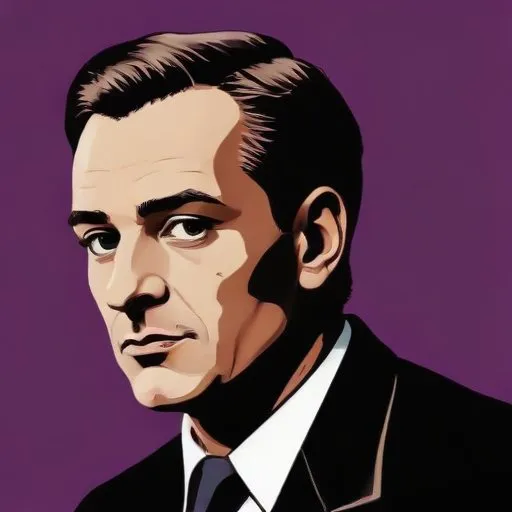
A Czech poet and author celebrated for his unique, avant-garde style and exploration of themes like existentialism, morality, and the human condition. His works often blended poetry and prose, creating a distinctive literary voice.
Vladimír Holan, a renowned Czech poet, is celebrated for his unique style of employing obscure language, dark topics, and pessimistic views in his poems. His literary works are a testament to his ability to evoke emotions and spark introspection, earning him a nomination for the Nobel Prize in Literature in the late 1960s.
Born on September 16, 1905, in Prague, Holan spent most of his childhood outside the capital. He returned to Prague in the 1920s to pursue law, but his true passion lay in writing. His job as a clerk proved to be a source of dissatisfaction, fueling his creativity.
Holan's literary career began with the publication of two books, Blouznivý víj (1926) and Triumf smrti (1930). However, it was his third collection, Vanutí bristující (1932), that he considered his first true poetic work. This collection received acclaim from the prominent Czech critic, František Xaver Šalda, who compared Holan favorably with the French poet Stéphane Mallarmé.
In the 1930s, Holan's poetry began to express his political feelings, reacting to the Spanish Civil War and the unfolding situation in Czechoslovakia. His poems, such as Odpověď Francii (The Reply to France), Z září 1938 (September 1938), and Zpěv třicátého srpna (Twelfth Night Song), showcased his disdain for the events leading up to World War II.
During World War II, Holan published several poetic stories in verse, inspired by national humiliation. His poem, Sen (The Dream), published in 1939, was a haunting prelude to the war. After the war, he penned Panychida, an apocalyptic record of events, and Tobě, Rudoarmějci (To You, Red Army Soldiers) and Ďk Sovětskému svazu (Thanks to the Soviet Union).
Holan's life took a significant turn when he left the Catholic Church and joined the Communist Party in 1949, following the communist takeover in Czechoslovakia. His works continued to be marked by their unique style, themes of darkness, and introspection. Vladimír Holan passed away on March 31, 1980, leaving behind a rich literary legacy.
Born in 1901
A Czech poet and journalist who captured the essence of his country's history and culture through his lyrical and expressive works, earning him the Nobel Prize in Literature.
Born in 1914
A Czech writer celebrated for his poetic and humorous novels that explore the human condition, often set against the backdrop of World War II and communist Czechoslovakia.
97 Years Old
A Czech-French writer who explored the human condition through novels, poetry, and plays, often blending philosophy and politics with a touch of irony and humor. His works are known for their lyrical style and exploration of themes such as identity, morality, and the search for meaning.
