


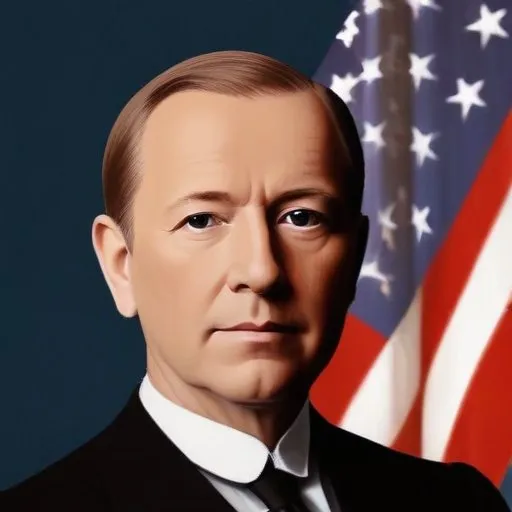
The 6th Governor of Oregon, a lawyer and politician who served from 1878 to 1882, known for his efforts to reform the state's government and economy.
W. W. Thayer, a name etched in the annals of Oregon's history, is renowned for his remarkable tenure as the sixth Governor of Oregon from 1878 to 1882 and Chief Justice of the Oregon Supreme Court from 1888 to 1889. His unwavering dedication to public service and the Democratic Party earned him a coveted place in the hearts of Oregonians.
Thayer was born on a farm near Lima, New York, on July 15, 1827. His early life was marked by a strong desire for education, which eventually led him to study law in college. He was admitted to the New York State Bar in 1851, paving the way for his future endeavors.
In 1860, the mining boom in Idaho Territory caught Thayer's attention, prompting him to move west. This marked a significant turning point in his life, as he would eventually make his mark on the region. He arrived in Corvallis, Oregon, in 1861, where he joined his brother's law firm, and later moved to Idaho in 1863, setting up his own law firm in Lewiston.
In 1866, Thayer was elected district attorney for the Third Judicial District of Idaho Territory, marking the beginning of his political career. He later served in the Idaho Territory House of Representatives and relocated to Portland, Oregon, where he established a successful law firm and became an active member of the Democratic Party.
In 1878, Thayer was nominated for governor by the Oregon State Democratic Party, and he narrowly won the election over Republican Cornelius C. Beekman, by a margin of 59 votes. His time in office is remembered for its fiscal responsibility, a quality that earned him the respect of his constituents.
Thayer's dedication to public service continued when he was appointed Chief Justice of the Oregon Supreme Court in 1888, a position he held until 1889. His commitment to upholding the law and ensuring justice for all cemented his legacy as a revered figure in Oregon's history.
W. W. Thayer's remarkable life and career serve as a testament to his unwavering dedication to public service and the people of Oregon. His commitment to fiscal responsibility, justice, and the Democratic Party has left an indelible mark on the state's history, ensuring his legacy as one of Oregon's most esteemed governors and chief justices.
Born in 1809
Led the United States through its Civil War and ultimately abolished slavery, leaving a lasting legacy in American history.
Born in 1822
Led the Union Army to victory in the Civil War and later became President, known for issuing the Emancipation Proclamation and strengthening federal authority.
Born in 1822
The 19th President of the United States, a general, lawyer, and politician who ended the Reconstruction era and withdrew federal troops from the South, allowing Racial Segregation to begin. He's also known for being a strong supporter of education and civil service reform.
Born in 1831
The 20th President of the United States was a multifaceted leader who served as a general in the Civil War and later became a lawyer and politician, known for his strong advocacy for education and civil rights. He's also infamous for being assassinated just six months into his presidency.
Born in 1829
The 21st President of the United States, a strong advocate for civil service reform, is most known for signing the Pendleton Civil Service Act, which transformed the federal government's hiring practices. He's also remembered for his unexpected rise to presidency after the assassination of James A. Garfield.
Born in 1837
The first Democrat elected after the Civil War, he served two non-consecutive terms, earning him a unique spot in history, and is often remembered for his strong leadership and commitment to limited government.
Born in 1833
The 23rd President of the United States was a prominent leader who oversaw the admission of six new states to the Union and supported education and conservation efforts. He's also known for being the grandson of William Henry Harrison, the 9th President.
Born in 1843
The 25th President of the United States, a strong leader who championed high tariffs and annexed Hawaii, is most known for being assassinated at the 1901 World's Fair. He played a significant role in shaping the country's economy and foreign policy.
