


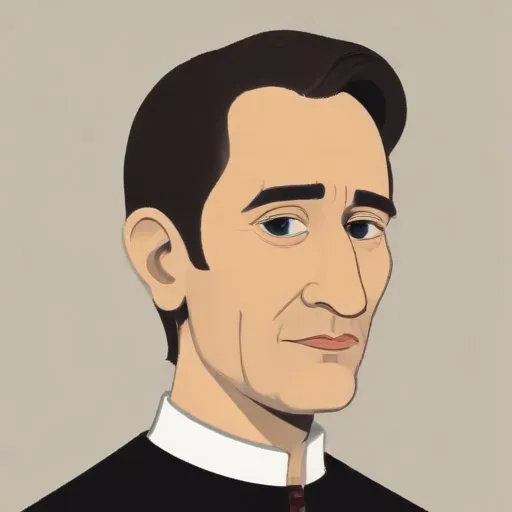
A Swedish writer of novels and short stories, known for exploring themes of love, relationships, and social class in a lyrical and introspective style.
Waldemar Hammenhg is renowned for his prolific writing career, having penned over 40 novels that explore the intricacies of human relationships, morality, and the Swedish bourgeoisie. His most iconic work, Pettersson & Bendel, has been adapted into films twice, solidifying his reputation as a master storyteller.
Born Waldemar Anderson in 1902, Hammenhg grew up in Stockholm, Sweden. He adopted the pseudonym Hammenhg in 1931, which became his official name. His writing debut, Esther och Albert, won first prize in a novel competition organized by the publishing house Natur & Kultur, paving the way for his successful writing career.
Hammenhg's early novels, such as Pettersson & Bendel and Esther och Alberts ktenskap, showcased his wit and satire, chronicling the lives of Sweden's urban middle class. These works resonated with audiences, establishing him as a prominent voice in Swedish literature.
In the late 1940s, Hammenhg's writing took a significant turn, as he began to tackle more introspective and morally charged themes. His struggles with alcoholism influenced his work, culminating in Torken, a novel that probed the shortcomings of traditional addiction treatment. This marked a turning point in his career, as his writing increasingly explored religious and moral issues.
Hammenhg's later novels, such as Omne animal, hinted at his growing affinity for Roman Catholicism. His subsequent works continued to grapple with complex moral dilemmas, solidifying his reputation as a thought-provoking author.
Hammenhg's contributions to Swedish literature are immeasurable. His writing has inspired generations of authors, and his exploration of moral and religious themes has left an indelible mark on the literary landscape.
Waldemar Hammenhg's remarkable literary journey has left a lasting impact on Swedish literature, cementing his place as one of the country's most celebrated novelists.
Born in 1849
A pioneering figure in Swedish literature, known for his bold, innovative, and often provocative works that explored the human psyche, relationships, and societal norms.
Born in 1891
A Swedish literary mastermind, renowned for his poignant and thought-provoking works that explore the human condition, often blending elements of mysticism and social commentary.
Born in 1900
A Swedish novelist and short story writer, known for his lyrical and introspective works that explored the human condition, earning him the Nobel Prize in Literature in 1974.
Born in 1906
A Swedish poet and critic who explored the intersection of poetry and politics, known for his lyrical and socially conscious works that often critiqued modern society.
Born in 1907
A Swedish poet and author known for his modernist and surrealist poetry, exploring themes of existential crisis and the human condition.
Born in 1900
A Swedish poet and novelist who explored themes of love, identity, and social commentary in her works, leaving a lasting impact on Scandinavian literature.
