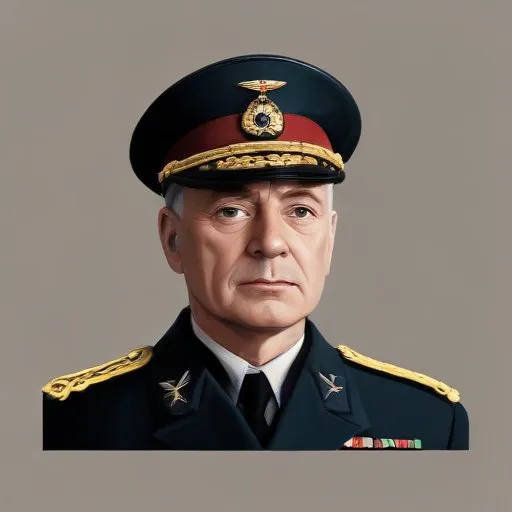
Walter Oesau: The Decorated German Fighter Pilot of World War II
Aerial Ace and Commander of Jagdgeschwader 1
Walter Oesau was a renowned German fighter pilot during World War II, credited with 127 aerial victories, making him one of the highest-scoring fighter aces of the war. He served in the Luftwaffe from 1934 until his death in 1944, commanding Jagdgeschwader 1, a prestigious fighter wing that was later named in his honor.
Early Life and Military Career
Born on June 28, 1913, in Farnewinkel, Germany, Oesau joined the German Army in October 1933 as an enlisted soldier. He later transferred to the Luftwaffe in 1934, undertaking flying training at the Deutsche Verkehrsfliegerschule in Hanover. Upon completion, he was assigned to Jagdgeschwader 132 as a Leutnant, which was later redesignated as Jagdgeschwader 2 Richthofen in May 1939.
Spanish Civil War and Early Successes
Oesau's operational career began with the Condor Legion during the Spanish Civil War, where he flew 130 combat missions and claimed nine aerial victories. This achievement earned him the prestigious Spanish Cross in Gold with Diamonds, one of only 28 individuals to receive this honor.
World War II and Command of Jagdgeschwader 1
At the outbreak of World War II, Oesau was given command of a fighter group within Jagdgeschwader 20. He later commanded III Gruppe, Jagdgeschwader 51, participating in the Invasion of Poland and operations on both the Western and Eastern Fronts. In 1944, he returned to operations as commander of Jagdgeschwader 1, leading the unit until his death in action on May 11, 1944, at the age of 30.
Legacy and Honors
In recognition of his exceptional service and bravery, Jagdgeschwader 1 was renamed Jagdgeschwader 1 Oesau after his death. Oesau's remarkable career was marked by numerous awards, including the Knight's Cross of the Iron Cross with Oak Leaves and Swords, the German Cross in Gold, and the Front Flying Clasp of the Luftwaffe. His legacy as a highly decorated and respected fighter pilot continues to inspire and influence military aviation to this day.
Personal Life and Milestones
- Born: June 28, 1913, in Farnewinkel, Germany
- Died: May 11, 1944, in action
- Joined the German Army: October 1933
- Transferred to the Luftwaffe: 1934
- Participated in the Spanish Civil War: 1938
- Commander of Jagdgeschwader 1: 1944
Impact on Modern Military Aviation
Walter Oesau's exceptional skills, leadership, and bravery have left a lasting impact on modern military aviation. His aerial victories and command experience have influenced the development of fighter tactics and strategies, while his legacy continues to inspire generations of military pilots.
FAQ
What was Walter Oesaus military role?
Walter Oesau was a German colonel and fighter pilot, serving in the Luftwaffe during World War II.
How many aerial victories did Walter Oesau achieve?
Walter Oesau achieved 127 aerial victories, earning him recognition as one of the highest-scoring fighter aces of World War II.
What awards did Walter Oesau receive for his military service?
Walter Oesau received numerous awards for his military service, including the Knights Cross of the Iron Cross with Oak Leaves and Swords.
How did Walter Oesaus military career impact his life?
Walter Oesaus military career had a profound impact on his life, including his post-war experiences as a prisoner of war and his later work as a businessman.
What was Walter Oesaus legacy in the history of military aviation?
Walter Oesaus legacy is that of a highly skilled and decorated fighter pilot who made significant contributions to the German war effort, earning him recognition as one of the leading aces of World War II.