


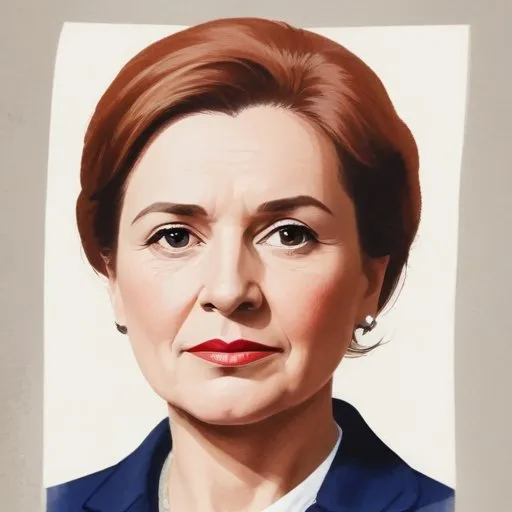
A Polish politician and resistance fighter who played a key role in the country's fight against Nazi occupation during World War II, and was also a pioneering female politician.
Wanda Krahelska-Filipowicz, code-named "Alinka" or "Alicja," was a fearless and visionary leader in Warsaw's underground resistance movement during World War II. As a co-founder of Żegota, a secret organization that aided Poland's Jewish population, she risked her life to save countless lives, defying the brutal Nazi regime and inspiring a generation of Polish heroes.
Born on December 15, 1886, Wanda Krahelska-Filipowicz was a Catholic Socialist activist and devout democrat. Her early life was marked by a passion for justice and equality, which led her to participate in an assassination attempt on the Russian governor-general of Warsaw, Georgi Skalon, in 1906. Although acquitted of the crime, she was forced to flee to Kraków, where she entered into a fictional marriage with painter Adam Dobrodzicki and became a citizen of Austria-Hungary.
In 1942, Wanda Krahelska-Filipowicz co-founded Żegota, a clandestine organization dedicated to helping Poland's Jewish population survive the Holocaust. As the wife of a former ambassador to Washington, she leveraged her connections with the military and political leadership of the Polish Underground to secure funding and support for the organization's vital work. Her unwavering commitment to the cause inspired others to join the fight against the Nazi occupation.
Wanda Krahelska-Filipowicz personally sheltered Jews in her own home, despite the Nazi threat of death for anyone caught harboring Jewish refugees. Among the refugees she protected was the widow of the Jewish historian Szymon Aszkenazy. Her brave actions not only saved lives but also symbolized the Polish people's defiance against the Nazi regime's brutal policies.
Today, Wanda Krahelska-Filipowicz is remembered as a heroine of the Polish resistance movement, a champion of humanity in the darkest of times. Her remarkable story serves as a testament to the power of courage, compassion, and conviction. As a cultural icon and symbol of Poland's unwavering spirit, her legacy continues to inspire new generations to stand up against injustice and fight for human rights.
Wanda Krahelska-Filipowicz's extraordinary life and work have inspired countless initiatives and organizations dedicated to promoting tolerance, understanding, and human rights. Her courage in the face of overwhelming odds continues to inspire people around the world to stand up against injustice and fight for a more compassionate and equitable society.
"The only way to overcome evil is to confront it with goodness."
Wanda Krahelska-Filipowicz's remarkable story is intricately woven into the fabric of Poland's history during World War II. Her courageous actions and vision have inspired a generation of Polish heroes, cementing her place as one of the country's most revered and beloved figures.
Throughout her life, Wanda Krahelska-Filipowicz dedicated herself to various charitable causes, from advocating for women's rights to promoting social justice and equality. Her tireless efforts have inspired countless others to follow in her footsteps, leaving behind a lasting legacy of compassion and generosity.
Wanda Krahelska-Filipowicz's extraordinary life serves as a powerful reminder that even in the darkest of times, humanity can prevail. Her courage, conviction, and compassion have inspired countless people to stand up against injustice and fight for a better world, leaving behind a legacy that will continue to inspire generations to come.
Born in 1914
A Polish-American activist and academic who risked his life to expose the atrocities of the Holocaust to the Western world, particularly the existence of concentration camps.
