


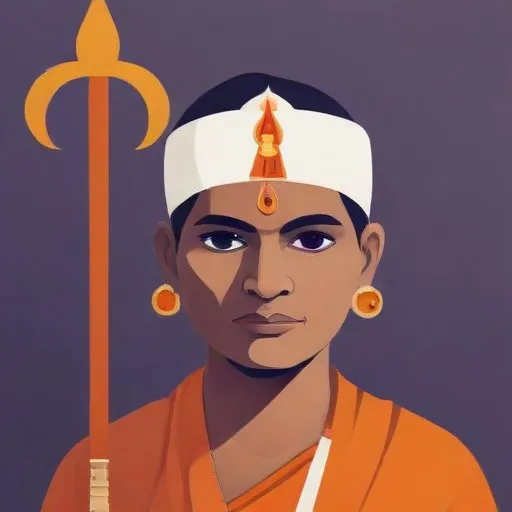
Founder of the Ramanya Kingdom, later renamed Hanthawady Kingdom of Pegu, known for unifying warring states and establishing a powerful kingdom in 14th-century Burma. He is remembered for his military prowess and administrative reforms.
Wareru, also known as Wagaru, is renowned for being the founder of the Martaban Kingdom, a Monspeaking polity located in present-day Myanmar (Burma). By leveraging his exceptional diplomatic and military skills, he successfully carved out a kingdom in Lower Burma during the collapse of the Pagan Empire in the 1280s.
Wareru was born as Ma Gadu on 20 March 1253 in the village of Tagaw Wun, near present-day Thaton in Mon State. His ethnic background was either Mon, Shan, or a mix of both. He grew up in a poor peasant family with a younger brother, Ma Gada, and a younger sister, Hnin U Yaing.
In 1285, Wareru seized the governorship of Martaban (Mottama) and received the backing of the Sukhothai Kingdom. He then declared independence from Pagan in 1287. Between 1295 and 1296, he and his ally, Tarabya, the self-proclaimed king of Pegu (Bago), defeated a major invasion by Pagan. Wareru soon eliminated Tarabya and emerged as the sole ruler of three Monspeaking provinces: Bassein, Pegu, and Martaban.
Wareru was assassinated in 1307, but his lineage continued to rule the kingdom until its eventual decline. Despite his untimely death, Wareru's legacy as a shrewd politician and military strategist has endured, shaping the course of Burmese history.
Wareru'scommission of the Wareru Dhammathat demonstrates his commitment to establishing a comprehensive legal framework for his kingdom. This treatise not only reflected his vision for a just and orderly society but also cemented his place in Burmese legal history.
Wareru's reign marked a significant turning point in Burmese history, as it signaled the emergence of the Mon people as a distinct ethnicity. His legacy has influenced the development of Burmese and Siamese legal codes, shaping the course of regional history for centuries to come.
Wareru's remarkable story serves as a testament to the power of vision, determination, and strategic leadership. His remarkable achievements continue to inspire and educate, offering valuable insights into the complexities of Southeast Asian history and politics.
Born in 1535
The king who unified Burma and established the Toungoo Empire, known for his military conquests and administrative reforms. He is also famous for his architectural achievements, including the construction of the Kanbawzathadi Palace.
Born in 1516
Unified Burma under a single rule, expanded the empire, and promoted Theravada Buddhism. Known for military conquests and cultural achievements.
Born in 1516
Unifier of Burma, conqueror of Siam and Lan Xang, and creator of the largest empire in Southeast Asian history. He expanded Buddhism and established a strong administrative system.
