


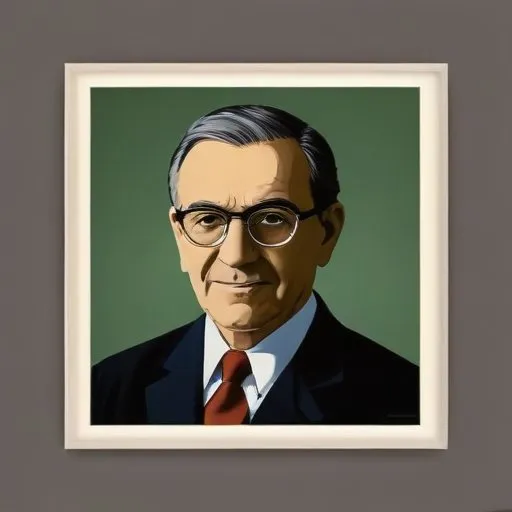
Brazilian scientist who made significant contributions to the fields of genetics, entomology, and engineering, particularly in the development of honey bee genetics and breeding programs. He is also recognized for his work on the genetic improvement of livestock and crops.
Warwick Estevam Kerr was a Brazilian agricultural engineer, geneticist, entomologist, professor, and scientific leader, renowned for his groundbreaking discoveries in the genetics and sex determination of bees. His work led to the accidental release of Africanized honey bees in the Western Hemisphere, forever changing the landscape of apiculture.
Born on September 9, 1922, in Santana do Parnaba, So Paulo, Brazil, Kerr was the son of Amrico Caldas Kerr and Brbara Chaves Kerr. His family, originally from Scotland, immigrated to the United States and eventually settled in Pirapora do Bom Jesus, So Paulo, in 1925.
Kerr attended secondary school and the preparatory course at the Mackenzie in So Paulo. He then pursued a degree in agricultural engineering at the Escola Superior de Agricultura Luiz de Queiroz of the University of So Paulo, graduating in 1948.
Kerr's extensive career spans multiple institutions, including the University of So Paulo, the National Institute of Amazonia Research (INPA), and the Universidade Estadual do Maranho. His work at INPA, from 1975 to 1979, focused on the genetics of bees and the creation of hybrid species.
In 1957, Kerr's experiment with interbreeding honey bees from Europe and southern Africa resulted in the accidental release of 26 Tanzanian queen bees (Apis mellifera scutellata) in Rio Claro, So Paulo. This incident marked the beginning of the Africanized bee population in the Western Hemisphere.
Kerr received numerous awards and honors for his contributions to the field of genetics and apiculture. Some notable recognition includes:
Kerr's work has had a profound impact on the field of apiculture, genetics, and entomology. His discoveries have contributed significantly to our understanding of bee biology and behavior. Moreover, his pioneering work in the creation of hybrid bees has opened up new avenues for research and development in the field.
Kerr's legacy extends beyond the scientific community, as his work has influenced modern agriculture, conservation, and environmental practices. His contributions have also inspired future generations of scientists and researchers, ensuring a continued exploration of the wonders of the natural world.
Kerr officially retired from the University of So Paulo in 1981 but continued to be actively involved in scientific research and academia. He passed away on September 15, 2018, leaving behind a legacy of groundbreaking research and discovery.
Born in 1900
A pioneer in evolutionary biology, he integrated genetics and evolution, revolutionizing our understanding of species adaptation and diversity. His work laid the foundation for modern evolutionary theory.
Born in 1890
A pioneering geneticist who discovered the effects of X-ray radiation on genetic mutation, leading to a deeper understanding of evolution and heredity.
Born in 1901
Pioneering geneticist and biologist who developed the science of ecological genetics, studying the interaction between genetics and environment, and was a key figure in the modern evolutionary synthesis.
Born in 1889
Developed the modern concept of genetic drift, a fundamental principle in population genetics, and pioneered the use of statistical methods in evolutionary biology.
Born in 1890
A pioneer in statistics and genetics, he developed techniques for data analysis and laid the foundations for modern evolutionary theory. His work has far-reaching implications in fields like medicine, agriculture, and social sciences.
Born in 1892
A pioneering geneticist and biologist who contributed significantly to the development of modern genetics, particularly in the fields of population genetics and evolutionary biology.
Born in 1904
A renowned biologist and ornithologist who pioneered the modern synthesis of evolutionary biology, shaping our understanding of species and their diversity.
Born in 1902
A renowned paleontologist and author who revolutionized the field of evolutionary biology with his groundbreaking work on fossil records and species adaptation. His contributions significantly shaped modern understanding of life on Earth.
