


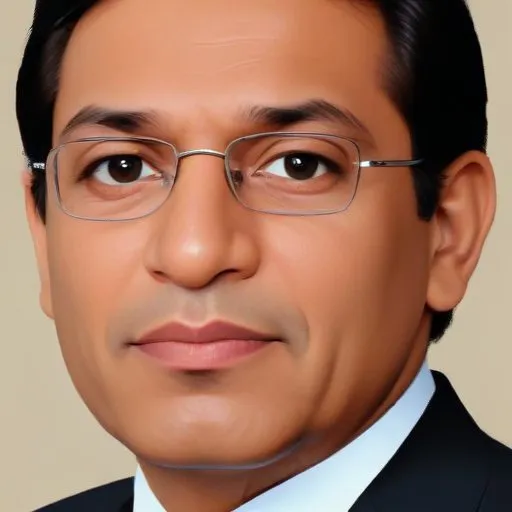
A Pakistani lawyer and politician who served as the President of Pakistan, known for playing a crucial role in the country's political landscape during the 1990s. He is remembered for his efforts to stabilize the government and promote democracy.
Wasim Sajjad, a Pakistani conservative politician and lawyer, is renowned for his remarkable tenure as the acting President of Pakistan for two non-consecutive terms and as the Chairman of the Senate between 1988 and 1999. With a career spanning over three decades, Sajjad has left an indelible mark on the political landscape of Pakistan.
Born on 30 March 1941 in Jalandhar, British India, Sajjad was raised in a family of esteemed jurists. His father, Justice Sajjad Ahmad Jan, served as a judge of the Supreme Court and later became the Chief Election Commissioner of Pakistan.
Sajjad's educational pursuits took him to the Army Burn Hall, followed by the University of Punjab, where he studied law. As a Rhodes Scholar, he embarked on a journey to Oxfordshire, where he earned his Bachelor of Civil Law and a graduate degree in Jurisprudence from Wadham College, Oxford in 1967.
Sajjad's foray into politics began in 1985 when he was elected to the Senate as a member of the center-right Muslim League. He served as the Minister for Law and Justice from September 1986 to December 1988, before being elected as Chairman of the Senate, a position he held until 1997.
During his tenure as Chairman, Sajjad served as acting President of Pakistan twice during the general elections. In 1999, he joined a defecting group that supported General Pervez Musharraf's coup and became the Leader of the House in the Senate of Pakistan in 2003, remaining in the position until 2008.
After retiring from politics, Sajjad has been actively engaged in various pursuits. He serves as the Chairman of the Foundation for Advancement of Science and Technology (FAST) and the Chancellor of the National University of Computer and Emerging Sciences (NUCES).
Throughout his illustrious career, Wasim Sajjad has remained committed to serving the people of Pakistan. His dedication to the country's political and judicial systems has earned him respect and admiration from across the political spectrum.
"The strength of a nation lies in its institutions, and it is our duty to strengthen them." - Wasim Sajjad
Wasim Sajjad's remarkable journey is a testament to his unwavering commitment to public service and his country. As a stalwart of Pakistani politics and law, his legacy continues to inspire generations to come.
86 Years Old
The 8th President of Pakistan, serving from 1993 to 1997, known for his efforts to strengthen the country's economy and democratic institutions. He also played a key role in the country's nuclear program.
97 Years Old
The 9th President of Pakistan, a judge-turned-politician who served from 1997 to 2001, known for his role in the country's political landscape during a tumultuous period. He's also remembered for his efforts to strengthen the judiciary and promote democracy.
83 Years Old
The Pakistani general and politician who seized power in a military coup and ruled Pakistan from 1999 to 2008, known for his controversial presidency and attempted assassination. He played a key role in Pakistan's politics and foreign policy during a tumultuous period.
71 Years Old
The 11th President of Pakistan, a shrewd politician and businessman who navigated the country's complex political landscape, known for his cunning and resilience in the face of adversity.
85 Years Old
The 12th President of Pakistan, a businessman-turned-politician who served from 2013 to 2018, known for maintaining a low profile and avoiding controversy during his tenure. He focused on economic development and strengthening international relations.
76 Years Old
The 12th Prime Minister of Pakistan, known for his three non-consecutive terms in office and his role in shaping the country's economy and foreign policy. He was ousted from power in 2017 due to corruption charges.
73 Years Old
The first female Prime Minister of a Muslim-majority country, known for her efforts to democratize Pakistan and promote women's rights. She was a symbol of hope for a more liberal and tolerant Pakistan.
