


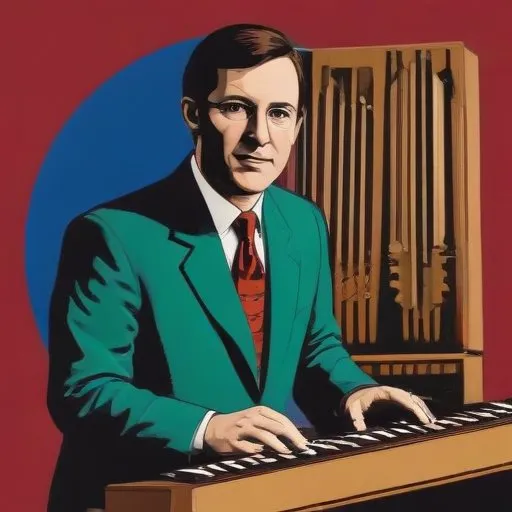
Noted for his contributions to the American classical music scene, particularly in the realm of sacred music, he composed and performed numerous works for organ and choir.
Wayne Barlow, an American composer of classical music, was a trailblazer in the world of electronic music, leaving an indelible mark on the music landscape. Known for his iconic compositions, such as "The Winters Past" for oboe and string orchestra, Barlow's innovative approach to music education and electronic music studio direction paved the way for future generations of musicians and composers.
Wayne Barlow was born on September 6, 1912, in Elyria, Ohio. He went on to receive his bachelor's, master's, and doctoral degrees from the prestigious Eastman School of Music, majoring in composition and theory. In 1937, he became the first American to receive a doctorate in music composition, a testament to his exceptional talent and dedication to his craft.
Barlow's impressive academic career spanned over four decades, with significant contributions to the Eastman School of Music. He served as a professor from 1937 to 1978, directing the Electronic Music Studio from 1968 to 1978, and later becoming the Dean of Graduate Studies from 1973 to 1978. As an Emeritus Professor of Composition from 1978 to 1996, Barlow continued to inspire and mentor countless students, including notable names such as James Cohn, Lucrecia Kasilag, and Samuel Jones.
Barlow's compositional works showcased his unique blend of traditional and modern techniques. His "Foundations of Music" book remains a seminal work in music theory and education. As a pioneer in electronic music, Barlow's experiments with Arnold Schoenberg and Myron Schaeffer, director of the Electronic Music Laboratory at the University of Toronto, led to groundbreaking innovations in the field.
Wayne Barlow's contributions to classical music and electronic innovation have left an enduring legacy. His manuscripts, preserved at the Sibley Music Library of the Eastman School of Music, serve as a testament to his life's work. As a devoted educator and composer, Barlow's impact on the music world continues to resonate, inspiring future generations of musicians and composers to push the boundaries of creative expression.
Wayne Barlow's remarkable journey came full circle when he passed away on December 17, 1996, at the age of 84. His life's work, a testament to his boundless passion for music, continues to inspire and educate, leaving an indelible mark on the world of classical music and electronic innovation.
Born in 1912
A renowned organist and composer, known for his virtuosic performances and innovative compositions that blended classical and modern styles. He was a prominent figure in the American classical music scene during the mid-20th century.
Born in 1886
A renowned French organist and composer, known for his virtuosic performances and contributions to the organ repertoire, including symphonic poems and chamber music.
Born in 1924
A renowned French organist and composer, he was a master of improvisation and created numerous works for the organ, earning him a reputation as one of the most innovative and influential organists of the 20th century.
Born in 1908
A French composer and ornithologist who merged birdsong with avant-garde music, creating a unique and influential sound. His work continues to inspire musicians and bird enthusiasts alike.
Born in 1907
A renowned French organist and composer, he was a master of improvisation and wrote numerous works for the organ, blending traditional and modern styles. His music continues to inspire and influence organists worldwide.
