


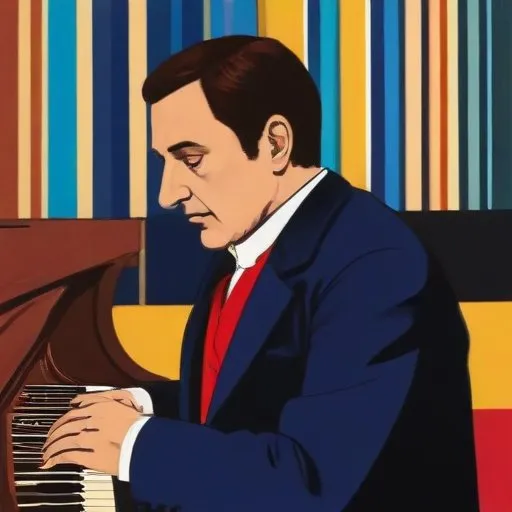
A renowned French organist and composer, he was a master of improvisation and created numerous works for the organ, earning him a reputation as one of the most innovative and influential organists of the 20th century.
Renowned for his exceptional improvisational skills and mastery of the organ, Pierre Cochereau was a French organist, improviser, composer, and pedagogue who left an indelible mark on the world of classical music. As the titular organist of Notre Dame de Paris from 1955 until his death in 1984, Cochereau's innovative approach to organ music and his controversial renovation of the cathedral's organ in the 1960s continue to inspire and influence generations of musicians.
Born on July 9, 1924, in Saint-Mandé Val-de-Marne, a commune near Paris, Cochereau's early life was marked by a passion for music. His father, Georges Ernest Cochereau, a wealthy factory owner, encouraged his son's musical pursuits, which began with violin lessons at the age of five. However, it wasn't until Cochereau discovered the organ that he truly found his calling.
At the age of 13, Cochereau suffered a year of poor health and performance in school, prompting his father to send him to recuperate in a village in the South of France. During this time, he stumbled upon a 2-manual pipe organ by Cavaillé-Coll in the local church, where he was introduced to the instrument by the church's titular organist. This encounter sparked a lifelong dedication to the organ, and Cochereau went on to study with prominent organists and pedagogues, including Marie-Louise Girod, André Fleury, and Paul Delafosse.
Cochereau's talent and dedication earned him a place at the Conservatory of Paris, where he refined his skills and eventually succeeded Paul Delafosse as titular organist at Saint-Roch in Paris in 1942. This appointment marked the beginning of a prestigious career that would take him to the pinnacle of organ music: the titular organist of Notre Dame de Paris.
On June 2, 1937, the day Louis Vierne, the then-organist of Notre Dame, died at the console of the organ during his 1750th organ recital, Cochereau was introduced to the Cavaillé-Coll organ in the village church. This coincidence was seen by many as an apostolic succession, as Cochereau would go on to occupy the same position 18 years later.
Cochereau's tenure at Notre Dame was marked by controversy and innovation. In the 1960s, he oversaw a major renovation of the cathedral's organ, which sparked debate among organ enthusiasts and aficionados. While some criticized the changes as radical, others hailed Cochereau's vision as a bold step forward in organ design.
Despite the controversy, Cochereau's genius as an improviser and organist earned him widespread recognition and acclaim. He was renowned for his ability to improvise complex and beautiful music on the spot, a skill that earned him the admiration of his peers and the adoration of his audience.
After Cochereau's passing on March 6, 1984, the Conservatory of Nice was renamed in his honor, a testament to his enduring impact on the world of classical music. His legacy continues to inspire generations of organists, composers, and musicians, and his music remains a source of beauty and inspiration for audiences around the world.
In recognition of his contributions to music, Cochereau was awarded numerous honors and accolades, including the prestigious Prix de Rome in 1951. His life and work serve as a testament to the power of music to uplift, inspire, and transform humanity.
Born in 1902
A renowned French organist and composer, famous for his mesmerizing and intricate Requiem Mass, which is still widely performed and admired today.
Born in 1886
A renowned French organist and composer, known for his virtuosic performances and contributions to the organ repertoire, including symphonic poems and chamber music.
Born in 1908
A French composer and ornithologist who merged birdsong with avant-garde music, creating a unique and influential sound. His work continues to inspire musicians and bird enthusiasts alike.
Born in 1907
A renowned French organist and composer, he was a master of improvisation and wrote numerous works for the organ, blending traditional and modern styles. His music continues to inspire and influence organists worldwide.
Born in 1822
A Belgian organist and composer who created iconic works that blended Romanticism and Impressionism, leaving a lasting impact on classical music.
Born in 1811
A virtuosic pianist and composer who revolutionized classical music with his technically demanding and emotionally expressive works, blending Hungarian folk influences with Romantic-era drama.
Born in 1685
A master of Baroque music, he composed over 1,000 works, including orchestral suites, cantatas, and passions, that still inspire and influence musicians today. His innovative use of counterpoint and harmony raised the bar for classical music.
Born in 1824
A renowned composer of symphonies and sacred music, known for his complex harmonies and innovative orchestration. His works are considered a bridge between Romanticism and modern classical music.
