


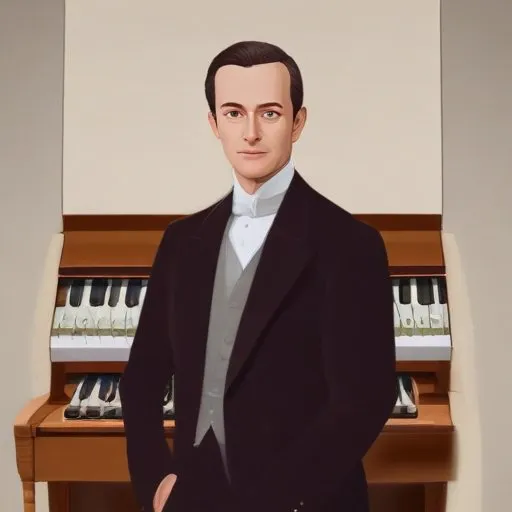
A renowned French organist and composer, famous for his mesmerizing and intricate Requiem Mass, which is still widely performed and admired today.
Maurice Duruflé, a renowned French composer, organist, and musicologist, is best known for his iconic Requiem, Op. 9, a masterpiece that has captivated audiences worldwide with its haunting beauty and profound spirituality. As a virtuosic organist, Duruflé's works are deeply rooted in the French choral plainsong tradition, infusing his compositions with a distinctive aura of elegance and refinement.
Born on January 11, 1902, in Louviers, Eure, France, Duruflé began his musical journey as a chorister at the Rouen Cathedral Choir School from 1912 to 1918. Under the guidance of Jules Haelling, a pupil of Alexandre Guilmant, Duruflé developed his skills in piano and organ.
At the age of 17, Duruflé moved to Paris, where he took private organ lessons with Charles Tournemire, a prominent organist and composer. This mentorship not only honed Duruflé's technical prowess but also instilled in him a deep appreciation for the French organ tradition. In 1920, Duruflé entered the Conservatoire de Paris, where he graduated with first prizes in organ, harmony, fugue, piano accompaniment, and composition.
In 1943, Duruflé became Professor of Harmony at the Conservatoire de Paris, where he taught until 1970. Among his distinguished pupils were Pierre Cochereau, Jean Guillou, and Marie-Claire Alain, all of whom went on to become revered organists in their own right.
Duruflé's contributions to the world of organ music are immeasurable. His compositions, characterized by their lyricism, nuance, and technical mastery, have raised the bar for generations of organists. His Requiem, Op. 9, remains a cornerstone of the organ repertoire, a testament to the power of music to evoke the sublime and the sacred.
Maurice Duruflé passed away on June 16, 1986, leaving behind a legacy that continues to inspire and influence musicians around the world. Despite his untimely death, Duruflé's music remains a testament to his unwavering dedication to his craft, a shining example of the transformative power of art to transcend time and mortality.
Born in 1862
A renowned French pianist and composer who revolutionized classical music with his unique, dreamy, and unconventional style, creating iconic works like "Clair de Lune" and "Prelude to the Afternoon of a Faun".
Born in 1875
A renowned French musician who blended classical and modern styles, creating iconic works like "Bolero" that continue to mesmerize audiences with their beauty and complexity.
Born in 1835
A French Romantic-era mastermind who composed iconic works like "The Carnival of the Animals" and "Danse Macabre", leaving an indelible mark on classical music.
Born in 1822
A Belgian organist and composer who created iconic works that blended Romanticism and Impressionism, leaving a lasting impact on classical music.
Born in 1845
A renowned French pianist, composer, and educator, he is most known for his romantic and impressionistic compositions, particularly his Requiem and nocturnes.
Born in 1899
A renowned French pianist and composer, celebrated for his eclectic and innovative works that blend jazz, classical, and sacred music, leaving a lasting impact on modern classical music.
Born in 1916
A renowned French pianist, composer, and educator, he was a prominent figure in 20th-century classical music, celebrated for his unique and innovative compositions.
Born in 1925
A renowned French musician who revolutionized classical music with his avant-garde compositions and innovative conducting style, pushing boundaries and redefining the genre.
