


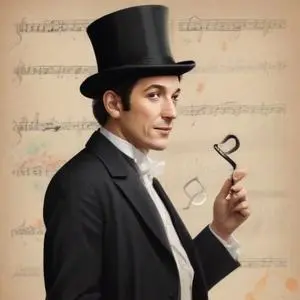
A French Romantic-era mastermind who composed iconic works like "The Carnival of the Animals" and "Danse Macabre", leaving an indelible mark on classical music.
Camille Saint-Saëns is renowned for his breathtaking compositions that traversed the realms of opera, symphony, and chamber music, leaving an indelible mark on the world of classical music. As a French composer, organist, conductor, and pianist, Saint-Saëns' oeuvre boasts an array of iconic works, including the celestial "Danse Macabre," the majestic "Third Organ Symphony," and the whimsical "Carnival of the Animals."
Born on October 9, 1835, in Paris, France, Saint-Saëns demonstrated an exceptional affinity for music from a tender age. At merely 10 years old, he made his concert debut, astonishing audiences with his virtuosic piano playing. His talent was nurtured by esteemed instructors, including Charles-Marie Widor and François Benoît, at the Paris Conservatoire.
Following his studies, Saint-Saëns embarked on a conventional career as a church organist, initially at Saint-Merri and later at La Madeleine, the official church of the French Empire. This period saw him develop a deep understanding of classical music, drawing inspiration from the likes of Schumann, Liszt, and Wagner. However, his compositions remained rooted in a traditional classical tradition, setting him apart from the emerging Impressionist and Expressionist movements.
Saint-Saëns' music, though often perceived as conservative, exhibited a pioneering spirit. His innovative use of harmony and orchestration, as seen in works like the "Second Piano Concerto" and "The Carnival of the Animals," anticipated the neoclassical movement, influencing future masters such as Stravinsky and Les Six. This blend of tradition and innovation earned him both admiration and criticism from his contemporaries.
Saint-Saëns' impact on French music was profound, shaping the trajectory of future generations. His brief stint as a teacher at the École de Musique Classique et Religieuse in Paris saw him mentor influential composers like Gabriel Fauré, who in turn taught the illustrious Maurice Ravel. This lineage of masters testifies to Saint-Saëns' enduring influence, cementing his status as a driving force in French musical heritage.
In his later years, Saint-Saëns' conservative stance on music sparked tensions with proponents of newer styles. However, his unwavering commitment to the classical tradition secured his place as a visionary, paving the way for future innovators. Today, his music remains a testament to his artistic courage, ensuring his legacy continues to captivate audiences worldwide.
This profound insight, attributed to Saint-Saëns, serves as a poignant reminder of the intangible essence that defines true artistry. As we delve into the life and works of this extraordinary composer, we are reminded that music, at its core, is an ephemeral yet eternal force that continues to inspire and uplift humanity.
As we celebrate the life and legacy of Camille Saint-Saëns, we honor not only his remarkable achievements but also the boundless potential of human creativity, which continues to resonate through the ages.
Born in 1811
A virtuosic pianist and composer who revolutionized classical music with his technically demanding and emotionally expressive works, blending Hungarian folk influences with Romantic-era drama.
Born in 1813
A revolutionary composer who transformed opera with his epic, mythological works, creating a new era of musical storytelling. His iconic operas, such as "Der Ring des Nibelungen," continue to captivate audiences worldwide.
Born in 1813
A renowned composer of iconic operas like La Traviata and Aida, known for his masterful blending of drama and music. His works continue to captivate audiences worldwide.
Born in 1833
A renowned pianist and composer, he crafted complex, expressive works that blended traditional and innovative techniques, leaving an indelible mark on classical music.
Born in 1840
A renowned Russian composer and educator, he is best known for his iconic and beloved ballets, such as Swan Lake and The Nutcracker, which continue to enchant audiences worldwide.
Born in 1822
A Belgian organist and composer who created iconic works that blended Romanticism and Impressionism, leaving a lasting impact on classical music.
Born in 1803
A French Romantic-era mastermind who composed iconic symphonies, operas, and orchestral works, revolutionizing classical music with his bold, expressive style.
Born in 1818
A French Romantic-era composer and educator, renowned for his operas, particularly "Faust," which remains a staple of the operatic repertoire. His music is characterized by lyricism and dramatic flair.
