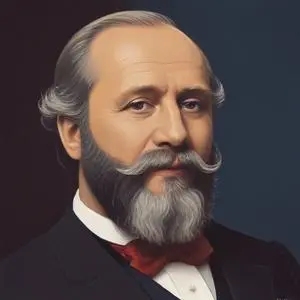
Charles Gounod: The Maestro of French Opera
The Renowned Composer of Faust and Roméo et Juliette
Charles Gounod, the celebrated French composer, is best known for his iconic operas
Faust (1859) and
Roméo et Juliette (1867), which continue to captivate audiences worldwide. Gounod's contributions to the world of opera are unparalleled, with his works remaining an integral part of the international repertory.
Early Life and Education
Born on June 17, 1818, in Paris, France, Gounod was immersed in an artistic and musical family. His father, François-Louis Gounod, was a draftsman and painter, while his mother, Victoire Lemachois, was a pianist. Gounod's early exposure to music led him to study at the prestigious Conservatoire de Paris, where he honed his skills as a composer.
Rise to Prominence
Gounod's talents were recognized early on, and he was awarded the Prix de Rome in 1839, France's most esteemed musical prize. This accolade allowed him to pursue his studies in Italy, Austria, and Prussia, where he met
Felix Mendelssohn, a significant influence on his work. Gounod's experiences abroad deeply impacted his compositional style, which would later define French opera.
Operatic Masterpieces
Gounod's operatic output is characterized by his mastery of drama, melody, and orchestration. His most famous works include:
- Faust (1859), based on Goethe's classic tale, which remains one of the most performed operas of all time.
- Roméo et Juliette (1867), an adaptation of Shakespeare's beloved tragedy, showcasing Gounod's ability to craft beautiful, heartfelt melodies.
- Sapho (1851), an opera that marked Gounod's debut at the Paris Opera.
Church Music and Choral Works
In addition to his operatic accomplishments, Gounod was a prolific composer of church music, including masses, motets, and hymns. His sacred works demonstrate his profound faith and ability to craft music that resonates with the soul. One of his most beloved compositions is the
Ave Maria, an arrangement of a Bach piece, which has become a timeless classic.
Personal Life and Controversies
Gounod's life was marked by both triumph and turmoil. During the Franco-Prussian War, he sought refuge in England with his family, where he became embroiled in a scandalous affair with Georgina Weldon, an amateur singer. This period in his life has been subject to much speculation and debate.
Legacy and Influence
Though Gounod's later years saw him falter in popularity, his impact on French opera is undeniable. His influence can be seen in the works of subsequent composers, such as
Jules Massenet and
Camille Saint-Saëns. Today, Gounod's music continues to enchant audiences, cementing his place as one of the greatest French composers of all time.
Fun Facts and Trivia
* Gounod was known to be deeply religious and briefly considered becoming a priest.
* He composed over 600 songs, as well as numerous orchestral and instrumental works.
* Gounod's music has been featured in numerous films, including the iconic 1925 silent movie
The Phantom of the Opera.
FAQ
What is Charles Gounod famous for?
Charles Gounod is famous for his contributions to French opera, particularly his iconic work Faust, which premiered in 1859 and remains one of the most popular operas of all time. He is also known for his sacred music, including his St. Cecilia Mass and Messe Solennelle.
What was Charles Gounods role in the Paris Conservatory?
Charles Gounod was a professor of composition at the Paris Conservatory, where he taught many prominent composers, including Claude Debussy and Charles-Marie Widor. He also served as the director of the conservatory from 1852 to 1859.
How did Charles Gounods music influence other composers?
Charles Gounods music had a significant impact on the development of French opera and influenced many other composers, including Hector Berlioz, César Franck, and Jules Massenet. His use of rich harmonies and expressive melodies set a new standard for French opera.
What were Charles Gounods contributions to sacred music?
Charles Gounod made significant contributions to sacred music, including his St. Cecilia Mass and Messe Solennelle. These works showcased his ability to create beautiful, expressive music for the church, and they remain popular to this day.
What was Charles Gounods relationship with the French opera?
Charles Gounod was a leading figure in the French opera scene, and his works were frequently performed at the Paris Opera. He was known for his ability to create music that was both entertaining and intellectually stimulating, and his operas remain an essential part of the French opera repertoire.