


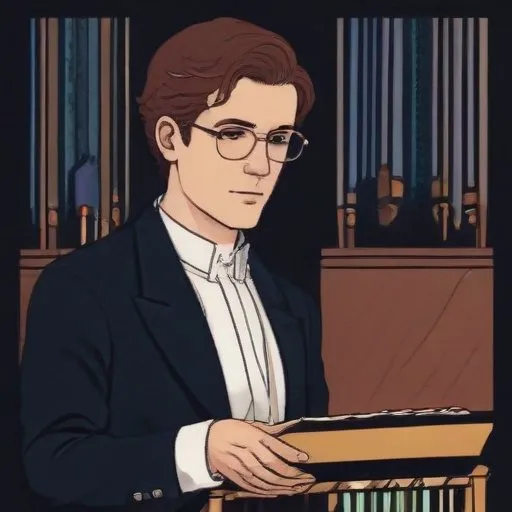
A renowned French organist and composer, known for his virtuosic performances and contributions to the organ repertoire, particularly in the Romantic era.
Alexandre Guilmant was a French organist and composer, renowned for his exceptional skill and mastery of the organ. He was the organist of La Trinité Church in Paris from 1871 to 1901, and his performances were characterized by his improvisational genius, inspired by Gregorian chants.
Guilmant was born on March 12, 1837, in Boulogne-sur-Mer, France. He received his early music education from his father, Jean-Baptiste Guilmant, and later studied under the Belgian master Jacques-Nicolas Lemmens. This solid foundation in music laid the groundwork for his future success as a virtuoso organist and composer.
Guilmant's career was marked by numerous concert tours across Europe, the United States, and Canada. He was the first major French organist to tour the United States, performing in various cities, including New York and Philadelphia. One of his most notable achievements was a series of 40 recitals on the St. Louis Exposition Organ, which is now part of the Wanamaker Organ in Philadelphia.
Guilmant's compositional output includes a significant body of work, including organ symphonies, choral music, and hymns. He is perhaps best known for his Archives des Maîtres de l'Orgue (Archives of the Masters of the Organ), a collection of scores featuring the works of numerous pre-1750 French composers. This collection, co-published with his colleague André Pirro, comprises ten volumes and remains an essential resource for organists and musicologists today.
Guilmant's impact on the world of organ music cannot be overstated. He played a crucial role in promoting the organ as a concert instrument, and his advocacy helped to establish the organ as a central part of French musical life. His teaching and performing career inspired a generation of organists, and his compositions continue to be performed and admired today.
Guilmant's legacy extends beyond the world of music. He was a pioneer in the field of music education, and his teachings on improvisation and composition remain influential to this day. His commitment to preserving and promoting French musical heritage has left a lasting impact on the cultural landscape of France and beyond.
Guilmant was appointed Professor of Organ at the Conservatoire de Paris in 1896, a testament to his exceptional skill and reputation as a teacher and performer. He received numerous accolades for his contributions to music, including the prestigious Prix Chartier award.
Guilmant's life was marked by several significant milestones, including his appointment as organist of La Trinité Church in 1871 and his subsequent 30-year tenure in the position. He also founded the Schola Cantorum de Paris, an institution dedicated to promoting French musical heritage.
Guilmant's personal life was marked by a deep commitment to his craft and a passion for music education. He was known for his kindness and generosity, often providing guidance and support to aspiring organists.
Alexandre Guilmant's remarkable life and career serve as a testament to his enduring legacy as a master of French organ music. His contributions to the world of music continue to inspire and influence generations of musicians and music lovers alike.
Born in 1822
A Belgian organist and composer who created iconic works that blended Romanticism and Impressionism, leaving a lasting impact on classical music.
Born in 1835
A French Romantic-era mastermind who composed iconic works like "The Carnival of the Animals" and "Danse Macabre", leaving an indelible mark on classical music.
Born in 1844
A renowned French organist and composer, he was a master of the symphonic organ style, creating iconic works that showcased the instrument's grandeur. His compositions continue to inspire and influence organ music today.
Born in 1833
A renowned pianist and composer, he crafted complex, expressive works that blended traditional and innovative techniques, leaving an indelible mark on classical music.
Born in 1809
A renowned 19th-century musician who masterfully blended classical and romantic styles, creating iconic works like the "Wedding March" and "Elijah" oratorio. His compositions continue to inspire and influence generations of artists.
Born in 1810
A renowned Romantic-era composer and influential music critic, known for his expressive and emotionally charged works, including symphonies, piano music, and art songs.
Born in 1811
A virtuosic pianist and composer who revolutionized classical music with his technically demanding and emotionally expressive works, blending Hungarian folk influences with Romantic-era drama.
