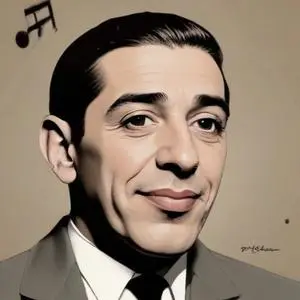
Francis Poulenc

Francis Poulenc

Francis Poulenc was born on January 7th, 1899

Full Name: Francis Jean Marcel Poulenc
Place of Birth: Paris, France
Nationality: French
Profession: Pianist, Composer
Notable Works: Les Mamelles de Tirésias
Career: 1920-1963
Death: January 30, 1963
Genre: Opera, Chamber Music

A renowned French pianist and composer, celebrated for his eclectic and innovative works that blend jazz, classical, and sacred music, leaving a lasting impact on modern classical music.

Written by: Liam O'Sullivan Liam O'Sullivan

Francis Poulenc, a French composer and pianist, is renowned for his diverse and eclectic compositions, which encompass songs, solo piano works, chamber music, choral pieces, operas, ballets, and orchestral concert music. Among his most celebrated works are the piano suite Trois mouvements perpétuels (1919), the ballet Les biches (1923), the Concert champêtre (1928) for harpsichord and orchestra, the Organ Concerto (1938), the opera Dialogues des Carmélites (1957), and the Gloria (1959) for soprano, choir, and orchestra.

Born on January 7, 1899, in Paris, France, Poulenc was the only son of a prosperous manufacturer. His parents expected him to follow in his father's footsteps, but Poulenc's passion for music prevailed. He studied piano with Ricardo Vines, who became his mentor after his parents' passing. This mentorship played a significant role in shaping Poulenc's musical style.

In the early 1920s, Poulenc became acquainted with Erik Satie, a prominent French composer, and subsequently joined a group of young composers known as Les Six. This collective, which included Georges Auric, Louis Durey, Arthur Honegger, Darius Milhaud, and Germaine Tailleferre, sought to revolutionize French music by breaking free from the traditional Romantic style. Under Satie's guidance, Poulenc's music embodied a new spirit of modernity, wit, and irreverence.

During the 1930s, Poulenc's compositions took a more serious turn, particularly in his religious music, which he began composing in 1936. This shift in style was marked by a greater sense of spirituality and introspection. Poulenc's ability to alternate between his lighthearted and serious works earned him widespread recognition and acclaim.

In addition to his work as a composer, Poulenc was an accomplished pianist. He formed celebrated performing partnerships with the baritone Pierre Bernac, who also advised him on vocal writing, and the soprano Denise Duval. Together, they toured Europe and America, and made numerous recordings. Poulenc was among the first composers to recognize the importance of the gramophone, and he recorded extensively from 1928 onwards.

In the years following Poulenc's passing on January 30, 1963, his music was often overshadowed by his reputation as a humorous, lightweight composer. However, in the 21st century, there has been a renewed interest in his serious works, and his religious music has been rediscovered and reevaluated. Today, Poulenc is recognized as one of the most important and versatile French composers of the 20th century.

  • "Music is a way of life, not just a profession."
  • "The most important thing in music is the thing that cannot be put into words."

Poulenc's music reflects the tumultuous period in which he lived, marked by two world wars and significant social change. His compositions, which often blended humor and gravity, captured the essence of his time. Today, Poulenc's legacy continues to inspire and influence contemporary composers, ensuring his place as a vital figure in the history of classical music.

Timeline
1899
Born in Paris
Francis Poulenc was born on January 7, 1899, in Paris, France. He would go on to become a renowned French pianist and composer.
1914
Begins Music Studies
Poulenc began his music studies at the Paris Conservatory, where he was taught by prominent composers such as Charles Koechlin.
1920
Publishes First Composition
Poulenc published his first composition, a piano sonata, which received critical acclaim.
1963
Dies in Paris
Francis Poulenc passed away on January 30, 1963, in Paris, France, at the age of 64.
Francis Poulenc

Francis Poulenc Quiz

What genre of music did Francis Poulenc blend with classical music?

Score: 0/5
FAQ
What is Francis Poulencs most famous composition?
Francis Poulencs most famous composition is his Gloria, a choral work that is considered one of the most popular and enduring pieces of 20th-century classical music.
What was Francis Poulencs musical style?
Francis Poulencs musical style was a blend of neoclassicism, lyricism, and humor. He was known for his ability to craft melodies that were both catchy and sophisticated.
What was Francis Poulencs significance in French music?
Francis Poulencs significance in French music is as a leading composer of the 20th century. He was a member of the French group Les Six, a collective of composers who sought to revolutionize French music in the 1920s.
What did Francis Poulenc teach?
Francis Poulenc taught music at the Paris Conservatory and was a vocal coach at the Opéra-Comique.
When did Francis Poulenc die?
Francis Poulenc died on January 30, 1963, at the age of 64.

Related People:

Erik Satie

Born in 1866

A pioneering composer of minimalist and avant-garde music, known for his unconventional and humorous approach to classical music, creating a new kind of simplicity and clarity. His music often featured repetitive patterns and witty titles.

Darius Milhaud

Born in 1892

A French composer and educator who blended jazz and classical music to create a unique sound, and is best known for his ballet scores and chamber music compositions.

Henri Dutilleux

Born in 1916

A renowned French pianist, composer, and educator, he was a prominent figure in 20th-century classical music, celebrated for his unique and innovative compositions.

Olivier Messiaen

Born in 1908

A French composer and ornithologist who merged birdsong with avant-garde music, creating a unique and influential sound. His work continues to inspire musicians and bird enthusiasts alike.

Pierre Boulez

Born in 1925

A renowned French musician who revolutionized classical music with his avant-garde compositions and innovative conducting style, pushing boundaries and redefining the genre.

Jean Cocteau

Born in 1889

A renowned French creative force, celebrated for his innovative and surreal works that blurred the lines between literature, art, and cinema, leaving an indelible mark on 20th-century culture.

Sergei Diaghilev

Born in 1872

A visionary who revolutionized ballet by combining avant-garde music, art, and dance, creating a new era of modern ballet. His company showcased works by renowned artists like Stravinsky and Picasso.

George Balanchine

Born in 1904

A renowned dancer, choreographer, and director who revolutionized ballet with his unique style and founded the New York City Ballet, leaving a lasting impact on the world of dance.