


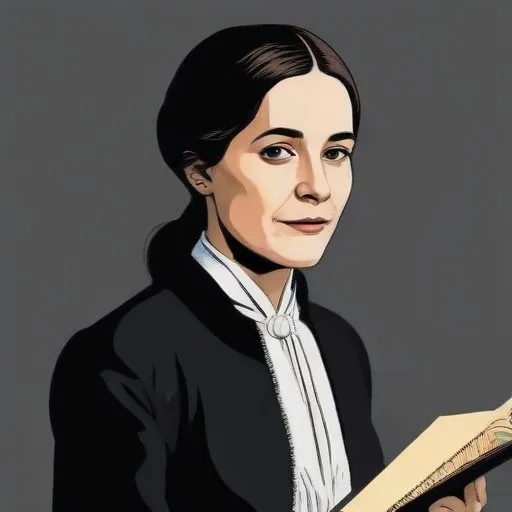
A pioneering female composer and educator, she broke gender barriers in the classical music world, leaving a lasting legacy in the development of modern French music.
Germaine Tailleferre, the only female member of the renowned group of composers known as Les Six, left an indelible mark on the music world with her lyrical and innovative works. Born Marcelle Germaine Taillefesse on April 19, 1892, in Saint-Maur-des-Fossés, Val-de-Marne, France, Tailleferre's musical prowess and perseverance paved the way for future generations of female composers.
Tailleferre's musical journey began at home, where she studied piano with her mother and composed short works of her own. Her talent soon took her to the prestigious Paris Conservatory, where she met fellow composers Louis Durey, Francis Poulenc, Darius Milhaud, Georges Auric, and Arthur Honegger. At the Conservatory, Tailleferre's skills were rewarded with prizes in several categories, including piano accompaniment, harmony, and composition.
In the vibrant artistic circles of Montmartre and Montparnasse, Tailleferre and her friends formed the nucleus of Les Six, a group of composers bound by their passion for innovation and their rejection of traditional musical norms. The publication of Jean Cocteau's manifesto Le coq et l'Arlequin in 1918 sparked a media frenzy, catapulting Les Six to instant fame.
Tailleferre's association with the artistic elite of Paris led to fruitful collaborations and influences. Her friendship with Maurice Ravel, whom she met in 1923, encouraged her to enter the prestigious Prix de Rome Competition. Although she didn't win, the experience had a lasting impact on her compositional style.
In 1926, Tailleferre married American caricaturist Ralph Barton, and the couple moved to Manhattan, New York. However, her husband's lack of support for her musical pursuits led to a creative drought, with Tailleferre barely composing during their two-year marriage. The couple returned to France in 1927, and Tailleferre eventually dissolved the marriage.
Tailleferre's extensive oeuvre includes 18 short works for harp, Petit livre de harpe de Madame Tardieu, composed for Caroline Luigini, the Conservatory's Assistant Professor of harp. Her rich contributions to French music span multiple genres, including opera, ballet, and chamber music. Tailleferre's legacy extends beyond her music, inspiring generations of women to pursue careers in composition.
Tailleferre's contributions to French music were recognized with various awards and honors, including the Prix de Rome in 1926 and the Grand Prix de la Musique Française in 1962.
Germaine Tailleferre's remarkable life serves as a testament to her unwavering dedication to her art and her unrelenting passion for innovation. Her legacy continues to inspire composers and music lovers alike, cementing her place as one of the most important female composers of the 20th century.
Born in 1892
A French composer and educator who blended jazz and classical music to create a unique sound, and is best known for his ballet scores and chamber music compositions.
Born in 1899
A renowned French pianist and composer, celebrated for his eclectic and innovative works that blend jazz, classical, and sacred music, leaving a lasting impact on modern classical music.
Born in 1866
A pioneering composer of minimalist and avant-garde music, known for his unconventional and humorous approach to classical music, creating a new kind of simplicity and clarity. His music often featured repetitive patterns and witty titles.
Born in 1862
A renowned French pianist and composer who revolutionized classical music with his unique, dreamy, and unconventional style, creating iconic works like "Clair de Lune" and "Prelude to the Afternoon of a Faun".
Born in 1875
A renowned French musician who blended classical and modern styles, creating iconic works like "Bolero" that continue to mesmerize audiences with their beauty and complexity.
Born in 1876
A renowned Spanish pianist and composer, known for blending folk influences with modernist techniques, creating iconic works like "The Three-Cornered Hat" and "Nights in the Gardens of Spain".
Born in 1923
A Canadian journalist and politician who championed social justice and workers' rights, known for his influential writings and leadership in the early 20th century labor movement.
Born in 1892
A French composer and educator, he blended classical and modern styles, creating iconic works like "Pacific 231" that evoke powerful images and emotions.
