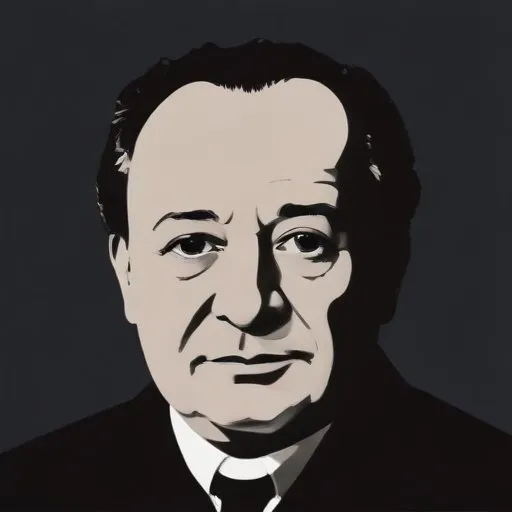
Arthur Honegger

Arthur Honegger

Arthur Honegger was born on March 10th, 1892

Full Name: Arthur Honegger
Place of Birth: Le Havre, France
Profession: Composer
Nationality: French
Style: Classical
Notable Work: Pacific 231
Born: March 10, 1892
Died: November 27, 1955

A French composer and educator, he blended classical and modern styles, creating iconic works like "Pacific 231" that evoke powerful images and emotions.

Written by: Sofia Garcia Sofia Garcia

Arthur Honegger: The Maestro of Modern Classical Music

A Life of Harmony and Innovation

Arthur Honegger, the renowned Swiss composer, is best known for his iconic works such as Antigone, Pacific 231, and Le Roi David, which have left an indelible mark on the world of classical music. Born on March 10, 1892, in Le Havre, France, to Swiss parents, Honegger's life was a testament to his innovative spirit and contributions to modern classical music.

Early Life and Education

Honegger's musical journey began in Le Havre, where he initially studied harmony with Robert-Charles Martin and violin. He then enrolled in the Zurich Conservatory for two years, before moving to the Paris Conservatoire, where he studied with Charles-Marie Widor and Vincent d'Indy from 1911 to 1918.

The Early Years: A Parisian Debut and Establishing his Voice

Honegger made his Parisian compositional debut in 1916, which paved the way for his first characteristic work, Le dit des jeux du monde, a ballet, in 1918. This early success was a precursor to his future triumphs, showcasing his unique blend of modernity and classical sensibilities.

Marriage and Personal Life

In 1926, Honegger married André Vaurabourg, a pianist and fellow student at the Paris Conservatoire. Their marriage was unconventional, with the couple living in separate apartments, a condition of their union. This arrangement allowed Honegger to maintain his solitude, essential for his creative process. They had a daughter, Pascale, born in 1932. Honegger also had a son, Jean-Claude, with singer Claire Croiza.

Fame and Critical Acclaim

The early 1920s saw Honegger's rise to fame with his dramatic psalm, Le Roi David, which remains a staple in the choral repertoire. Antigone, composed between 1924 and 1927, with a libretto by Jean Cocteau, further solidified his reputation as a master composer. The opera's premiere, with sets designed by Pablo Picasso and costumes by Coco Chanel, was a monumental event in the Parisian cultural scene.

A Legacy of Innovation

Honegger's music defied conventions, blending modernist techniques with classical structures. His works, such as Pacific 231, which evoked the sound of a steam locomotive, showcased his innovative spirit. Throughout his career, he continued to push boundaries, experimenting with new sounds and forms.

Influence on Modern Society and Pop Culture

Honegger's influence extended beyond the classical music sphere, with his works featured in various films, including Pacific 231, which was used in the 1935 film Le sexe faible. His music has also been used in numerous documentaries, advertisements, and television shows, cementing his impact on popular culture.

Awards and Honors

Throughout his career, Honegger received numerous awards and honors, including the Grand Prix de la Musique Française in 1934 and the Grand Prix du Disque in 1955.

A Lasting Legacy

Arthur Honegger's life and works serve as a testament to his dedication to modern classical music. His innovative spirit, passion for experimentation, and commitment to his craft have left an indelible mark on the world of classical music. As a member of Les Six, a group of French composers who sought to break away from traditional musical conventions, Honegger's legacy continues to inspire future generations of composers and music enthusiasts alike.

Arthur Honegger's life and works continue to captivate audiences, inspiring a new era of classical music enthusiasts and composers. His innovative spirit, passion for experimentation, and commitment to his craft have cemented his place as one of the most important composers of the 20th century.

Timeline
1892
Birth of Arthur Honegger
Arthur Honegger was born on March 10, 1892, in Le Havre, France.
1920
Founded the Les Six Group
Arthur Honegger co-founded the Les Six group, a collective of French composers.
1955
Death of Arthur Honegger
Arthur Honegger died on November 27, 1955, in Paris, France.
Arthur Honegger

Arthur Honegger Quiz

What style of music did Arthur Honegger blend to create his iconic works?

Score: 0/5
FAQ
What is Arthur Honegger best known for?
Arthur Honegger is best known for his contributions to French classical music, particularly his symphonies and oratorios. He is considered one of the most important French composers of the 20th century.
What is the significance of Arthur Honeggers Pacific 231?
Pacific 231 is one of Honeggers most famous compositions, a symphonic movement that evokes the sound of a steam locomotive. Its considered a classic of 20th-century classical music and showcases Honeggers unique style.
How did Arthur Honeggers education influence his music?
Honegger studied at the Zurich Conservatory and later at the Paris Conservatory, where he was influenced by his teachers and contemporaries, including Darius Milhaud and Igor Stravinsky. This education shaped his compositional style and introduced him to various musical movements.
What is the relationship between Arthur Honegger and Les Six?
Honegger was a member of Les Six, a group of French composers who sought to break away from the traditional Romantic style and create a more modern, eclectic sound. This group also included Darius Milhaud, Francis Poulenc, and others.
What are some of Arthur Honeggers notable works?
Some of Honeggers notable works include his symphonies, particularly Symphony No. 2, as well as his oratorios, such as Le Roi David and Cantate de Noël. He also composed music for film and stage, including the score for the 1935 film LÉquipage.

Related People:

Darius Milhaud

Born in 1892

A French composer and educator who blended jazz and classical music to create a unique sound, and is best known for his ballet scores and chamber music compositions.

Francis Poulenc

Born in 1899

A renowned French pianist and composer, celebrated for his eclectic and innovative works that blend jazz, classical, and sacred music, leaving a lasting impact on modern classical music.

Georges Auric

Born in 1899

A French composer who wrote music for films, ballets, and orchestras, creating iconic scores for movies like "Roman Holiday" and "The Lavender Hill Mob".

Germaine Tailleferre

Born in 1892

A pioneering female composer and educator, she broke gender barriers in the classical music world, leaving a lasting legacy in the development of modern French music.

Erik Satie

Born in 1866

A pioneering composer of minimalist and avant-garde music, known for his unconventional and humorous approach to classical music, creating a new kind of simplicity and clarity. His music often featured repetitive patterns and witty titles.

Claude Debussy

Born in 1862

A renowned French pianist and composer who revolutionized classical music with his unique, dreamy, and unconventional style, creating iconic works like "Clair de Lune" and "Prelude to the Afternoon of a Faun".

Maurice Ravel

Born in 1875

A renowned French musician who blended classical and modern styles, creating iconic works like "Bolero" that continue to mesmerize audiences with their beauty and complexity.

Igor Stravinsky

Born in 1882

A Russian master of music, renowned for revolutionizing classical music with bold, avant-garde compositions that blended traditional and modern elements. His iconic works, such as "The Rite of Spring," continue to inspire and influence artists across genres.