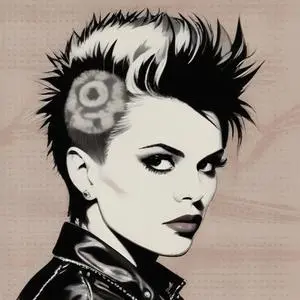
Wendy O. Williams: The Queen of Punk Rock Chaos
Known for Her Onstage Theatrics and Raw Energy
Wendy O. Williams was an American singer, songwriter, and musician who rose to fame as the lead singer of the punk rock band Plasmatics. She was notorious for her outrageous onstage antics, which included partial nudity, explosive equipment, firing shotguns, and chainsawing guitars - a true pioneer of shock value in music.
A Unconventional Path to Stardom
Born on May 28, 1949, in Webster, New York, Williams left home at 16 and hitchhiked to Colorado, where she earned a living by crocheting string bikinis. She traveled to Florida and Europe, taking on various jobs such as lifeguard, stripper, macrobiotic cook, and server at Dunkin' Donuts. After arriving in New York City in 1976, she began performing in live sex shows and appeared in the pornographic film "Candy Goes to Hollywood" in 1979.
The Rise of Plasmatics
It was in 1979 that Williams was recruited by manager Rod Swenson to join the Plasmatics, a punk rock band that would become a fixture of the New York City underground scene. With her raw energy and provocative stage presence, Williams and the Plasmatics quickly gained a following, performing at iconic clubs like CBGB. The band released three albums, "New Hope for the Wretched" (1980), "Beyond the Valley of 1984" (1981), and "Coup d'Etat" (1982), before Williams embarked on a solo career.
A Solo Career Marked by Grammy Nominations and Film Appearances
Williams' debut solo album, "WOW", was released in 1984 and earned her a Grammy nomination for Best Female Rock Vocal Performance. She went on to release two more albums, "Kommander of Kaos" (1986) and "Deffest and Baddest" (1988), before retiring from the music industry. During this period, Williams also made her non-adult film debut in Tom DeSimone's "Reform School Girls" (1986), for which she recorded the title song. She also appeared in the comedy "Pucker Up and Bark Like a Dog" (1989) and the TV series "The New Adventures of Beans Baxter" and "MacGyver".
A Life Cut Short
On April 6, 1998, Williams tragically took her own life near her home in Storrs, Connecticut. She had struggled with depression and had attempted suicide twice in the years leading up to her death. Despite her untimely passing, Williams' legacy as a punk rock icon continues to inspire generations of musicians and fans alike.
Philosophical Contributions and Beliefs
Williams' music and artistry were deeply rooted in her anti-establishment and anti-authoritarian beliefs. She often incorporated themes of individuality, nonconformity, and social critique into her work, inspiring a sense of rebellion and empowerment in her audience.
Impact on Modern Society
Wendy O. Williams' influence can be seen in many aspects of modern society. From her raw, unapologetic stage presence to her unbridled energy and creativity, Williams paved the way for future generations of female punk rockers and musicians. Her impact on the music industry, fashion, and popular culture is still felt today.
Controversies and Public Perception
Throughout her career, Williams was often criticized for her provocative stage antics and perceived lack ofmusical talent. However, these criticisms only added to her notoriety and cult following. In the end, Williams' unwavering commitment to her art and vision cemented her place as a true original and punk rock pioneer.
FAQ
What was Wendy O. Williams role in the Plasmatics?
Wendy O. Williams was the lead singer of the American punk rock band The Plasmatics, known for her provocative stage presence, outrageous fashion, and powerful vocals.
What was Wendy O. Williams influence on the punk rock movement?
Wendy O. Williams was a pioneering figure in the punk rock movement, inspiring countless female musicians and challenging traditional gender roles with her rebellious attitude and avant-garde style.
What were some of Wendy O. Williams most notable performances?
Wendy O. Williams most notable performances include her appearances on TV shows like The Tomorrow Show with Tom Snyder and The Tube, as well as her iconic music videos and live shows with The Plasmatics.
What were Wendy O. Williams views on feminism and sexuality?
Wendy O. Williams was a strong advocate for female empowerment and sexual liberation, using her music and art to challenge societal norms and promote a message of individual freedom and self-expression.
What was the impact of Wendy O. Williams death on the music industry?
Wendy O. Williams tragic death in 1998 was met with an outpouring of tributes from the music industry, recognizing her groundbreaking contributions to punk rock and her enduring influence on alternative music.