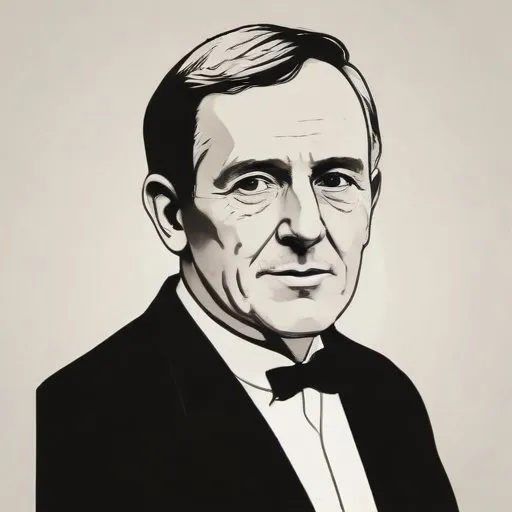
Wilbur Norman Christiansen

Wilbur Norman Christiansen

Wilbur Norman Christiansen was born on August 9th, 1913

Nationality: Australian
Profession: Astronomer and engineer
Full name: Wilbur Norman Christiansen
Occupation: Science and research
Born in: Australia
Famous for: Radio astronomy
Category: Science
Awards: Edgeworth David Medal

Australian astronomer and engineer who developed the first radio telescope and made significant contributions to radio astronomy, including the discovery of the first radio galaxy.

Written by: Cassandra Blake Cassandra Blake

Wilbur Norman Christiansen: The Pioneering Australian Radio Astronomer

Wilbur Norman Christiansen, affectionately known as Chris, was a trailblazing Australian radio astronomer and electrical engineer who made groundbreaking contributions to the field of radio astronomy. He is best known for building the first grating array for scanning the sun at the radio astronomy field station at Potts Hill, New South Wales, and for his work on the Chris Cross Telescope.

Early Life and Education

Christiansen was born on August 9, 1913, in Elsternwick, Victoria, to Wilhelm Christiansen, a minister in the Congregational Church, and Ilma Clarice Christiansen, a music teacher. He was educated at Caulfield Grammar School from 1921 to 1930 and later attended the University of Melbourne, where he earned his Bachelor of Science (B.Sc.) in 1934, Master of Science (M.Sc.) in 1935, and Doctor of Science (D.Sc.) in 1953.

Career Highlights and Major Works

Christiansen's most notable contributions include:

Influence on Modern Society

Christiansen's work in radio astronomy has had a significant impact on our understanding of the universe. His pioneering efforts in building radio telescopes and arrays have paved the way for further research and discovery in the field. His contributions have also inspired future generations of scientists and engineers to pursue careers in radio astronomy.

Personal Milestones and Key Life Events

Christiansen married Elsie Mary Hill in 1938 and had a son, Peter. During his lifetime, he was involved in various philanthropic activities, including supporting the University of Melbourne and the Institution of Engineers Australia.

Controversies and Public Perception

In 1955, Christiansen was questioned before the Royal Commission on Espionage regarding his political orientation and potential connections to communist activities. However, he was ultimately cleared of any wrongdoing.

Legacy and Impact on the Field

Christiansen's legacy in radio astronomy is significant, and his work has had a lasting impact on the field. He is remembered as a pioneer and a trailblazer who paved the way for future generations of scientists and engineers.

Timeline
1913
Birth of Wilbur Norman Christiansen
Wilbur Norman Christiansen was born on August 9, 1913, in Melbourne, Australia.
1935
Graduated from the University of Melbourne
Christiansen graduated from the University of Melbourne in 1935 with a degree in electrical engineering.
1946
Joined the Commonwealth Scientific and Industrial Research Organisation
Christiansen joined the Commonwealth Scientific and Industrial Research Organisation (CSIRO) in 1946 and worked on radio astronomy projects.
1964
Developed the First Radioheliograph
Christiansen developed the first radioheliograph, a device that maps the Suns radio emissions, in the 1960s.
2007
Passed Away
Wilbur Norman Christiansen passed away on April 26, 2007, at the age of 93.
Wilbur Norman Christiansen

Wilbur Norman Christiansen Quiz

What field of study did Wilbur Norman Christiansen make significant contributions to?

Score: 0/5
FAQ
What were Wilbur Norman Christiansens contributions to radio astronomy?
Wilbur Norman Christiansen made significant contributions to the field of radio astronomy, including the development of the Chris-Cross telescope. He was also involved in the discovery of the first quasar.
What awards did Wilbur Norman Christiansen win?
Wilbur Norman Christiansen won the Edgeworth David Medal in 1958 for his contributions to radio astronomy. He was also elected a Fellow of the Australian Academy of Science.
What was Wilbur Norman Christiansens academic career like?
Wilbur Norman Christiansen earned his PhD from the University of Cambridge and went on to become a professor of electrical engineering at the University of Sydney.
What was Wilbur Norman Christiansens early life like?
Wilbur Norman Christiansen was born in 1913 in Melbourne, Australia. He earned his undergraduate degree from the University of Melbourne and later earned his PhD from the University of Cambridge.
How did Wilbur Norman Christiansen die?
Wilbur Norman Christiansen died on November 26, 2007, at the age of 94.

Related People:

Bernard Lovell

Born in 1913

Pioneering radio astronomer who developed radar technology during WWII and later discovered quasars, greatly advancing our understanding of the universe.

Martin Ryle

Born in 1918

A pioneering radio astronomer who made groundbreaking discoveries about the universe, including the detection of quasars and the mapping of the cosmic microwave background radiation.

Fred Hoyle

Born in 1915

A renowned astronomer and science fiction author who proposed the steady state theory of the universe and coined the term "Big Bang", making significant contributions to our understanding of the cosmos.