


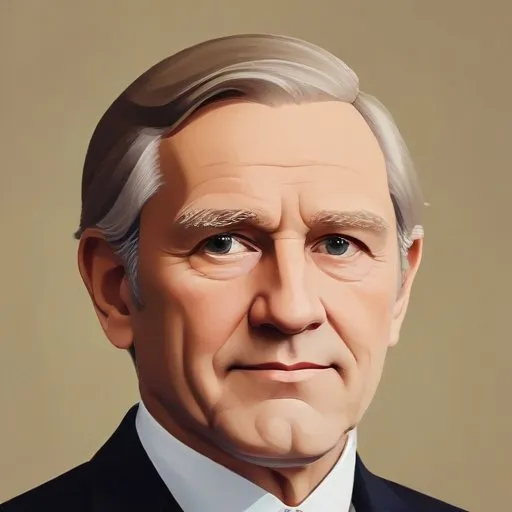
The 4th President of The Church of Jesus Christ of Latter-day Saints, who oversaw significant changes and growth within the Mormon community, and is revered for his spiritual leadership and vision.
Wilford Woodruff, the fourth president of the Church of Jesus Christ of Latter-day Saints (LDS Church), is best known for ending the public practice of plural marriage among members of the LDS Church in 1890. This pivotal decision marked a significant shift in the church's stance on polygamy, and cemented Woodruff's legacy as a leader who navigated the complexities of religious doctrine and societal pressure.
Woodruff was born on March 1, 1807, in Farmington, Connecticut. Growing up, he was drawn to Restorationism, a Christian movement that sought to restore the church to its original apostolic roots. It was during this time that he discovered the teachings of Joseph Smith, the founder of the Latter Day Saint movement. Woodruff's interest in Smith's teachings led him to join the church in 1833, and he soon became an active participant in the early days of Mormonism.
Woodruff's commitment to the church earned him a spot in the Quorum of the Twelve Apostles in 1838, and he was ordained in 1839. He served as a missionary in England from 1839 to 1841, where he led converts from England to Nauvoo, Illinois. Woodruff's leadership skills and dedication to the church did not go unnoticed, and he became a trusted advisor to Joseph Smith.
After Smith's assassination in 1844, Woodruff played a crucial role in the church's subsequent leadership. He served as an apostle and eventually became the president of the church in 1889. It was during his presidency that Woodruff faced mounting pressure from the U.S. government to abandon the practice of polygamy. In 1890, he issued the "Manifesto," which officially disavowed the practice of plural marriage among members of the LDS Church.
Woodruff's decision to end plural marriage had far-reaching consequences for the LDS Church. It paved the way for Utah's statehood in 1896 and marked a significant shift in the church's relationship with the U.S. government. Woodruff's leadership also oversaw significant growth and development within the church, including the construction of temples and the expansion of missionary work.
Woodruff married his first wife, Phebe Whittemore Carter, in 1837. He went on to marry three additional wives between 1852 and 1853, all of whom were plural wives. Woodruff's family life was marked by significant challenges, including the loss of several children and the difficulties of navigating polygamy.
Woodruff was known for his thoughtful and introspective nature. One of his most famous quotes is: "The Lord will not permit his Saints to be led astray, nor will he suffer them to be deceived by their enemies." This quote reflects Woodruff's deep commitment to his faith and his trust in the guidance of the Lord.
Woodruff's life and presidency took place during a tumultuous period in American history. The late 19th century was marked by rapid industrialization, westward expansion, and significant social change. Woodruff's leadership navigated these complexities, and his decision to end plural marriage was a critical turning point in the history of the LDS Church.
Woodruff's contemporaries included other prominent religious leaders, such as Brigham Young and Orson Pratt. While these leaders played important roles in the development of Mormonism, Woodruff's unique approach to leadership and his willingness to adapt to changing circumstances set him apart.
Woodruff's life was marked by a deep commitment to his faith and a willingness to adapt to changing circumstances. His legacy continues to shape the Church of Jesus Christ of Latter-day Saints to this day.
Born in 1801
The 2nd President of The Church of Jesus Christ of Latter-day Saints, a prominent religious leader who played a crucial role in the settlement of Utah and the development of the Mormon faith. He's also known for his polygamous practices and territorial governance.
Born in 1838
The 6th President of The Church of Jesus Christ of Latter-day Saints, a prominent religious leader who played a crucial role in shaping the Mormon faith and its practices, particularly in the early 20th century.
Born in 1805
A prominent leader in the early days of the Latter Day Saint movement, he played a key role in the development of the Church of Jesus Christ of Latter-day Saints and its expansion into the western United States. He's also known for his missionary work and writings about the church's early history.
Born in 1873
The 9th President of The Church of Jesus Christ of Latter-day Saints, a prominent religious leader who oversaw significant church growth and expansion, while also emphasizing education and spiritual development.
Born in 1895
The 12th President of The Church of Jesus Christ of Latter-day Saints, a prominent religious leader who oversaw significant changes and growth within the church, and was a strong advocate for family and social values.
Born in 1910
The 15th President of The Church of Jesus Christ of Latter-day Saints, a prominent religious leader who oversaw significant expansion and modernization of the church, while promoting interfaith dialogue and humanitarian efforts.
99 Years Old
The 16th President of The Church of Jesus Christ of Latter-day Saints, a prominent religious leader who guided millions of Mormons worldwide, known for his humanitarian work and spiritual guidance.
