


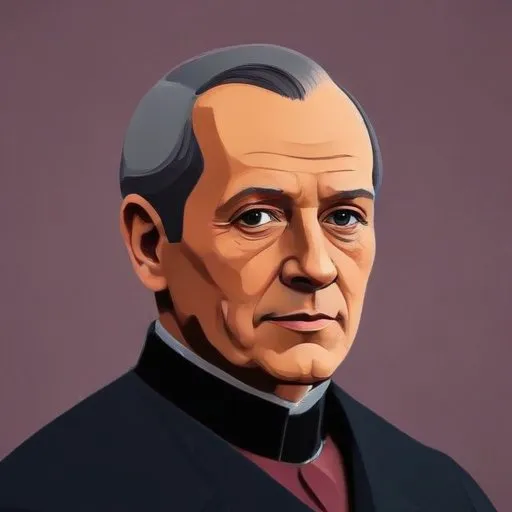
A 19th-century German historian and academic who specialized in medieval history and was a pioneer in the field of diplomatics, known for his critical editions of historical sources.
Wilhelm Wattenbach, a renowned German historian, is best known for his meticulous work on the Monumenta Germaniae Historica, a comprehensive collection of medieval historical documents. His groundbreaking research and scholarly contributions have earned him a revered place in the annals of historical scholarship, shedding light on the previously obscure chronicles and original documents of the Middle Ages.
Born on September 22, 1819, in Rantzau, Holstein, Wattenbach embarked on a lifelong journey of academic pursuits. He studied philology at the esteemed universities of Bonn, Göttingen, and Berlin, laying the foundation for his future endeavors. In 1843, he joined the Monumenta Germaniae Historica project, an undertaking that would occupy him for the remainder of his life.
In 1855, Wattenbach's exceptional skills earned him the position of archivist at Breslau. Seven years later, he became a professor of history at Heidelberg, followed by a professorship at Berlin in 1872. His membership in the directing body of the Monumenta Germaniae Historica and the Academy further solidified his reputation as a leading authority on medieval history.
Wattenbach's magnum opus, Deutschlands Geschichtsquellen im Mittelalter bis zur Mitte des XIII Jahrhunderts (1858), remains a seminal work in the field of medieval history. This definitive guide to the sources of German history in the Middle Ages has undergone multiple editions, a testament to its enduring relevance. His other notable works include:
Wattenbach's meticulous approach to historical research and his unparalleled expertise in medieval chronicles have left an indelible mark on the field of historical scholarship. His contributions have paved the way for future generations of historians, allowing them to delve deeper into the complexities of the Middle Ages.
Wilhelm Wattenbach passed away on September 20, 1897, in Frankfurt, leaving behind a legacy of scholarly excellence and a treasure trove of historical knowledge. His remarkable career serves as a testament to the power of dedication and a lifelong passion for uncovering the secrets of the past.
Born in 1795
A pioneering historian who revolutionized the field by emphasizing empirical research and primary sources, known for his meticulous and objective approach to historical writing.
Born in 1817
A renowned historian and scholar who wrote extensively on ancient Rome, earning a Nobel Prize in Literature for his monumental work "The History of Rome".
Born in 1805
A German philologist and politician who made significant contributions to the field of classical philology, particularly in the study of ancient Greek literature and language.
Born in 1817
A 19th-century German historian and politician who pioneered the modern historical method, emphasizing objective research and accuracy, and served as a key figure in shaping Germany's national identity.
