


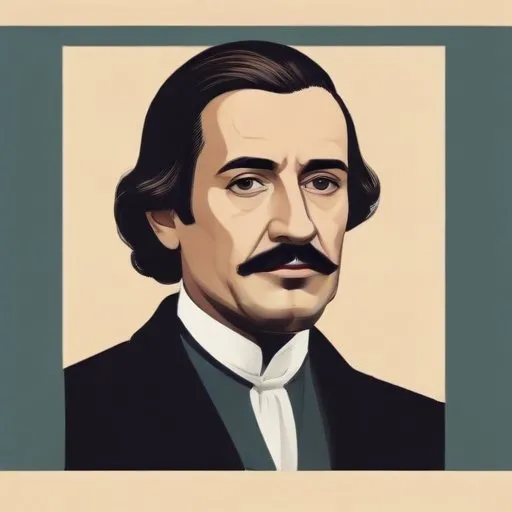
Developed groundbreaking theories on the universe's expansion and curvature, and his work laid the foundation for modern cosmology. He's also known for his contributions to general relativity and the concept of dark matter.
Willem de Sitter, a Dutch mathematician, physicist, and astronomer, is renowned for his groundbreaking contributions to the field of physical cosmology. He is best known for co-authoring a paper with Albert Einstein in 1932, discussing the implications of cosmological data for the curvature of the universe, and for introducing the concept of the de Sitter space and de Sitter universe.
Born on May 6, 1872, in Sneek, Netherlands, de Sitter studied mathematics at the University of Groningen. He then joined the Groningen astronomical laboratory, where he began his journey in astronomy.
De Sitter's work has had a profound impact on our understanding of the universe. His concept of the de Sitter universe has been influential in the development of modern cosmology, and his work with Einstein has shaped our understanding of the curvature of the universe.
The crater De Sitter on the Moon, the asteroid 1686 De Sitter, and the De Sitter universe are all named in his honor, a testament to his significant contributions to the field of astronomy.
De Sitter's family was also involved in science, with one of his sons, Ulbo de Sitter, becoming a Dutch geologist, and one of Ulbo's sons becoming a Dutch sociologist.
De Sitter passed away on November 20, 1934, after a brief illness, leaving behind a legacy that continues to inspire and influence scientists today.
Born in 1879
A brilliant physicist who developed the theory of relativity and is considered one of the most influential scientists of the 20th century, known for his groundbreaking work in physics and mathematics.
Born in 1885
A pioneer in quantum mechanics, he introduced the concept of wave-particle duality, revolutionizing our understanding of atomic structure. His philosophical approach to science also explored the nature of reality and human understanding.
Born in 1867
A pioneering scientist who pioneered radioactivity research, discovering elements polonium and radium, and paving the way for breakthroughs in medicine and energy.
Born in 1901
A pioneer in quantum mechanics, he formulated the uncertainty principle, which revolutionized our understanding of the atomic world. His groundbreaking work reshaped modern physics.
Born in 1858
A pioneer in quantum theory, he introduced the concept of the Planck constant, revolutionizing our understanding of energy and matter.
Born in 1853
Developed the theory of electromagnetism, predicting the existence of radio waves and paving the way for Einstein's theory of relativity. Contributed to the understanding of light, space, and time.
Born in 1902
A brilliant mind who formulated the Dirac equation, a fundamental concept in quantum mechanics, and predicted the existence of antimatter. His work revolutionized our understanding of the universe.
