


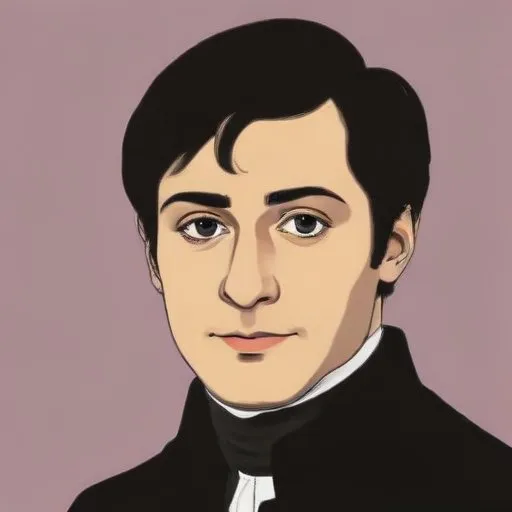
A claimant to the County of Flanders, known for his attempts to assert his rights to the title through military campaigns and alliances. He played a significant role in the politics of 12th-century France and Flanders.
William Clito, a member of the esteemed House of Normandy, is renowned for his tumultuous reign as the Count of Flanders from 1127 until his untimely death in 1128. His life was marked by a series of power struggles, alliances, and rivalries that ultimately led to his downfall.
Born on October 25, 1102, William Clito was the son of Robert Curthose, the Duke of Normandy, and Sibylla of Conversano. His father's defeat and capture at the hands of his uncle, King Henry I of England, in 1106 led to William being placed in the custody of Helias of Saint Saens, Count of Arques. This early experience would shape William's destiny and set him on a path of rivalry with his uncle.
As William grew older, he became increasingly embroiled in the struggle for the Duchy of Normandy. His uncle, King Henry I, viewed him as a rival and sought to undermine his claim to the throne. William responded by forming an alliance with King Louis VI of France, who installed him as the new Count of Flanders following the assassination of Charles the Good in 1127.
However, William's reign was short-lived, as the Flemish people soon revolted against him. He was killed in the ensuing struggle against another claimant to Flanders, Thierry of Alsace, on July 28, 1128.
William Clito's life and death are set against the backdrop of medieval power struggles and alliances. His story highlights the complexities of royal succession and the rivalries that often accompanied it. Despite his untimely demise, William's legacy serves as a testament to the intricate web of relationships and alliances that shaped the course of European history.
William Clito's story serves as a reminder of the complexities of power and the consequences of rivalries and alliances. His legacy continues to resonate in the study of medieval history and politics, offering insights into the intricate relationships between royal houses and the struggles that shaped the course of European history.
Born in 1133
King of England from 1154 to 1189, known for establishing a strong centralized government, reforming the English church, and his tumultuous relationships with Thomas Becket and his sons.
Born in 1650
The Prince of Orange, King of England, Scotland, and Ireland, led the Glorious Revolution, overthrowing the Catholic King James II, and ruled with his wife Mary II, establishing a Protestant monarchy. He's also known for his military victories in Ireland and Europe.
Born in 1133
King of England from 1154 to 1189, known for establishing a strong centralized government, reforming the English church, and his tumultuous relationships with Thomas Becket and his sons.
Born in 1367
The last king of the House of Plantagenet, deposed in a coup, known for his extravagance and tyranny, leading to his downfall and the rise of the Lancastrian dynasty.
