


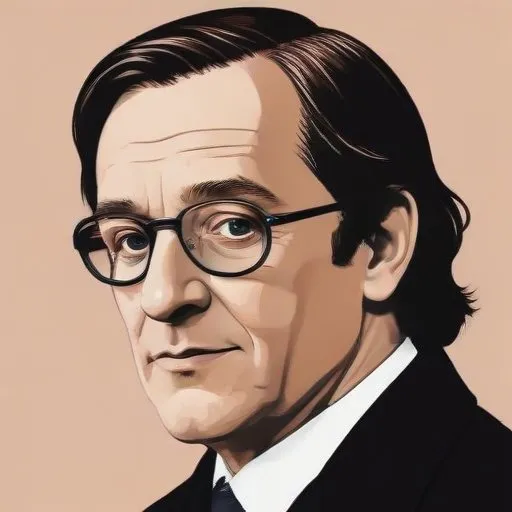
English minister and pharmacist who discovered the process of making hard-paste porcelain in Europe, and founded the Plymouth Porcelain Factory.
William Cookworthy, a multifaceted English Quaker minister, pharmacist, and innovator, is renowned for being the first person in Britain to discover the secret of making hardpaste porcelain, a feat previously exclusive to China.
His groundbreaking innovation not only enabled mass production of high-quality porcelain in Britain but also led to the discovery of china clay in Cornwall, catapulting him to the forefront of the ceramic industry.
Born on April 12, 1705, in Kingsbridge, Devon, to Quaker parents William and Edith Cookworthy, William was a bright and ambitious child.
Tragedy struck when his father passed away in 1718, and the family's investment in the South Sea Company failed in 1720, halting William's education.
However, fate intervened in the form of an apprenticeship offer from the Bevan Brothers, two Quaker apothecaries in London, which William accepted, walking to London to take up the opportunity.
After completing his apprenticeship, Cookworthy moved to Plymouth, where he established a thriving pharmacy, Bevan and Cookworthy.
He eventually brought his brothers Philip and Benjamin into the partnership and bought out the Bevans' interest in 1745, solidifying his position as a successful pharmacist and entrepreneur.
Cookworthy's commitment to the Quaker community earned him recognition as an Elder, and he became a prominent figure among Devon Quakers.
Cookworthy's fascination with porcelain production led him to experiment with various techniques, ultimately discovering the secret of making hardpaste porcelain in Britain.
In 1768, he founded a factory in Plymouth specifically for producing Plymouth porcelain, which became a huge success.
Two years later, he relocated the factory to Bristol, renaming it Bristol porcelain, before selling it to a partner in 1773.
Cookworthy's pioneering work in porcelain production had a profound impact on the British ceramic industry, paving the way for mass production of high-quality porcelain.
His discovery of china clay in Cornwall further cemented his legacy, as it became a vital resource for the industry.
Today, William Cookworthy is remembered as a visionary innovator, pharmacist, and Quaker minister who left an indelible mark on British industrial history.
Born in 1778
Pioneering chemist and physicist who discovered several elements, including potassium and sodium, and invented the Davy lamp, a safety lamp for miners. His groundbreaking work laid the foundation for modern chemistry and electrochemistry.
Born in 1743
Father of modern chemistry, discovered oxygen, and developed a systematic method of chemical nomenclature. He laid the foundation for modern chemistry and paved the way for future scientific discoveries.
Born in 1742
A pioneering pharmaceutical chemist who discovered oxygen, chlorine, and other elements, and made significant contributions to the field of chemistry.
Born in 1728
Discovered magnesium and isolated carbon dioxide, making significant contributions to the field of chemistry.
