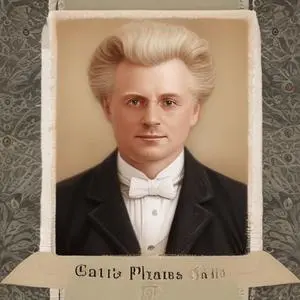
Carl Wilhelm Scheele: The Pioneering Chemist Behind Oxygen and Beyond
A Legacy of Discovery
Carl Wilhelm Scheele is renowned for his groundbreaking contributions to the field of chemistry, including the discovery of oxygen, molybdenum, tungsten, barium, hydrogen, and chlorine. This Swedish-German pharmaceutical chemist left an indelible mark on the scientific community, and his findings continue to shape our understanding of the natural world.
Early Life and Education
Born on December 9, 1742, in Stralsund, Western Pomerania, Scheele was raised in a family of modest means. His father, Joachim or Johann Christian Scheele, was a grain dealer and brewer, while his mother, Margaretha Eleanore Warnekros, instilled in him a love for learning. Scheele's early education was largely self-directed, with friends of his parents teaching him the art of reading prescriptions and the meaning of chemical and pharmaceutical signs.
The Apprentice Years
At the tender age of 14, Scheele began his apprenticeship under Martin Andreas Bauch, a family friend and apothecary in Gothenburg. For eight years, he honed his skills, running experiments late into the night and devouring the works of prominent chemists like Nicolas Lemery, Caspar Neumann, Johann von Löwenstern-Kunckel, and
Georg Ernst Stahl. Stahl's phlogiston theory, in particular, would greatly influence Scheele's later theoretical speculations.
Key Discoveries and Contributions
Scheele's most notable achievement is the discovery of oxygen, although Joseph Priestley published his findings first. He also identified a plethora of elements, including molybdenum, tungsten, barium, hydrogen, and chlorine. Additionally, he discovered several organic acids, such as tartaric, oxalic, uric, lactic, and citric, as well as hydrofluoric, hydrocyanic, and arsenic acids.
Personal Milestones and Relationships
In 1765, Scheele worked under the progressive apothecary C.M. Kjellström in Malmö, where he met Anders Jahan Retzius, a lecturer at the University of Lund. This encounter marked the beginning of a lifelong friendship and collaborative partnership. During his time in Stockholm, Scheele became acquainted with prominent figures, solidifying his position within the scientific community.
Philosophical Beliefs and Influences
Scheele's theoretical speculations were heavily influenced by Georg Ernst Stahl's phlogiston theory. He also drew inspiration from the works of Nicolas Lemery, Caspar Neumann, and Johann von Löwenstern-Kunckel. Scheele's own philosophical contributions include his theory on the composition of air, which posited that atmosphere consisted of two components: a "fire-air" and a "foul-air."
Legacy and Impact
Carl Wilhelm Scheele's discoveries and contributions have had a profound impact on modern chemistry. His identification of oxygen paved the way for later scientists, such as
Antoine Lavoisier, to build upon. Today, Scheele is recognized as one of the most important chemists of the 18th century, and his work continues to inspire new generations of scientists.
Trivia and Fun Facts
- Scheele preferred speaking German to Swedish throughout his life, as German was commonly spoken among Swedish pharmacists.
- He was known for his meticulous and thorough approach to experimentation, often repeating experiments multiple times to ensure accuracy.
- Scheele's discoveries were often overshadowed by those of his contemporaries, such as Joseph Priestley, due to his delay in publishing his findings.
Carl Wilhelm Scheele's remarkable life and achievements serve as a testament to the power of human curiosity and determination. As we continue to build upon his discoveries, we honor his legacy and the profound impact he has had on the world of chemistry.