


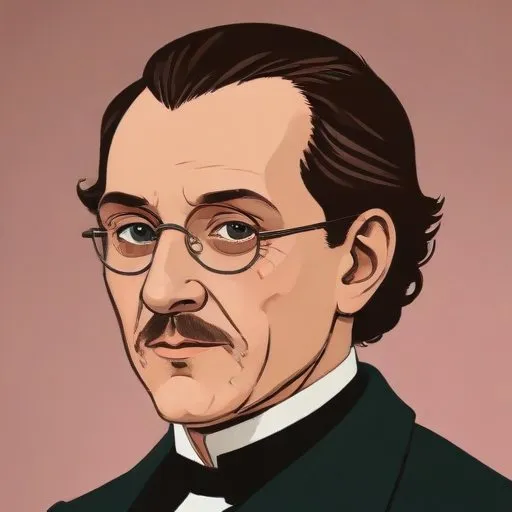
Developed the phlogiston theory, a precursor to modern chemistry, and made significant contributions to the field of medicine.
Georg Ernst Stahl, a German chemist, physician, and philosopher, is widely recognized as a stalwart advocate of vitalism, a philosophical and scientific movement that emphasized the importance of a vital force or principle in living organisms. His work on phlogiston, a hypothetical substance thought to be responsible for combustion, was a cornerstone of chemical understanding until the late 18th century.
Born on October 22, 1659, in Anspach, Bavaria, Stahl was raised in a devout Lutheran household, where his father, Johann Lorentz Stahl, was a pastor. This pious upbringing instilled in him a strong sense of morality and a passion for knowledge. From a young age, Stahl demonstrated a keen interest in chemistry, mastering university lecture notes and a difficult treatise by Johann Kunckel by the age of 15.
In 1683, Stahl earned his M.D. from the University of Jena, where he later taught and gained a reputation as a brilliant educator.
In 1687, he became the personal physician to Duke Johann Ernst of Sachsen-Weimar, a position that cemented his status as a respected medical professional.
In 1694, Stahl took up the chair of medicine at the University of Halle, where he worked alongside his friend Friedrich Hoffmann.
From 1715 until his death, Stahl served as the physician and counselor to King Friedrich Wilhelm I of Prussia and headed Berlins Medical Board.
Stahl's most significant contribution to science lies in his advocacy of vitalism, which posits that living organisms possess a unique vital force or principle that cannot be reduced to mechanical or chemical explanations. He believed that this vital force was responsible for the unique properties of living matter. His work on phlogiston, a hypothetical substance thought to be responsible for combustion, was a direct application of vitalist principles to chemical processes.
Stahl married twice, losing both wives to puerperal fever in 1696 and 1706.
He had a son, Johnathan, and a daughter, who died in 1708.
Despite personal tragedies, Stahl continued to work and publish, although he became increasingly withdrawn and depressed.
Stahl's work on vitalism and phlogiston, although eventually superseded by newer scientific theories, had a significant impact on the development of chemistry and medicine in the 17th and 18th centuries. His emphasis on the importance of a vital force in living organisms paved the way for later scientific discoveries and continues to influence philosophical debates about the nature of life.
Georg Ernst Stahl's life and work reflect the intellectual and cultural ferment of the late 17th and early 18th centuries, a time when science, philosophy, and medicine were rapidly evolving. His contributions to vitalism and phlogiston theory, although now largely superseded, remain an important chapter in the history of scientific thought.
Today, Stahl's legacy is a testament to the power of human curiosity and the importance of interdisciplinary approaches to understanding the natural world.
Born in 1743
Father of modern chemistry, discovered oxygen, and developed a systematic method of chemical nomenclature. He laid the foundation for modern chemistry and paved the way for future scientific discoveries.
Born in 1742
A pioneering pharmaceutical chemist who discovered oxygen, chlorine, and other elements, and made significant contributions to the field of chemistry.
Born in 1778
Pioneering chemist and physicist who discovered several elements, including potassium and sodium, and invented the Davy lamp, a safety lamp for miners. His groundbreaking work laid the foundation for modern chemistry and electrochemistry.
83 Years Old
A British bassist who played with bands like The Levellers and Faithless, known for his energetic stage presence and distinctive bass lines.
Born in 1776
Formulated the molecular hypothesis, which states that equal volumes of gases at the same temperature and pressure contain an equal number of molecules. This concept is fundamental to understanding chemistry and physics.
Born in 1852
Discovered the element fluorine and developed an electric arc furnace, earning a Nobel Prize in Chemistry in 1906.
