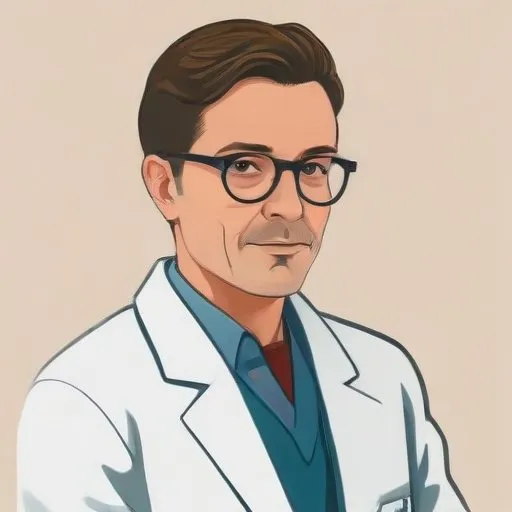
Urban Hjrne: The Renaissance Man of 17th Century Sweden
A Multifaceted Genius
Urban Hjrne was a Swedish polymath who made significant contributions to the fields of chemistry, geology, medicine, and literature. He is renowned for being a pioneer in these fields, and his works had a profound impact on the intellectual landscape of 17th century Sweden.
Early Life and Education
Born on December 20, 1641, in Skworitz, near Nyenschantz, Swedish Ingria, Urban Hjrne was the son of vicar Erlandus Jon Hirne and Christina Tomasdotter Schmidt. He was admitted to the high school gymnasium in Dorpat in 1655 and later studied at Uppsala University, where he began his medical education in 1661. Hjrne's thirst for knowledge led him to travel to the Netherlands, England, and France, where he visited leading research centers for medicine.
Medical Career and Royal Patronage
In 1670, Hjrne became a doctor of medicine at Angers, France. He settled as a physician in Stockholm in 1674, where his practice primarily served the aristocracy. His expertise earned him the position of first physician to King
Charles XI of Sweden in 1684, and he was ennobled in 1689.
Literary Pursuits
Hjrne's literary contributions are notable, particularly his novel
Stratonice, a partly autobiographical romance of seduction. Written between 1665 and 1668, it is often claimed to be the first Swedish novel. His writing reflects his fascination with the human experience, blending fact and fiction to create a unique narrative.
Fight Against Witch Trials
Urban Hjrne is also remembered for his courageous stance against witch trials. As a member of the Witchcraft Commission during the Katarina witch trials in 1676, he began to doubt the validity of the child witnesses' testimonies, leading to their exposure as liars. This ultimately led to the dissolution of the commission and the witch hunt.
Personal Life and Legacy
Hjrne built an impressive research library of 3,500 books, one of the largest in Sweden at the time. He married three times, to Maria Svahn, Catharina Elisabeth Bergenhielm, and Elisabeth Carlsdotter. He passed away in Stockholm on March 10, 1724, leaving behind a rich legacy that continues to inspire scholars and academics.
Contributions to Science and Society
Urban Hjrne's contributions extend beyond his own accomplishments. He was elected a Fellow of the Royal Society in 1669 and served as assessor of the Board of Mines (
Bergskollegium) in 1675. He also headed the
Laboratorium Chemicum in 1683. His work in chemistry, geology, and medicine paved the way for future generations of scientists.
Impact on Modern Society
Urban Hjrne's eclectic interests and pursuits have had a lasting impact on modern society. His fight against witch trials and his advocacy for scientific inquiry have inspired countless individuals to question dogma and seek truth. His literary works have contributed to the rich cultural heritage of Sweden, while his scientific discoveries have advanced our understanding of the natural world.
FAQ
What was Urban Hjärnes role in Swedish science and medicine?
Urban Hjärne was a Swedish chemist, geologist, and physician who made significant contributions to the development of science and medicine in Sweden during the 17th century.
What were Urban Hjärnes most notable achievements?
Some of Urban Hjärnes most notable achievements include his work on the discovery of the mineral cobalt, his development of new medical treatments, and his promotion of scientific education in Sweden.
How did Urban Hjärnes work impact Swedish science and medicine?
Urban Hjärnes work had a lasting impact on Swedish science and medicine, including the establishment of the first medical school in Sweden and the development of new treatments for diseases.
What is Urban Hjärnes legacy in Swedish history?
Urban Hjärnes legacy in Swedish history is that of a pioneering figure who made significant contributions to the development of science, medicine, and education in Sweden.
How is Urban Hjärne remembered in modern times?
Urban Hjärne is remembered in modern times as a dedicated scientist and physician who played a significant role in shaping Swedish science and medicine.