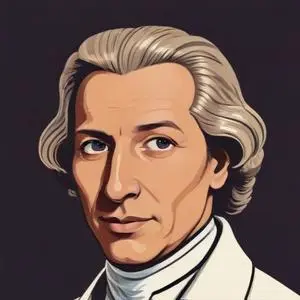
Anders Celsius

Anders Celsius

Anders Celsius was born on November 27th, 1701

Full Name: Anders Celsius
Nationality: Swedish
Occupation: Astronomer, physicist, and mathematician
Field: Astronomy, thermometry
Invention: Celsius scale
Notable Work: Observationes de triangulis
Influenced by: Isaac Newton
Era: Age of Enlightenment

A Swedish astronomer, physicist, and mathematician who developed the Celsius temperature scale, still widely used today to measure temperature. He also made significant contributions to astronomy, including the discovery of the aurora borealis.

Written by: Carlos Hernandez Carlos Hernandez

Anders Celsius: The Father of the Celsius Scale

A Brief Overview

Anders Celsius, a Swedish astronomer, physicist, and mathematician, is renowned for his groundbreaking work in developing the Celsius temperature scale, which revolutionized the field of science. Born on November 27, 1701, in Uppsala, Sweden, Celsius made significant contributions to the study of astronomy, physics, and mathematics, earning him a distinguished place in the annals of scientific history.

Early Life and Education

Celsius was born into a family of esteemed academics. His father, Nils Celsius, was a professor of astronomy, and his uncle, Olof Celsius, was a renowned botanist. Anders's talent for mathematics was evident from an early age, and he went on to study at Uppsala University, where his father taught. In 1730, Celsius became a professor of astronomy at the university, following in his father's footsteps.

Notable Achievements

Travel and Collaborations

Celsius traveled extensively throughout Europe, visiting prominent observatories in Germany, Italy, and France from 1732 to 1735. During this period, he collaborated with influential scientists, further expanding his knowledge and expertise.

Legacy and Impact

Anders Celsius's legacy extends far beyond his scientific contributions. His work on the Celsius temperature scale has had a profound impact on modern society, influencing fields such as medicine, physics, and engineering. The Celsius scale has become an integral part of our daily lives, used in weather forecasting, cooking, and countless other applications.

Personality andTrivia

Final Years and Legacy

Anders Celsius passed away on April 25, 1744, at the age of 42. His untimely death was a significant loss to the scientific community, but his contributions continue to inspire and influence generations of scientists and researchers. Celsius's legacy serves as a testament to the power of human curiosity and dedication to advancing our understanding of the world.
Timeline
1701
Birth of Anders Celsius
Anders Celsius, Swedish astronomer, physicist, and mathematician, was born in Uppsala, Sweden.
1730
Professor of Astronomy
Celsius was appointed professor of astronomy at the University of Uppsala, where he made significant contributions to the field.
1741
Measurement of the Aurora Borealis
Celsius made precise measurements of the Aurora Borealis, providing valuable insights into the phenomenon.
1742
Proposal of the Centigrade Scale
Celsius proposed the centigrade scale, a thermometer system that would later become the standard for temperature measurement.
1744
Death of Anders Celsius
Anders Celsius died on April 25, 1744, in Uppsala, Sweden.
Anders Celsius

Anders Celsius Quiz

What field of science did Anders Celsius primarily contribute to?

Score: 0/5
FAQ
What was Anders Celsiuss contribution to astronomy?
Anders Celsius made significant contributions to astronomy, particularly in the field of celestial mechanics. He was one of the first scientists to study the aurora borealis and the Earths magnetic field.
How did Anders Celsius develop the Celsius scale?
Anders Celsius developed the Celsius scale, a temperature scale that is still widely used today, by dividing the range between the freezing and boiling points of water into 100 equal parts.
What were Anders Celsiuss views on the nature of the universe?
Anders Celsius believed in the Copernican heliocentric model of the universe, which placed the Sun at the center of the solar system. He was also interested in the study of comets and the possibility of extraterrestrial life.
What was Anders Celsiuss role in the Swedish Academy of Sciences?
Anders Celsius was one of the founders of the Swedish Academy of Sciences and served as its secretary for many years. He played a key role in promoting scientific research and education in Sweden.
What was Anders Celsiuss legacy in scientific history?
Anders Celsiuss legacy in scientific history is that of a pioneering astronomer and physicist who made significant contributions to our understanding of the universe. He is remembered as one of the most important Swedish scientists of the 18th century.

Related People:

Carl Linnaeus

Born in 1707

Developed the system of binomial nomenclature, which is still used today to classify and name living organisms. This system has had a profound impact on the fields of biology, ecology, and conservation.

Astrid Lindgren

Born in 1907

Creator of beloved children's books and characters, including Pippi Longstocking, that have captivated readers worldwide with their whimsical storytelling and strong female protagonists.

Alfred Nobel

Born in 1833

A Swedish chemist and engineer who invented dynamite and established a prestigious award recognizing outstanding contributions in fields like literature, peace, and science.

Selma Lagerlöf

Born in 1858

A pioneering female writer and educator who won the Nobel Prize in Literature in 1909, known for her vivid storytelling and exploration of Swedish folklore.

Pär Lagerkvist

Born in 1891

A Swedish literary mastermind, renowned for his poignant and thought-provoking works that explore the human condition, often blending elements of mysticism and social commentary.

Torgny Lindgren

87 Years Old

A celebrated Swedish writer and poet, known for his unique blend of mysticism, humor, and social commentary in his works, which often explored the human condition.

Harry Martinson

Born in 1904

A Swedish literary mastermind, renowned for his poignant and evocative works that explored the human condition, earning him the Nobel Prize in Literature in 1974.

Erik Axel Karlfeldt

Born in 1864

A Swedish poet and literary historian who was awarded the Nobel Prize in Literature in 1931 for his poetry's lyric style and exploration of Swedish folklore. His works are still widely read and studied in Sweden today.