


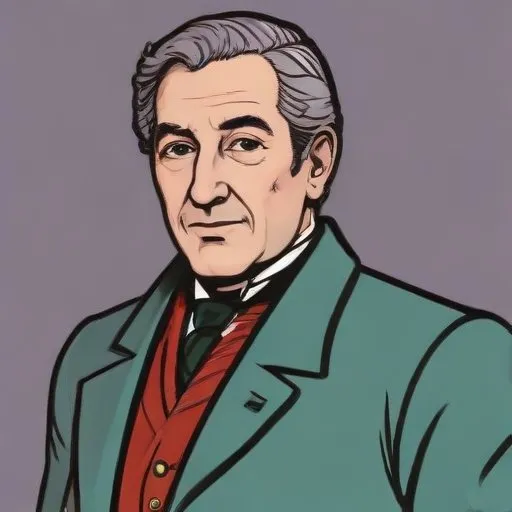
Scottish engineer and shipbuilder who pioneered the development of iron-hulled ships, revolutionizing maritime trade and transportation. He also designed and built the first steam-powered warship.
William Crichton, a Scottish engineer and shipbuilder, is renowned for revolutionizing the maritime industry in Turku, Finland, during the late 19th century. Through his exceptional leadership and innovative spirit, he transformed the city's shipbuilding landscape, leaving an indelible mark on the region's economy and history.
Born on November 29, 1827, in Leith, Scotland, Crichton was raised in a family steeped in maritime tradition. His father, George Crichton, was a shipowner, and his mother's family had a long history of involvement in shipbuilding and whaling. The example set by his older brothers, Alexander and Edward, who studied at the Royal Naval College, Greenwich, and worked in Scottish engineering companies, inspired Crichton to pursue a career in engineering.
In 1850, at the age of 23, Crichton moved to Turku, Finland, to lead a steam engine construction project at Cowie and Eriksson, a local engineering company. His exceptional skills and dedication quickly earned him recognition, and he was soon offered a position at Fiskars in Helsinki. However, the Crimean War intervened, and Crichton was arrested due to his Scottish nationality. With the help of family connections, he was released and went on to work at Izhorsk Works in Saint Petersburg for eight years.
In 1862, Crichton returned to Turku, where he was offered the opportunity to buy half of Cowie and Eriksson Company. He accepted the offer and renamed the company Wm Crichton & Co. Under his leadership, the company flourished, becoming the largest in Turku, specializing in shipbuilding and steam engine construction. The company's main customer was the Imperial Russian Navy, which provided a steady stream of lucrative contracts.
During his lifetime, Crichton's company built numerous ships and steam engines, cementing his reputation as a visionary engineer and entrepreneur. He played a significant role in developing Turku's maritime industry, creating jobs and stimulating economic growth in the region. His company remained in operation until 1965, long after his passing in 1889.
Crichton was survived by twelve children, who sold the company to investors after his death. He was known for his strong family values and was deeply devoted to his wife and children. His brothers, Alexander and Edward, also made significant contributions to the engineering and shipbuilding industries, ensuring that the Crichton family name remained synonymous with excellence and innovation.
William Crichton's remarkable life and achievements continue to inspire generations of engineers, entrepreneurs, and historians. His legacy serves as a testament to the power of innovation, hard work, and determination, leaving an enduring impact on the maritime industry and the city of Turku.
Born in 1810
Developed the Froude number, a crucial concept in fluid dynamics, and designed innovative ship hulls that revolutionized naval architecture.
Born in 1806
A visionary engineer who revolutionized transportation with innovative designs, including the iconic Clifton Suspension Bridge, which transformed urban landscapes.
Born in 1926
Pioneering neurosurgeon who developed the first head transplant procedure and successfully transplanted the head of a monkey in 1970, paving the way for future organ transplantation research.
Born in 1757
A Scottish architect and engineer renowned for designing iconic bridges, including the Menai Suspension Bridge, which revolutionized transportation and connected communities.
Born in 1736
Improved steam engine efficiency, revolutionizing industry and transportation. Known for his innovative designs and patents that transformed the Industrial Revolution.
