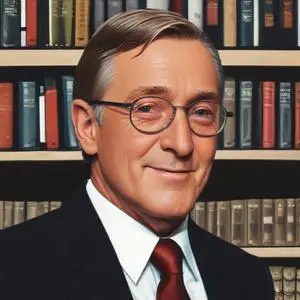
William F. Buckley, Jr.: The Godfather of Conservatism
The Maverick of Modern Conservatism
William F. Buckley, Jr. is known for being a pioneer of modern American conservatism, shaping the political landscape with his sharp wit, biting humor, and unwavering principles. As a renowned author, commentator, and intellectual, Buckley's influence extends far beyond the realm of politics, resonating with audiences across the spectrum.
Philosophical Contributions and Beliefs
Buckley's philosophy revolved around traditional conservatism, emphasizing limited government intervention, individual freedom, and the importance of faith and morality in public life. His intellectual prowess earned him the respect of both adversaries and admirers alike. He was a fierce critic of liberalism, socialism, and communism, uncompromising in his defense of American exceptionalism.
Personal Milestones and Key Life Events
- November 24, 1925: Born in New York City to a wealthy oil family.
- 1944: Graduated from Millbrook School and later attended Yale University, where he excelled in debate and founded the Yale Daily News.
- 1951: Published his first book, God and Man at Yale, which critiqued Yale's liberal leanings.
- 1955: Founded the National Review, a publication that became the torchbearer of modern conservatism.
- 1965: Ran for Mayor of New York City, albeit unsuccessfully, but garnered significant attention for his unconventional campaign.
Influence on Modern Society
Buckley's impact on modern society is immeasurable. He:
- Inspired a generation of conservative thinkers, including Ronald Reagan, George Will, and Pat Buchanan.
- Popularized conservative ideology through his writings, debates, and television appearances.
- Shaped the course of American politics, influencing policy decisions and presidential elections.
Career Highlights and Major Works
Buckley's literary output was prolific, with over 50 books and numerous articles to his credit. Some notable works include:
- God and Man at Yale (1951)
- Up from Liberalism (1959)
- Did You Ever See a Dream Walking? (1970)
- Miles Gone By: A Literary Autobiography (2004)
Controversies and Public Perception
Buckley's unapologetic style and strong convictions often courted controversy. He was criticized for his views on:
- Civil rights, where he advocated for gradual, rather than rapid, social change.
- Anti-communism, with some labeling him a "Red-baiter" for his aggressive stance against communist ideologies.
- Race relations, with some perceiving his statements as insensitive or inflammatory.
Quotes and Memorable Sayings
- "I would rather be governed by the first 2,000 people in the Boston telephone directory than by the Harvard University faculty."
- "A Conservative is a fellow who is standing athwart history, yelling 'Stop!'"
Historical Context and Legacy
William F. Buckley, Jr. passed away on February 27, 2008, leaving behind a rich intellectual and cultural heritage. His legacy extends beyond his own accomplishments, as he laid the groundwork for modern conservatism and continues to inspire new generations of thinkers.
Visual Timeline and Milestones

Awards and Honors
Buckley received numerous accolades, including:
- Presidential Medal of Freedom (1991)
- National Medal of Humanities (1991)
- Francis Boyer Award (1993)
Educational Contributions and Influence
Buckley's intellectual generosity extended to academia, where he:
- Served as a presidential appointee to the National Council on the Humanities.
- Founded the National Review Institute, a think tank dedicated to conservative thought.
FAQ
What was William F. Buckley Jr.s role in shaping American conservatism?
William F. Buckley Jr. was a prominent figure in shaping American conservatism, founding the National Review in 1955 and serving as its editor-in-chief for many years. He was a vocal advocate for conservative principles and values.
How did William F. Buckley Jr.s early life influence his political ideology?
William F. Buckley Jr.s early life, including his education at Yale University and his service in the U.S. Army, shaped his political ideology. His experiences as a young conservative in a predominantly liberal intellectual environment influenced his later writing and activism.
How did William F. Buckley Jr.s writing influence American politics?
William F. Buckley Jr.s writing had a profound influence on American politics, shaping the development of conservative thought and inspiring generations of politicians, policymakers, and journalists.
What is William F. Buckley Jr.s legacy in American politics?
William F. Buckley Jr.s legacy is one of intellectual rigor, wit, and unwavering commitment to conservative principles. His influence on American politics continues to be felt today, shaping the course of conservative thought and action.