


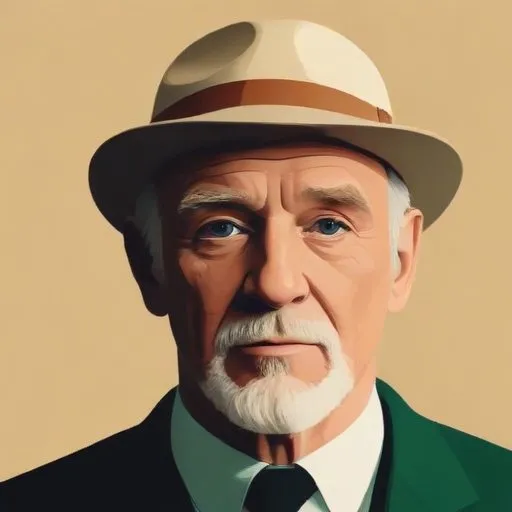
Noted Irish actor and producer who founded the Abbey Theatre and played a crucial role in the development of Irish theatre and cinema. He was a pioneer in promoting Irish culture and identity through his work.
William George Fay, an actor and theatre producer, is renowned for co-founding the Abbey Theatre, a Dublin-based institution that revolutionized Irish theatre. Alongside his brother Frank, Fay played a pivotal role in shaping the Abbey style of acting, nurturing Irish acting talent, and leaving an indelible mark on the world of theatre.
Born in Dublin on November 12, 1872, Fay attended Belvedere College, where his passion for theatre was ignited. He began his career in the 1890s, touring Ireland, Scotland, and Wales with a theatre company. Upon his return to Dublin, he collaborated with his brother Frank, staging productions in local halls and eventually forming the W. G. Fay's Irish National Dramatic Company.
In 1904, Fay, along with his brother and other prominent Irish writers, founded the Abbey Theatre. This innovative venture aimed to promote Irish theatre, foster local talent, and provide a platform for the country's rich literary heritage. Fay's vision and dedication were instrumental in shaping the Abbey's unique style of acting, which emphasized naturalism and authenticity.
Following a disagreement with the Abbey's directors in 1908, Fay and his brother emigrated to the United States, where they continued to work in theatre. However, in 1914, Fay moved to London, where he established himself as a respected actor on stage and screen. One of his most notable film roles was as Father Tom in Carol Reed's Odd Man Out (1947), a film that showcased the talents of several Abbey Theatre alumni.
Fay's memoir, The Fays of the Abbey Theatre, published in 1935, offers a unique insight into the early days of the Abbey Theatre and the Fay brothers' contributions to Irish theatre. This candid and engaging account provides a fascinating glimpse into Fay's life and the development of the Abbey's distinctive style.
Fay was a passionate advocate for the importance of theatre in preserving and promoting Irish culture. He believed that the arts had the power to inspire and educate, and that the Abbey Theatre could serve as a beacon for Irish identity and creativity.
Fay's contributions to Irish theatre have had a lasting impact on modern society. The Abbey Theatre, which he co-founded, continues to be a vibrant cultural institution, promoting Irish literature and nurturing new talent. Fay's commitment to preserving Irish cultural heritage has inspired generations of artists, writers, and actors.
"The theatre is not a place for showing off, but for showing the truth." - William Fay
Fay's legacy extends beyond his own achievements to the countless actors, writers, and directors who have been inspired by his work. The Abbey Theatre, now a national institution, remains a testament to Fay's vision and dedication. His contributions to Irish theatre have left an indelible mark on the cultural landscape of Ireland and beyond.


Fay's determination to promote Irish culture and his passion for theatre have inspired generations of artists and audiences alike. His legacy serves as a testament to the power of dedication and perseverance in the pursuit of one's vision.
Fay's contributions to Irish theatre have been recognized with numerous awards and honors, including his induction into the Irish Theatre Hall of Fame.
Born in 1865
A renowned Irish wordsmith and dramatist, celebrated for his mystical and nationalistic verse that explores the human condition, as well as his contributions to the Irish Literary Revival.
Born in 1880
Irish playwright and memoirist known for his powerful, realistic portrayals of Dublin's working-class life, particularly during the Irish War of Independence. His plays often blended humor and tragedy, offering a unique perspective on Irish identity.
Born in 1856
A renowned Irish playwright and critic, known for his witty, thought-provoking plays that often challenged social norms and conventions. His works include Pygmalion and My Fair Lady.
Born in 1854
A witty and flamboyant literary mastermind, renowned for crafting clever, humorous, and poignant works that continue to delight audiences with their clever wordplay and societal commentary.
Born in 1852
A pioneering figure in the Irish literary revival, known for his innovative and influential novels that explored themes of morality, identity, and social change. His works paved the way for modernist writers like James Joyce and Virginia Woolf.
