


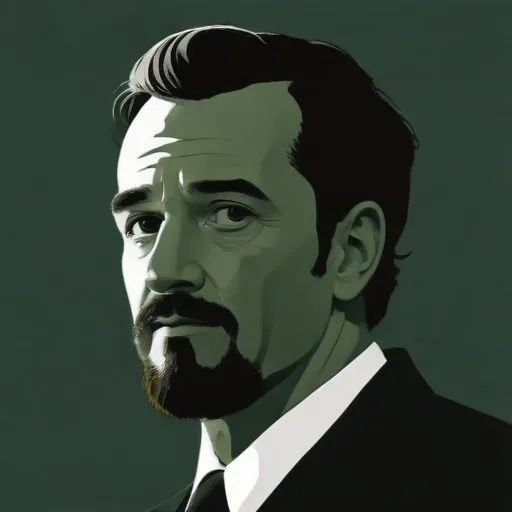
Irish playwright and memoirist known for his powerful, realistic portrayals of Dublin's working-class life, particularly during the Irish War of Independence. His plays often blended humor and tragedy, offering a unique perspective on Irish identity.
Sen O'Casey, born John Casey, was an Irish dramatist and memoirist who etched his name in the annals of Irish literature with his works that vividly portrayed the struggles and triumphs of the Dublin working class. As the first Irish playwright of note to focus on the lives of the common man, O'Casey's plays and writings served as a mirror to the society, reflecting its flaws and virtues with unflinching honesty.
O'Casey was born on March 30, 1880, at 85 Upper Dorset Street, Dublin, to Michael Casey, a mercantile clerk, and Susan Archer. His early life was marked by hardship, with his father's death when O'Casey was just six years old, leaving a family of thirteen to fend for themselves. This experience would later shape his writing, imbuing it with a deep sense of empathy for the working class.
O'Casey's early education was hampered by his poor eyesight, but he taught himself to read and write by the age of thirteen. His love for literature was kindled by his elder brother, Archie, with whom he would stage plays by Dion Boucicault and William Shakespeare in their family home. This early exposure to the world of theater would lay the foundation for O'Casey's future career as a playwright.
O'Casey's entry into the world of Irish theater was marked by his involvement with the Gaelic League, which he joined in 1906. During this time, he Gaelicized his name from John Casey to Sen Cathasaigh, a testament to his growing interest in Irish nationalism. His work with the League introduced him to the writings of W.B. Yeats and Lady Gregory, who would later become instrumental in launching his career as a playwright.
O'Casey's breakthrough came with his play The Shadow of a Gunman, which premiered at the Abbey Theatre in 1923. The play's success was followed by a string of critically acclaimed works, including Junio and the Paycock and The Plough and the Stars, which cemented O'Casey's position as a leading Irish dramatist.
O'Casey's writing was deeply influenced by his socialist beliefs, which he saw as a means to bring about social change. His plays often explored the struggles of the working class, highlighting the injustices and inequalities that plagued Irish society. Through his work, O'Casey sought to raise awareness about the need for social reform, inspiring a new generation of Irish writers to follow in his footsteps.
O'Casey's work had a profound impact on Irish literature, paving the way for future generations of writers to explore themes of social justice and inequality. His commitment to socialism and his advocacy for the rights of the working class continue to inspire writers, artists, and activists to this day.
Sen O'Casey's contribution to Irish literature is immeasurable. His plays and writings continue to be performed and studied, inspiring new generations of writers, artists, and social activists. As a champion of the working class, O'Casey's work remains a powerful testament to the enduring power of art to shape our understanding of the world around us.
Born in 1888
A pioneering playwright who explored the American experience through powerful, psychologically complex dramas, earning the Nobel Prize in Literature in 1936.
Born in 1856
A renowned Irish playwright and critic, known for his witty, thought-provoking plays that often challenged social norms and conventions. His works include Pygmalion and My Fair Lady.
Born in 1882
A pioneering modernist writer, known for experimental novels and short stories that explore the human experience, particularly in Dublin, Ireland. His works are celebrated for their complex, lyrical prose and innovative narrative structures.
Born in 1865
A renowned Irish wordsmith and dramatist, celebrated for his mystical and nationalistic verse that explores the human condition, as well as his contributions to the Irish Literary Revival.
Born in 1871
A pioneering figure in Irish literature, known for capturing the spirit of the Irish people through his plays and writings, which often explored themes of identity, culture, and social change.
Born in 1854
A witty and flamboyant literary mastermind, renowned for crafting clever, humorous, and poignant works that continue to delight audiences with their clever wordplay and societal commentary.
Born in 1852
A pioneering figure in the Irish literary revival, known for his innovative and influential novels that explored themes of morality, identity, and social change. His works paved the way for modernist writers like James Joyce and Virginia Woolf.
