


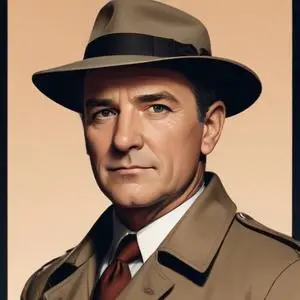
Led the Office of Strategic Services (OSS), precursor to the CIA, during World War II, and is considered the "Father of American Intelligence" for his role in shaping modern espionage. He was a decorated war hero, lawyer, and politician who played a crucial role in shaping US foreign policy.
William J. Donovan is best known for serving as the head of the Office of Strategic Services (OSS), the precursor to the Central Intelligence Agency (CIA), during World War II. He is regarded as the founding father of the CIA, and his legacy continues to inspire and influence American intelligence operations to this day.
Donovan was born on January 1, 1883, in Buffalo, New York, to Anna Letitia Tish Donovan (née Lennon) and Timothy P. Donovan. His family had Irish roots, with his grandfather, Timothy O'Donovan Sr., hailing from County Cork, Ireland. Donovan's father worked as a superintendent of a Buffalo railroad yard and attempted to engage in a political career with little success.
Donovan's military career spanned both World Wars, earning him numerous decorations for his bravery and service. He is believed to be the only person to have been awarded all four of the following prestigious decorations:
In addition to these honors, Donovan also received the Silver Star and Purple Heart, as well as decorations from several other nations for his service during both World Wars.
In 1942, Donovan was appointed as the head of the Office of Strategic Services (OSS), a newly formed intelligence agency tasked with gathering and analyzing information to support the Allied war effort. Under Donovan's leadership, the OSS played a crucial role in providing strategic intelligence to the Allies, conducting covert operations behind enemy lines, and developing innovative techniques for gathering and analyzing information.
In 1947, the OSS was disbanded, and Donovan's experience and expertise were instrumental in the formation of the Central Intelligence Agency (CIA). Donovan is widely regarded as the founding father of the CIA, and his legacy continues to shape American intelligence operations to this day.
Donovan's personal life was marked by a strong sense of duty and service to his country. He was a devout Catholic and was known for his strong moral principles and commitment to justice. A statue of Donovan stands in the lobby of the CIA headquarters building in Langley, Virginia, a testament to his enduring legacy in American intelligence.
In recognition of his extraordinary service and contributions, Donovan was awarded numerous honors and decorations throughout his life. His legacy continues to inspire and influence American intelligence operations, and his name remains synonymous with bravery, duty, and service to one's country.
Born in 1882
Led the United States through the Great Depression and World War II, implementing a series of reforms known as the New Deal and helping to establish the country as a global superpower.
Born in 1890
Led the Allied forces to victory in World War II and later served as President, maintaining peace and prosperity during the Cold War era. He's known for his strategic leadership and diplomatic skills.
Born in 1885
A renowned military leader who played a crucial role in World War II, particularly in the Allied victory in Europe, known for his bold tactics and unapologetic style.
Born in 1893
Led the US Army in World War II and became the last five-star general, playing a crucial role in shaping post-war American military strategy. He's also known for his humble and unassuming leadership style.
Born in 1871
Prolific writer of historical novels and adventure stories, also a talented landscape painter.
Born in 1878
The Soviet Union's ruthless leader who ruled with an iron fist, implementing policies that led to widespread famine and purges, while also playing a crucial role in defeating Nazi Germany in World War II.
Born in 1880
A highly decorated military leader and statesman who played a crucial role in shaping post-WWII foreign policy and was awarded the Nobel Peace Prize for his efforts. He's most known for authoring the Marshall Plan, a massive economic aid program that helped rebuild war-torn Europe.
Born in 1896
Led a daring bombing raid on Tokyo in 1942, earning the Medal of Honor for his bravery and helping to turn the tide of World War II.
