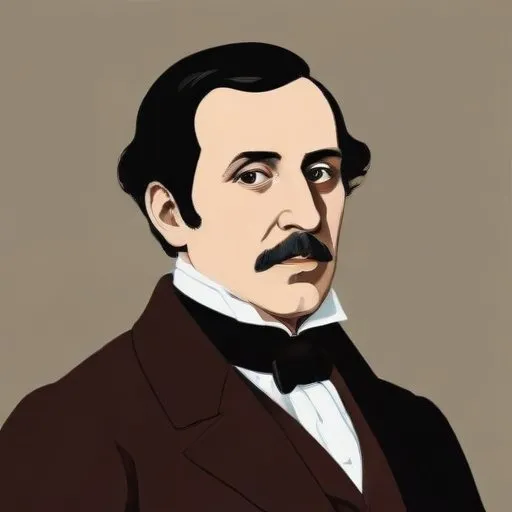
William Penney, Baron Penney: The Mathematician Behind Britain's Nuclear Programme
Breaking Ground in Nuclear Research
William Penney, Baron Penney, was a renowned English mathematician and professor of mathematical physics who played a pivotal role in the development of Britain's nuclear programme during the Second World War. As the head of the British delegation working on the Manhattan Project at Los Alamos Laboratory, Penney's calculations predicted the damage effects generated by the blast wave of an atomic bomb, laying the foundation for Britain's first atomic bomb in 1952.
Early Life and Education
Born on June 24, 1909, in Gibraltar, Penney was the oldest child and only son of William Alfred Penney, a sergeant-major in the British Army's Ordnance Corps, and Blanche Evelyn Johnson. Due to his father's frequent postings, Penney's family moved frequently, and he often stayed behind to continue his education. This tumultuous childhood did not deter Penney, who went on to earn a scholarship to study mathematics at the University of Cambridge.
Career Highlights and Major Works
Penney's contributions to mathematics and physics are multifaceted:
- High Explosive Research: Penney led the British nuclear weapons directorate, codenamed Tube Alloys, and directed scientific research at the Atomic Weapons Research Establishment, resulting in the first detonation of a British nuclear bomb in Operation Hurricane in 1952.
- Manhattan Project: As the head of the British delegation at Los Alamos Laboratory, Penney's calculations predicted the damage effects generated by the blast wave of an atomic bomb.
- Mathematics and Physics: Penney made significant contributions to the mathematics of complex wave dynamics, shock waves, and gravity waves, proposing optimization problems and solutions in hydrodynamics, which have far-reaching implications for materials science and metallurgy.
Awards and Honors
Penney's outstanding contributions were recognized with several awards and honors, including:
- Baron Penney: Penney was knighted in 1958 and created a life peer in 1969.
- Fellow of the Royal Society: Penney was elected a Fellow of the Royal Society (FRS) in 1946.
- Order of the British Empire: Penney was appointed a Commander of the Order of the British Empire (CBE) in 1946.
Influence on Modern Society
Penney's work had a profound impact on modern society, shaping the course of nuclear research and international relations:
- Nuclear Deterrence: Penney's contributions to Britain's nuclear programme helped establish the country as a major nuclear power, influencing the global balance of power during the Cold War.
- International Cooperation: Penney's involvement in international negotiations led to the Partial Nuclear Test Ban Treaty, a landmark agreement that limited nuclear testing and promoted global cooperation.
Legacy
William Penney, Baron Penney, left an indelible mark on the fields of mathematics, physics, and nuclear research. His pioneering work continues to inspire new generations of scientists and policymakers, shaping the course of international relations and global security. As a testament to his enduring legacy, Penney's contributions remain a cornerstone of Britain's nuclear programme and a symbol of British scientific excellence.
FAQ
What was William Penneys contribution to British science?
William Penney, Baron Penney, was a renowned English mathematician and physicist who made significant contributions to British science. He was particularly known for his work on the development of the atomic bomb.
What was William Penneys role in the development of the atomic bomb?
William Penney played a crucial role in the development of the atomic bomb, working closely with British and American scientists to develop the first nuclear weapons.
What were William Penneys achievements in mathematics?
William Penney was a prominent mathematician who made significant contributions to the field of fluid dynamics. He was elected a Fellow of the Royal Society for his work.
How did William Penneys work influence British science policy?
William Penneys work had a significant impact on British science policy, particularly in the area of nuclear energy. He was a key advisor to the British government on science and technology matters.
What is William Penneys legacy in British science?
William Penneys legacy in British science is that of a brilliant mathematician and physicist who made significant contributions to our understanding of the natural world. He is remembered as a dedicated public servant who worked tirelessly to promote British science and technology.