


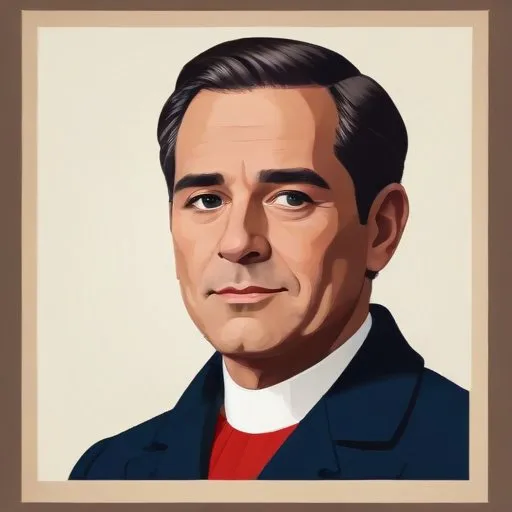
The first American-born governor of the Province of Massachusetts Bay, who led a successful expedition to recover treasure from a sunken Spanish ship and played a key role in the Salem witch trials.
William Phips, a true Renaissance man, is renowned for being the first New England native to be knighted and the first royally appointed governor of the Province of Massachusetts Bay. His remarkable journey took him from humble beginnings as a shepherd boy to becoming a celebrated treasure hunter, shipwright, and captain, leaving an enduring legacy in his wake.
Born on February 2, 1651, in Nequasset, Maine, Phips' early life was marked by hardship and perseverance. After his father's untimely death, his mother married a neighbor, and Phips was tasked with watching over the family's flock of sheep until the age of 18. This rugged upbringing instilled in him a strong work ethic and resourcefulness that would serve him well in his future endeavors.
At 18, Phips began a four-year apprenticeship as a ship's carpenter, demonstrating his innate intelligence and eagerness to learn. Though his formal education was limited, he went on to master multiple skills, eventually becoming a ship's captain and treasure hunter.
Phips' most famous exploit was the recovery of a vast treasure from the sunken Spanish galleon, the Concepción, off the coast of Hispaniola. This incredible feat, which took place in 1687, catapulted him to international fame and earned him a fortune.
This remarkable achievement not only showcased Phips' bravery and cunning but also underscored his ability to adapt to challenges and seize opportunities. The treasure, estimated to be worth around £200,000 (approximately £3 million today), made him an overnight sensation, and he was soon dubbed the "Treasure Hunter of the Caribbean."
In 1692, Phips was appointed the first royally appointed governor of the Province of Massachusetts Bay, a position that propelled him to the forefront of colonial politics. During his tenure, he oversaw the establishment of the court associated with the Salem Witch Trials, a tumultuous period marked by hysteria, fear, and tragedy.
Though Phips initially supported the trials, he grew increasingly disillusioned with the proceedings and eventually forced to disband the court after five months. This decision demonstrated his commitment to justice and fairness, even in the face of overwhelming public opinion.
William Phips' life serves as a testament to the power of perseverance, adaptability, and integrity. His remarkable journey, marked by triumph and turmoil, continues to inspire generations, offering valuable lessons in leadership, courage, and the importance of staying true to one's convictions.
As a pioneering figure in American history, Phips' impact extends far beyond his own lifetime, shaping the course of colonial politics, maritime trade, and the very fabric of our collective identity.
Born in 1588
A 17th-century English lawyer and politician who played a key role in establishing the Massachusetts Bay Colony and shaping its early government and laws. He's known for his "City upon a Hill" sermon, which emphasized the colony's mission to create a model Christian community.
Born in 1576
An early American leader who played a key role in shaping the Massachusetts Bay Colony, serving as its governor and contributing to its growth and development. He was also a skilled military leader and politician.
Born in 1616
Governor of the Massachusetts Bay Colony from 1673 to 1679, known for his role in King Philip's War and his efforts to negotiate with Native American tribes.
Born in 1603
A colonial magistrate who served as a governor of the Massachusetts Bay Colony, known for his fair and diplomatic leadership during a tumultuous period in American history.
Born in 1647
Governor of the Province of Massachusetts Bay during a tumultuous period, known for his role in the Salem witch trials and later becoming a prominent figure in the American colonial government.
Born in 1894
A solicitor, deputy coroner, and territorial soldier who served in World War II and was part of the 1945 expedition to climb Mount Everest. He's known for his adventurous spirit and bravery.
