


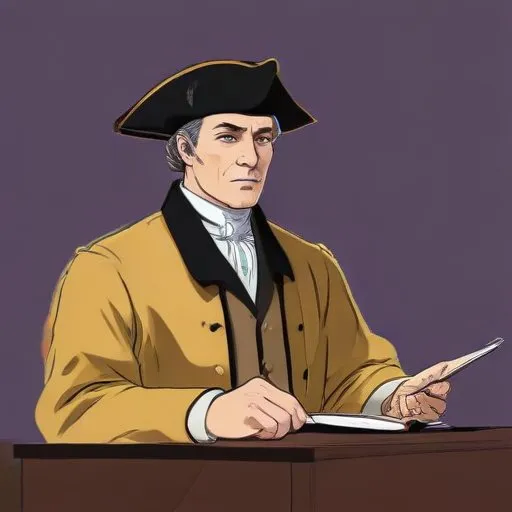
A colonial magistrate who served as a governor of the Massachusetts Bay Colony, known for his fair and diplomatic leadership during a tumultuous period in American history.
Simon Bradstreet was a prominent figure in the early history of Massachusetts, serving as the last governor of the Massachusetts Bay Colony from 1679 until his death in 1697. As a skilled politician, diplomat, and businessman, Bradstreet played a crucial role in shaping the colony's development and growth.
Born on March 18, 1603, in Horbling, Lincolnshire, England, Simon Bradstreet was the second of three sons to Simon and Margaret Bradstreet. His father, a rector of the parish church, instilled in him strong Puritan values, which would later influence his political and social beliefs.
At the age of 16, Bradstreet entered Emmanuel College, Cambridge, where he studied for two years. He then joined the service of the Earl of Lincoln as an assistant to Thomas Dudley in 1622. Although there is some uncertainty about whether he returned to Emmanuel College in 1623-1624, it is likely that he did, earning an M.A. degree.
In 1630, Bradstreet arrived in Massachusetts as part of the Winthrop Fleet, a group of English Puritans who established the Massachusetts Bay Colony. He quickly became involved in the colony's politics, serving on diplomatic missions and as an agent to the crown in London.
In 1679, Bradstreet was appointed governor of the Massachusetts Bay Colony, a position he held until his death in 1697. During his tenure, he worked tirelessly to promote peace and stability in the colony, often taking moderate stances to maintain harmony between the colonists and the English monarchy.
In 1628, Bradstreet married Anne Dudley, the daughter of Massachusetts cofounder Thomas Dudley and a published poet in her own right. Together, they had several children, including a son who would later become a prominent merchant and politician.
Simon Bradstreet's legacy extends far beyond his political achievements. He was a shrewd businessman, investing in land and shipping interests that helped establish Massachusetts as a thriving commercial center. His commitment to education and religious freedom also had a lasting impact on the colony's development.
"Let us not forget that we are here not to pleasure ourselves, but to do the work of the Lord."
When Cotton Mather, a prominent Puritan minister, referred to Bradstreet as the "Nestor of New England," he was acknowledging the governor's wisdom, experience, and leadership.
Simon Bradstreet's remarkable life and achievements have left an indelible mark on American history. His dedication to education, religious freedom, and economic development helped shape the Massachusetts Bay Colony into a thriving community. Today, he is remembered as a visionary leader who paved the way for future generations of Americans.
Born in 1588
A 17th-century English lawyer and politician who played a key role in establishing the Massachusetts Bay Colony and shaping its early government and laws. He's known for his "City upon a Hill" sermon, which emphasized the colony's mission to create a model Christian community.
Born in 1576
An early American leader who played a key role in shaping the Massachusetts Bay Colony, serving as its governor and contributing to its growth and development. He was also a skilled military leader and politician.
Born in 1616
Governor of the Massachusetts Bay Colony from 1673 to 1679, known for his role in King Philip's War and his efforts to negotiate with Native American tribes.
Born in 1592
A 17th-century lawyer and politician who advocated for the rights of the common man and played a key role in the development of the English Parliament. He's known for being a pioneer of British democracy.
