


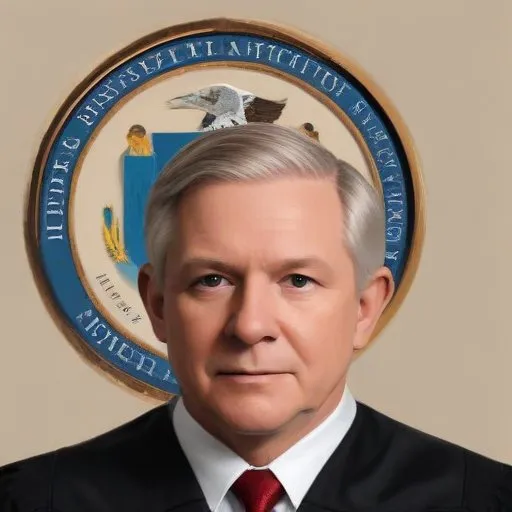
The 8th Director of the FBI, serving from 1987 to 1993, known for his efforts to modernize the agency and his eventual dismissal by President Bill Clinton. He played a significant role in shaping the FBI's response to emerging threats like terrorism and cybercrime.
William S. Sessions, a renowned American attorney and jurist, left an indelible mark on the country's legal landscape. Best known for serving as the Director of the Federal Bureau of Investigation (FBI) from 1987 to 1993, Sessions' illustrious career spanned over four decades, earning him a reputation as a strong advocate for justice and a dedicated public servant.
Born on May 27, 1930, in Fort Smith, Arkansas, Sessions grew up with a strong sense of duty and service. He graduated from Northeast High School in Kansas City, Missouri, in 1948, before enlisting in the United States Air Force, where he received his commission in 1952. After serving on active duty until 1955, Sessions attended Baylor University in Waco, Texas, earning a Bachelor of Arts degree in 1956 and a Bachelor of Laws degree from Baylor Law School in 1958.
Sessions began his legal career as an attorney for the firm of Haley, Fulbright, Winniford, Sessions, and Bice in Waco, Texas, from 1963 until 1969. He then served as Chief of the Government Operations Section, Criminal Division of the Department of Justice in Washington, D.C., before being appointed United States Attorney for the Western District of Texas in 1971.
In 1974, President Gerald Ford nominated Sessions to the United States District Court for the Western District of Texas, where he served as a judge for over a decade, including a stint as Chief Judge. His reputation as a fair and knowledgeable jurist earned him the respect of his peers and the confidence of the public.
In 1987, President Ronald Reagan appointed Sessions as the Director of the FBI, a position he held until his dismissal by President Bill Clinton in 1993. During his tenure, Sessions oversaw significant reforms, including the establishment of the FBI's Critical Incident Response Group and the creation of the National Center for the Analysis of Violent Crime.
However, Sessions' time at the helm of the FBI was also marked by controversy, including criticism of his leadership style and accusations of misusing FBI funds. His dismissal by President Clinton was a controversial move, sparking a heated debate about the role of the FBI and its director.
After leaving the FBI, Sessions went on to represent Semion Mogilevich, an international leader of the Russian mafia, in a highly publicized case. He also continued to practice law, advocating for justice and fairness in the legal system.
Sessions' legacy is complex and multifaceted, marked by both achievements and controversies. However, his dedication to public service and his commitment to upholding the law remain unwavering, earning him a place among the most influential figures in American legal history.
Sessions was a devoted family man, married to Alice Lewis Sessions for over 50 years, with whom he had three children, including Pete Sessions, a Texas Congressman. He was also an Eagle Scout and recipient of the Distinguished Eagle Scout Award from the Boy Scouts of America.
In conclusion, William S. Sessions was a dedicated public servant, a distinguished jurist, and a complex figure whose legacy continues to shape the American legal landscape.
Born in 1895
The first Director of the FBI, who led the agency for nearly five decades, building it into a powerful force in American law enforcement, and notorious for his secretive and authoritarian style. He's infamous for his surveillance and harassment of political dissidents, civil rights leaders, and celebrities.
76 Years Old
The 10th Director of the FBI, a lawyer and jurist who led the Bureau during a tumultuous period, investigating high-profile cases like the Oklahoma City bombing and Ruby Ridge. He's also known for his post-FBI work on international corruption cases.
82 Years Old
The 6th Director of the FBI, a decorated war hero, and a seasoned lawyer, led the bureau during a tumultuous period, investigating high-profile cases, and later spearheaded the Russia probe. He's synonymous with integrity and impartiality in law enforcement.
65 Years Old
The 7th Director of the Federal Bureau of Investigation, who led the FBI from 2013 to 2017, is known for his controversial handling of the Hillary Clinton email investigation and his subsequent firing by President Trump. He's also a vocal critic of Trump's presidency and has written a bestselling memoir about his experiences.
84 Years Old
The 79th United States Attorney General, serving from 2001 to 2005, is most known for his role in shaping post-9/11 national security policies and his strong stance on the USA PATRIOT Act.
71 Years Old
The 80th United States Attorney General, serving under President George W. Bush, is known for being the first Hispanic to hold the position and for his involvement in controversial policies, including the War on Terror. He was also a key figure in the dismissal of several U.S. Attorneys.
75 Years Old
The first African American to hold the position, he served as the chief law enforcement officer of the US, overseeing high-profile cases and implementing key policy reforms. He's known for his progressive stance on issues like voting rights and criminal justice reform.
