


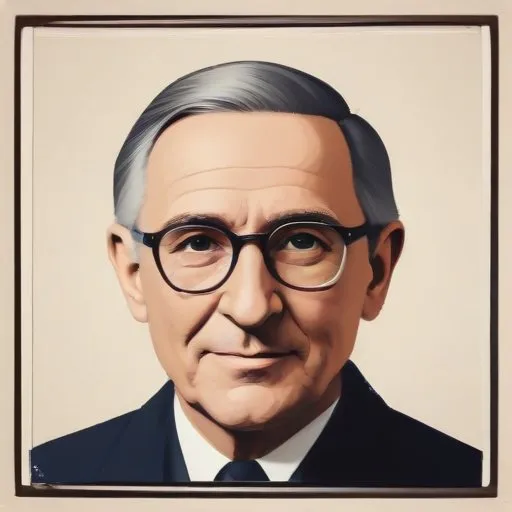
Developed the first universal screw thread standard, revolutionizing manufacturing and industry, and founded a prominent engineering company.
William Sellers, a prolific inventor and mechanical engineer, holds a remarkable distinction in the realm of industrial innovation. He is best known for designing the standard screw thread system still in use today, revolutionizing the manufacturing industry and earning him over 90 patents throughout his lifetime.
Born on September 19, 1824, in Upper Darby Township, Pennsylvania, Sellers was part of a Quaker family rich in industrial and manufacturing innovation. His cousins, George Escol Sellers and Coleman Sellers II, were also inventors and innovators in their own right, further solidifying the family's legacy in the field.
Sellers began his apprenticeship at the age of 14 under his uncle, J. Morton Poole, in a machine shop near Wilmington, Delaware. After seven years, he moved to Providence, Rhode Island, to run the shops of what eventually became the Corliss Steam Engine Company. His experience and expertise led him to become the president of the Franklin Institute in Philadelphia, Pennsylvania, where he proposed the adoption of a system of screw threads that was easier for ordinary mechanics and machinists to cut.
Sellers' most notable achievement is the design of the United States standard screw thread, which has remained unchanged since its introduction. This innovative system enabled standardized production and interchangeability of parts, significantly enhancing manufacturing efficiency and paving the way for mass production.
The impact of Sellers' work extends far beyond the industrial realm. His standard screw thread system has had a profound influence on modern society, enabling the widespread adoption of assembly-line production, mass manufacturing, and globalization. The ease of manufacturing and interchangeability of parts have contributed significantly to the development of consumer goods, automobiles, and other industrial products.
As a Quaker, Sellers was deeply committed to his faith and its principles of simplicity, equality, and social justice. His inventions and innovations were driven by a desire to improve the human condition, making him a true pioneer in the field of social responsibility.
Had Sellers lived in the modern era, it is likely that he would have continued to push the boundaries of innovation, potentially exploring new materials, technologies, and manufacturing techniques. His inventive spirit and commitment to improving society would have made him a natural fit in today's fast-paced, technology-driven world.
William Sellers' contributions to the world of manufacturing and innovation have left an indelible mark on history. As a testament to his legacy, his standard screw thread system remains an integral part of modern industry, a lasting tribute to his vision, ingenuity, and dedication to improving the human condition.
Sellers' remarkable achievements were recognized during his lifetime, earning him numerous awards and honors. His legacy continues to be celebrated by the Franklin Institute, which he led as president, and by the countless industries and inventors who have built upon his groundbreaking work.
Born in 1835
A self-made industrialist who amassed a vast fortune in the steel industry, then donated most of it to fund over 2,500 public libraries and other philanthropic endeavors.
Born in 1839
Founded the Standard Oil Company, revolutionizing the oil industry and amassing vast wealth, which he later used for philanthropic efforts. He's remembered for his business acumen and generosity.
Born in 1794
Built railroad empires, revolutionizing transportation and commerce, and donated extensively to education and the arts.
Born in 1837
Founded a powerful banking dynasty and dominated corporate finance, shaping the American economy through strategic investments and mergers.
Born in 1863
Founded the pioneering automobile manufacturing company that revolutionized the industry with the assembly line production method, making cars more affordable and accessible to the masses.
Born in 1847
A pioneer in innovation, credited with developing groundbreaking inventions that revolutionized the way people live and communicate, including the light bulb and phonograph.
Born in 1847
A Scottish-American engineer and academic credited with inventing the telephone, revolutionizing real-time communication. This innovation transformed the way people connect and conduct business.
Born in 1853
Developed groundbreaking inventions and innovations in electrical engineering, including the first practical welding machine and the first electric streetcar system.
