


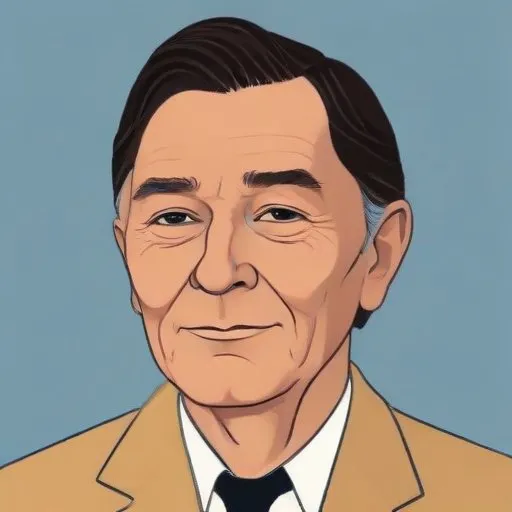
A celebrated poet and pacifist, known for his accessible and introspective style, which explores the human condition and the beauty of the natural world.
William Stafford is best known for his involvement in the intricate web of espionage and politics during the reign of Queen Elizabeth I, earning him a reputation as a conspirator and spy. As the son of William Stafford of Chebsey, brother-in-law of Henry VIII and uncle of Elizabeth I, Stafford's life was intertwined with the highest echelons of English society.
Born in 1554, Stafford's early years were marked by exile in Geneva, Switzerland, with his strongly Protestant family. This period had a profound impact on his life, as he came into contact with prominent figures such as John Calvin, who became the godfather to his brother. Following the death of his father, the family moved to Basel, where they lived next door to the influential John Knox.
Stafford received his education at Winchester College and later at New College, Oxford, where he matriculated in 1571. Although he was elected a fellow of New College in 1573, he was deprived of his fellowship two years later due to his prolonged absence without leave.
In 1585, Stafford embarked on a secret journey to France, staying in the lodgings of his brother Sir Edward Stafford, the English ambassador to France. During this time, he engaged in espionage activities on his own account, which eventually led to his exposure and subsequent begging for Sir Francis Walsingham's intercession with his mother.
The following year, Stafford became entangled in the plans of Châteauneuf, the French ambassador, who conspired to poison Queen Elizabeth. Stafford's court connections would have enabled him to plant a poisoned gown or saddle for the queen's use. However, he confessed the plot to Walsingham, leading to the arrest of the conspirators. Although Stafford was imprisoned in the Tower, he was released in August 1588 without any charges being brought against him.
It is speculated that Stafford was an agent provocateur for Walsingham, working to uncover the plot from within. This theory is supported by the fact that Stafford suffered no lasting harm from the episode, suggesting that he may have been working in cahoots with Walsingham all along.
William Stafford's life was marked by intrigue, espionage, and conspiracy, leaving behind a trail of questions and speculations. His involvement in the plots against Queen Elizabeth I has cemented his place in history as a fascinating, if enigmatic, figure. Despite his dubious activities, Stafford's story serves as a testament to the complex web of politics and espionage that defined the Elizabethan era.
Born in 1876
American rower who won a gold medal at the 1920 Summer Olympics and set multiple world records in the sport. Known for his exceptional rowing technique and dominance in the sport during the 1920s.
Born in 1457
First Tudor king of England, who ended the Wars of the Roses and established a strong, centralized government, bringing stability and prosperity to the country.
Born in 1926
The monarch of the United Kingdom and its Commonwealth realms, serving as a unifying figurehead and symbol of national identity, while also carrying out various ceremonial and charitable duties.
