


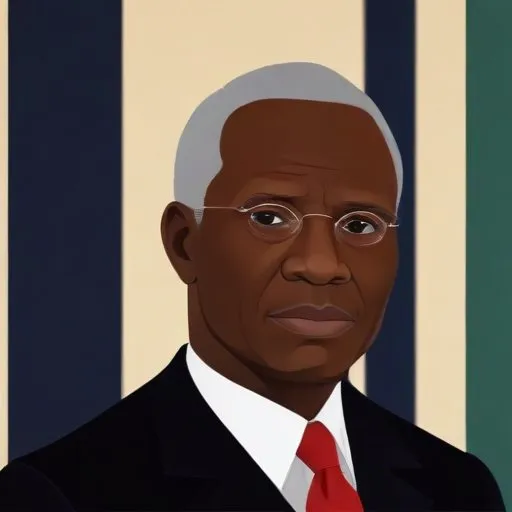
The 19th President of Liberia, a shrewd politician who ruled for 27 years, implementing policies to modernize and unify the country, while also consolidating his own power. He's known for his efforts to bridge the gap between Liberia's indigenous population and American-Liberian elite.
William Vacanarat Shadrach Tubman, affectionately known as the "Father of Modern Liberia," served as the 19th President of Liberia from 1944 until his death in 1971. During his remarkable tenure, he transformed Liberia's economy, infrastructure, and social landscape, earning him a revered place in the country's history.
William Tubman was born on November 29, 1895, in Harper, southeastern Liberia, to a family of modest means. He was one of five children, and his grandfather, Alexander Tubman, was a prominent figure in Liberian politics and society. Tubman's father, a strict disciplinarian, instilled in his children the value of hard work and education. His mother, Elizabeth Rebecca, hailed from Atlanta, Georgia, and was part of a family with a rich history of philanthropy and social activism.
Tubman's entry into politics was marked by his election to the Liberian Senate in 1923. He quickly rose through the ranks, becoming a respected figure in the country's political circles. In 1944, he was elected President of Liberia, a position he held for an unprecedented 27 years.
Tubman's presidency was characterized by a vision for modernization and national unity. He attracted significant foreign investment, which enabled Liberia to modernize its economy and infrastructure. The country experienced a period of sustained growth, and Tubman's policies helped reduce social and political differences between Americo-Liberians and indigenous Liberians.
Tubman was a firm believer in the importance of education, economic development, and social progress. He advocated for the empowerment of women, the promotion of national unity, and the protection of human rights. His leadership was guided by a philosophy of inclusivity, equality, and justice for all Liberians.
Tubman's legacy extends beyond Liberia's borders. He was a pioneering figure in African politics, and his commitment to modernization, economic development, and social progress inspired a generation of African leaders. His policies and reforms continue to shape Liberia's social and economic landscape.
William Tubman's remarkable career was marked by a dedication to the people of Liberia and a vision for a unified, prosperous nation. His leadership transformed Liberia, and his legacy continues to inspire future generations of Africans and beyond.
In conclusion, William Vacanarat Shadrach Tubman's remarkable life and achievements have earned him a revered place in Liberian history. As the "Father of Modern Liberia," he remains an iconic figure, whose commitment to education, economic development, and social progress continues to inspire and shape the country's future.
88 Years Old
The first female head of state in Africa, she led Liberia through a period of reconstruction and reconciliation, and was awarded the Nobel Peace Prize for her efforts to promote peace and women's rights.
78 Years Old
Former warlord who led Liberia through a brutal civil war and was later convicted of war crimes and crimes against humanity. He's infamous for his role in fueling regional instability and human rights abuses.
75 Years Old
A Liberian sergeant-turned-politician who seized power in a coup and became the first indigenous head of state in Liberia, known for his brutal rule and human rights abuses.
77 Years Old
A Liberian businessman and politician who played a key role in the country's transitional government, helping to stabilize the nation after a brutal civil war. He's known for his efforts to rebuild Liberia's economy and infrastructure.
Born in 1809
First President of Liberia, leading the country to independence and self-governance, and a historian who documented the nation's early years.
