


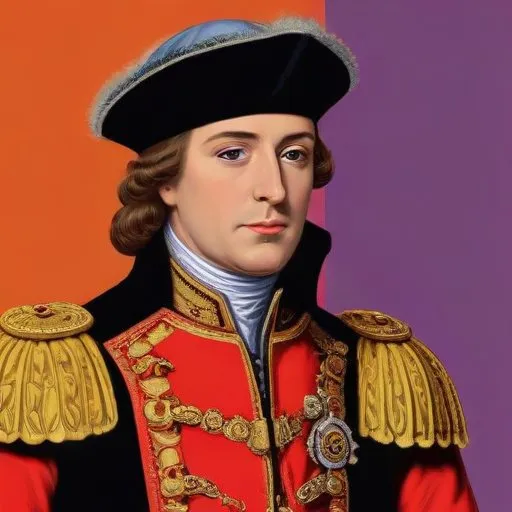
A medieval military leader who played a key role in the Hundred Years' War and was a founder of the Order of the Garter. He was also a close friend and advisor to King Edward III.
William de Montagu, 2nd Earl of Salisbury, is remembered as one of the most revered noblemen of the 14th century, celebrated for his unwavering loyalty to the English crown and his exemplary display of chivalry on the battlefield. As a trusted advisor to King Edward III and a skilled military commander, Montagu played a crucial role in shaping the course of English history during a tumultuous period.
Born around 1301, Montagu was the son of William Montagu, 1st Earl of Salisbury, and inherited his title and lands at a young age. Throughout his life, he demonstrated an unwavering commitment to the English monarchy, serving as a close advisor to King Edward III and accompanying him on several military campaigns. Montagu's loyalty and bravery in battle earned him the respect and admiration of his peers, solidifying his position as a trusted and influential figure at court.
Montagu's military career was marked by a series of impressive victories, including the Battle of Halidon Hill in 1333 and the Siege of Calais in 1346-1347. He was known for his chivalric ideals, adhering to a strict code of conduct that emphasized honor, loyalty, and courtesy. This commitment to chivalry earned him the respect of his enemies, who often praised his bravery and dignity in defeat.
Montagu's exceptional service to the crown was recognized with numerous awards and honors, including his appointment as a Knight of the Garter, one of the highest honors bestowed upon a nobleman. He was also granted significant lands and titles, including the Earldom of Salisbury and the Lordship of Denbigh.
Montagu's life and legacy are set against the backdrop of a tumultuous 14th century, marked by the Hundred Years' War with France and the Black Death that ravaged England. Despite these challenges, Montagu remained a steadfast supporter of the English crown, earning a reputation as a paragon of chivalry and loyalty. His commitment to the ideals of nobility and his dedication to the monarchy have endured as a testament to his character and influence.
Today, William de Montagu, 2nd Earl of Salisbury, is remembered as a shining example of medieval chivalry and loyalty, an inspiration to generations of noblemen and knights who followed in his footsteps. His legacy serves as a reminder of the importance of honor, duty, and allegiance, values that continue to resonate with us today.
Born in 1340
A powerful and wealthy medieval English nobleman, known for his immense influence on English politics and his role in the Hundred Years' War. He was also a patron of the arts and a founder of Trinity College, Cambridge.
Born in 1133
King of England from 1154 to 1189, known for establishing a strong centralized government, reforming the English church, and his tumultuous relationships with Thomas Becket and his sons.
Born in 1367
The last king of the House of Plantagenet, deposed in a coup, known for his extravagance and tyranny, leading to his downfall and the rise of the Lancastrian dynasty.
39 Years Old
Australian left-arm orthodox spinner who took 96 wickets in 59 first-class matches, including 15 wickets in a Sheffield Shield season.
