


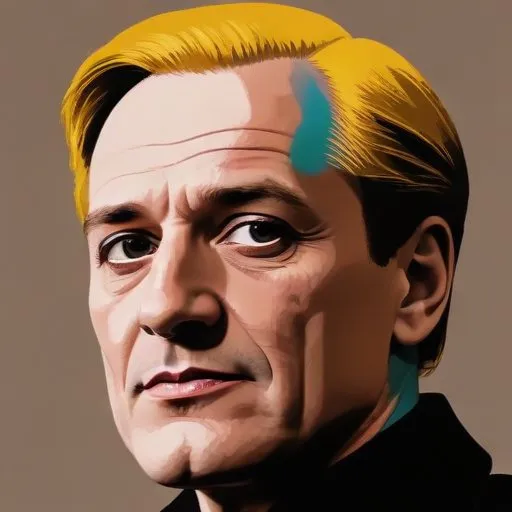
A popular German film actor of the 1920s-1950s, starring in over 100 movies, including musical comedies and romantic dramas. He was a beloved matinee idol and cultural icon of his time.
Willy Fritsch, born Wilhelm Egon Fritz Fritsch, was a German theater and film actor who ruled the silent film era and continued to shine until the early 1960s. With a career spanning over four decades, Fritsch was a household name in Germany, known for his versatility, charm, and captivating on-screen presence.
Born on January 27, 1901, in Kattowitz, Prussian province of Silesia (now Katowice, Poland), Fritsch grew up in a family that valued education and the arts. After his father's bankruptcy in 1912, the family moved to Berlin, where Fritsch Sr. worked for the Siemens-Schuckert company. Initially, young Willy planned to become a mechanic, but fate had other plans.
Fritsch began working as an extra at the Groes Schauspielhaus theatre in Berlin, which led him to attend Max Reinhardt's drama school at the Deutsches Theater. He debuted with small roles and played as an understudy, even sharing the stage with the legendary Marlene Dietrich in Spring Awakening.
In 1920, Fritsch made his film debut as a supporting player in Miss Venus. However, it was his leading role in the silent film A Waltz Dream (1925), directed by Ludwig Berger, that catapulted him to international fame. He became a sought-after actor, rejecting a United Artists contract that would have required him to move to the United States, choosing instead to stay in Germany and focus on his career.
Fritsch's partnership with the UFA film company led to a string of successful silent comedies, including Chaste Susanne (1926), The Last Waltz (1927), Hungarian Rhapsody (1928), and Her Dark Secret (1929). He also starred in two silent films directed by the renowned Fritz Lang: the thriller Spies (1928) and the science fiction film Woman in the Moon (1929).
In 1929, Fritsch spoke the first sentence in a German talkie, "Melodie des Herzens" (Melody of the Heart), marking the beginning of a new era in cinema. He continued to shine in talkies, often paired with his on-screen partner, Lilian Harvey.
Willy Fritsch's remarkable career, spanning over 40 years, left an indelible mark on German cinema. He worked with some of the most influential directors of his time, including Fritz Lang and Ludwig Berger, and shared the screen with legendary actresses like Marlene Dietrich and Lilian Harvey. Fritsch's legacy serves as a testament to the Golden Age of German cinema, a period that continues to inspire filmmakers and audiences alike.
Willy Fritsch passed away on July 13, 1973, leaving behind a legacy of memorable performances and a generation of actors who drew inspiration from his work. His contribution to German cinema remains unparalleled, and his films continue to captivate audiences today.
Born in 1902
A renowned German actor, celebrated for his versatility in playing a wide range of roles, from comedy to drama, in numerous films and stage productions.
Born in 1886
A renowned German conductor and composer, he was a dominant figure in the Berlin Philharmonic, known for his intense and expressive performances of Beethoven, Brahms, and Bruckner. He was also a composer of symphonies and other works.
Born in 1907
A Swedish actress and singer who captivated audiences with her powerful voice and iconic film roles, becoming a beloved star of German cinema during the 1930s and 1940s.
