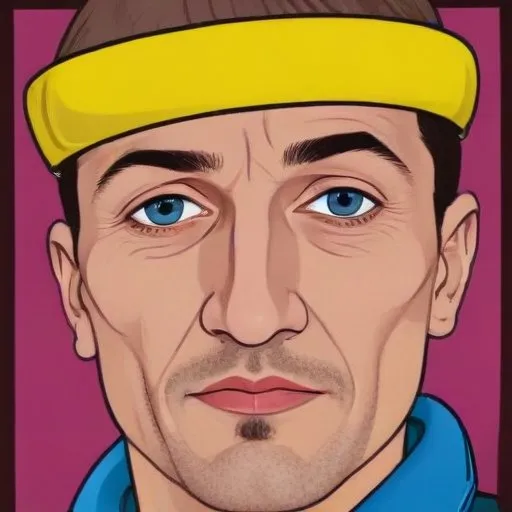
Wladimir Burliuk: The Ukrainian Futurist Revolutionizing Art and Literature
A Pioneer of Futurist Movement
Wladimir Burliuk, a Ukrainian artist, poet, and public figure, is best known for being one of the founders of Ukrainian Futurism, a literary and artistic movement that emerged in the early 20th century. Along with his brother David, Burliuk played a crucial role in shaping the ideology and aesthetics of the movement, which aimed to break away from traditional forms of art and literature.
Early Life and Education
Born on March 27, 1886, in the Kherson region of Ukraine, Burliuk grew up in a family of intellectuals. His father, a teacher, encouraged his children to explore the world of art and literature from a young age. Burliuk's early interest in art led him to study at the Odessa Art School, followed by the Academy of Fine Arts in Munich, Germany.
The Rise of Ukrainian Futurism
In the early 1910s, Burliuk, along with his brother David, Mykhailo Semenko, and other like-minded individuals, founded the Ukrainian Futurist movement. This avant-garde movement sought to challenge traditional forms of art, literature, and music, and instead, emphasize experimentation, innovation, and the expressiveness of modern life. The movement's manifesto, "A Slap in the Face of Public Taste," published in 1912, declared war on traditional aesthetics and promoted the idea of a new, futuristic art.
Artistic Contributions
Burliuk's artistic style was characterized by vivid colors, dynamic compositions, and a fusion of abstract and figurative elements. His paintings often depicted urban landscapes, machines, and technological innovations, reflecting his fascination with modernity and the machine age. Some of his notable works include "The Red Bridge" (1913) and "The City" (1914).
Literary Contributions
Burliuk was also an accomplished poet and writer, and his literary works were deeply influenced by the Futurist ideology. His poetry collections, such as "Iron Rebellion" (1914) and "Futurist Ukrainian Poetry" (1916), showcased his innovative use of language, imagery, and typography. Burliuk's writings often explored themes of industrialization, urbanization, and the transformation of human experience in the modern era.
Personal Life and Later Years
In the 1920s, Burliuk began to distance himself from the Futurist movement, and instead, turned his attention to teaching and art criticism. He also became involved in the Ukrainian nationalist movement, advocating for Ukraine's independence from Soviet rule. During World War II, Burliuk fled Ukraine and eventually settled in the United States, where he continued to paint and write until his death on March 18, 1947.
Legacy and Impact
Wladimir Burliuk's contributions to Ukrainian Futurism have had a lasting impact on modern art and literature. His pioneering work paved the way for subsequent avant-garde movements, including Constructivism and Surrealism. Today, Burliuk is recognized as one of Ukraine's most influential artists and writers, and his legacy continues to inspire generations of artists, writers, and thinkers.
- Notable Works: "The Red Bridge" (1913), "The City" (1914), "Iron Rebellion" (1914), "Futurist Ukrainian Poetry" (1916)
- Influenced by: Italian Futurism, Cubism, Expressionism
- Influenced: Ukrainian Futurism, Constructivism, Surrealism
FAQ
What is Wladimir Burliuks significance in Ukrainian art?
Wladimir Burliuk was a renowned Ukrainian painter and illustrator, known for his vibrant and expressive works that showcased the countrys cultural heritage.
What inspired Wladimir Burliuks artistic style?
Burliuks style was influenced by the avant-garde movements of the early 20th century, including Cubism and Futurism, which he adapted to depict Ukrainian folk themes.
How did Wladimir Burliuks work reflect Ukrainian culture?
Burliuks art often featured traditional Ukrainian motifs, such as folk costumes and rural landscapes, which helped to promote the countrys cultural identity.
What is Wladimir Burliuks legacy in Ukrainian art?
Burliuk is celebrated as a pioneer of Ukrainian modern art, whose work continues to inspire generations of artists and designers.
How did Wladimir Burliuks poetry complement his visual art?
Burliuks poetry and visual art were intertwined, as he often incorporated poetic elements into his paintings and used his art to illustrate his literary works.