


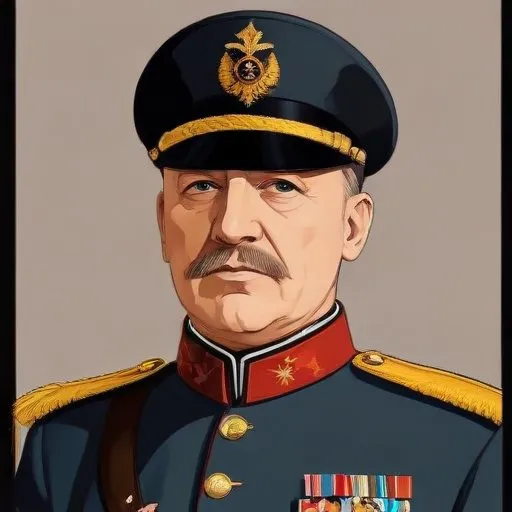
A German field marshal who led troops in the Thirty Years' War and later became a prominent military strategist, known for his innovative tactics and writings on warfare.
Wolfgang Julius, Count of HohenloheNeuenstein, was a renowned German Field Marshal and the last Count of HohenloheNeuenstein, celebrated for his bravery and strategic prowess during the tumultuous Thirty Years War. As a seasoned military leader, he played a crucial role in defending against the Turkish aggression in the Balkans and was instrumental in several notable battles, earning him a place among the most esteemed figures of his time.
Wolfgang Julius was born on August 3, 1622, in Neuenstein, Germany, to Kraft III of HohenloheNeuenstein and Sophie of Birkenfeld. His family, under the threat of war, had fled to Ohrdruf during the Thirty Years War. In 1637, at the tender age of 15, Wolfgang Julius was wounded in the face by a glancing shot while being stopped by a patrol. This eventful experience perhaps paved the way for his future military endeavors.
In 1643, Wolfgang Julius embarked on his Grand Tour to France, a journey that would shape his perspective and broaden his horizons. To supplement his income, he joined the regiment of the Imperial Marshal Josias Rantzau, where he became embroiled in a cabal, resulting in a seven-month imprisonment. This episode, however, did not deter him from his calling. Upon his release, he returned home in 1657 and assumed the position of lieutenant-general of the troops of the League of the Rhine, tasked with defending against the Turkish threat in the Balkans.
Wolfgang Julius's military prowess was showcased in several key battles. He distinguished himself during the sieges of Pecs and Novi Zrin Castle, although the latter failed due to a lack of unity among the army. His triumph at the Battle of Mogersdorf in 1664 earned him the esteemed title of Field Marshal. With 800 men from the original 6500, he returned to Hohenlohe, marking a significant milestone in his military career.
Wolfgang Julius married twice, first to Sophie Eleanor of Holstein-Sonderburg-Plön in 1666, and after her death, to Countess Barbara Franziska of Welz-Wilmersdorf in 1689. Unfortunately, both marriages were childless, and his inheritance passed to his brother, John Frederick I of Hohenlohe-Oehringen.
After his illustrious military career, Wolfgang Julius retired to the lordship of Wilhermsdorf, near Nuremberg, which he had acquired. He lived out the remainder of his life in relative quietude, passing away on December 26, 1698, at the age of 76.
Wolfgang Julius, Count of HohenloheNeuenstein, left an indelible mark on the annals of history. His bravery, strategic acumen, and unwavering dedication to his country have cemented his place as one of the most revered figures of the Thirty Years War era. His story serves as a testament to the power of perseverance and the importance of loyalty, inspiring generations to come.
Born in 1583
A powerful and influential military leader who played a crucial role in the Thirty Years' War, leading the Holy Roman Empire's army to several victories before his assassination. He's also known for his strategic genius and innovative military tactics.
Born in 1594
A Bavarian field marshal who played a key role in the Thirty Years' War, leading troops to several victories and earning a reputation as a skilled military strategist. He's also remembered for his bravery and chivalry on the battlefield.
