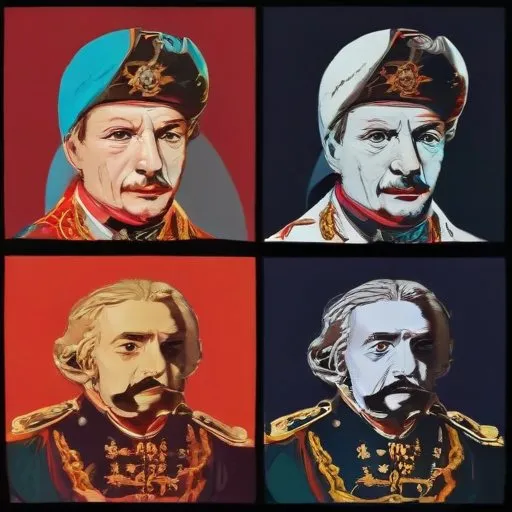
Albrecht von Wallenstein: The Brilliant and Controversial Military Leader of the Thirty Years War
The Legendary Commander
Albrecht von Wallenstein, a Bohemian military leader and statesman, is renowned for his extraordinary martial prowess and strategic genius, which elevated him to become one of the most influential figures of the Thirty Years War (1618-1648). As the supreme commander of the Imperial Army, Wallenstein's brilliant campaigns and conquests earned him the respect and admiration of his contemporaries, as well as the fear of his enemies.
Early Life and Education
Born on September 24, 1583, in the Kingdom of Bohemia, Wallenstein came from a poor Protestant noble family. Despite their modest means, his family managed to secure a multilingual university education for him across Europe. This stint abroad had a profound impact on Wallenstein, and in 1606, he converted to Catholicism. This conversion would later play a significant role in shaping his military and political career.
Rise to Prominence
Wallenstein's marriage in 1609 to the wealthy widow of a Bohemian landowner, Lucrezia Nicolson, marked a turning point in his life. Her untimely death in 1614 left him with considerable estates and wealth, which he utilized to launch his military career. In 1617, Wallenstein raised forces for the Holy Roman Emperor in the Uskok War against the Republic of Venice, commencing his ascent as a mercenary commander.
Military Campaigns and Conquests
Wallenstein's military genius was exemplified in his victories against the Protestants in the Bohemian Revolt of 1618. His victories earned him the favor of the imperial court, and in 1620, he was awarded estates confiscated from the rebels after their defeat at White Mountain. This was followed by a series of military triumphs, including the crushing defeat of the Protestants at Dessau Bridge in 1626.
Imperial Count Palatine and Ruler of Friedland
In recognition of his military achievements, Wallenstein was appointed an imperial count palatine and made himself ruler of the lands of the Duchy of Friedland in northern Bohemia. This marked the pinnacle of his power and influence, as he became one of the most powerful men in the Holy Roman Empire.
Downfall and Assassination
However, Wallenstein's rise to power was short-lived.
Ferdinand II, the Holy Roman Emperor, grew wary of his ambition and released him from service in 1630. This brief exile ended with Wallenstein's recall in 1632, after a series of Protestant victories over Catholic armies. Tragically, Wallenstein's life was cut short on February 25, 1634, when he was assassinated in Cheb, Bohemia, allegedly at the behest of the Emperor himself.
Legacy and Impact
Albrecht von Wallenstein's remarkable military career and legacy continue to inspire and fascinate historians and scholars. His campaigns and conquests shaped the course of the Thirty Years War, leaving an indelible mark on European history. Despite his controversial nature, Wallenstein remains an iconic figure, revered for his exceptional leadership, strategic brilliance, and unwavering ambition.
- Notable Battles:
- Battle of White Mountain (1620)
- Battle of Dessau Bridge (1626)
- Awards and Honors:
- Imperial Count Palatine
- Admiral of the Baltic Sea (1628)
- Influence on Modern Society:
- Wallenstein's military tactics and strategies continue to be studied by military historians and scholars.
- His legacy has inspired numerous literary and artistic works, including Friedrich Schiller's play "Wallenstein."
Trivia and Fun Facts
- Wallenstein was known for his superstition and often consulted astrologers and soothsayers before making important decisions.
- He was a prolific patron of the arts, commissioning numerous works from prominent artists and architects.
- Wallenstein's personal motto was "Aut Caesar, Aut Nihil" ("Either Caesar, or Nothing").
Quotes and Memorable Sayings
- "Bellum se ipsum alet" ("War feeds itself"), a phrase often attributed to Wallenstein, underscores his understanding of the self-sustaining nature of conflict.
Comparative Analysis with Contemporaries
Wallenstein's military genius and strategic brilliance can be compared to those of other renowned commanders of the era, such as
Gustavus Adolphus of Sweden and
Cardinal Richelieu of France. While his contemporaries admired his martial prowess, they also feared his ambition and perceived arrogance.
Personal Relationships and Anecdotes
Wallenstein's personal relationships were often marked by turmoil and controversy. His marriage to Lucrencia Nicolson was marked by disputes over property and wealth, while his relationships with his contemporaries, including Emperor Ferdinand II, were often strained and distrustful.
FAQ
What was Albrecht von Wallensteins role in the Thirty Years War?
Albrecht von Wallenstein was a Bohemian general who played a key role in the Thirty Years War, one of the most devastating conflicts in European history. He was a commander of the Imperial Army and led several successful campaigns against the Protestant forces.
Where did Albrecht von Wallenstein come from?
Albrecht von Wallenstein was born in Heřmanice, Bohemia, in 1583. He came from a noble family and was educated in Germany and Italy.
What was Albrecht von Wallensteins relationship with Emperor Ferdinand II?
Albrecht von Wallenstein was a close advisor and military leader of Emperor Ferdinand II, the Holy Roman Emperor. He played a key role in several of the Emperors military campaigns and was rewarded with large tracts of land and titles.
What is the most famous campaign led by Albrecht von Wallenstein?
Albrecht von Wallensteins most famous campaign was the siege of Stralsund, a Protestant stronghold in northern Germany. He successfully captured the city and forced the Protestants to surrender.
What is Albrecht von Wallensteins legacy in European history?
Albrecht von Wallensteins legacy in European history is complex. He is remembered as a skilled military leader who played a key role in shaping the course of the Thirty Years War, but he is also criticized for his ruthless tactics and his role in the devastation of large parts of Europe.