


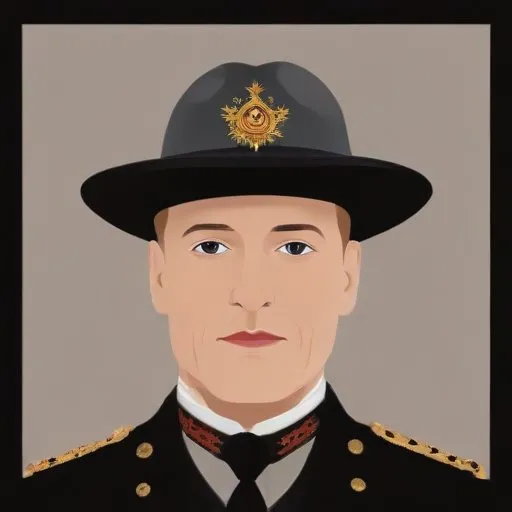
A 17th-century German prince who patronized famous composers like Bach and Telemann, supporting the development of classical music. He was a prominent figure in the Baroque era's musical landscape.
Wolfgang, Prince of Anhalt-Köthen, is renowned as one of the earliest Protestant rulers in the Holy Roman Empire, introducing the Reformation in his principality in 1525. This bold move made Anhalt-Köthen the second country in the world, after the Electorate of Saxony, to officially adopt Protestantism.
Born on August 1, 1492, in Köthen, Wolfgang was the second but eldest surviving son of Waldemar VI, Prince of Anhalt-Köthen, and his wife Margarete, daughter of Günther XX, Count of Schwarzburg and Lord of Arnstedt. At just eight years old, Wolfgang was admitted to the University of Leipzig, where he received a solid education that laid the foundation for his future endeavors.
Following his father's passing in 1508, Wolfgang took over the government of the principality at the tender age of 16. This marked the beginning of his illustrious career as a Protestant leader. In 1521, he had the opportunity to meet Martin Luther at the Diet of Augsburg, an encounter that would change the course of his life. Wolfgang was deeply moved by Luther's words, later saying, "He gained my heart after hearing him speak."
With Luther's guidance, Wolfgang introduced the Reformation in Anhalt-Köthen in 1525 and Anhalt-Bernburg in 1526. This bold move sparked a wave of Protestantism in the region, making Wolfgang a trailblazer in the Holy Roman Empire. In 1526, he joined a defensive alliance with other Evangelical states against Emperor Charles V, paving the way for the formation of the Schmalkaldic League.
In 1529, Wolfgang, along with five other princes, drew up the Protestation at Speyer, a document that petitioned the Imperial Diet to remove the Imperial Ban against Luther and allow the unhindered spread of Evangelical beliefs. A year later, in 1530, he signed the Augsburg Confession at the Diet of Augsburg, solidifying his commitment to Protestantism.
In 1534, Wolfgang ordered the first church inspections in Anhalt-Köthen, expropriating Catholic church possessions and handing them over to the municipalities. Later, in 1544, he resigned his rights over Anhalt-Dessau in favor of his cousins, retaining his rights over Anhalt-Bernburg.
Wolfgang's later life was marked by continued dedication to Protestantism and his principality. He passed away on March 23, 1566, in Zerbst, leaving behind a legacy as a pioneer of Protestantism in the Holy Roman Empire.
Wolfgang's introduction of Protestantism in Anhalt-Köthen and Anhalt-Bernburg paved the way for the spread of Protestantism throughout the Holy Roman Empire. His courage and conviction in the face of adversity inspired a generation of Protestant leaders, earning him a place in history as a champion of religious freedom.
Through his unwavering dedication to Protestantism and his principality, Wolfgang, Prince of Anhalt-Köthen, left an indelible mark on the history of the Holy Roman Empire, cementing his place as a champion of religious freedom and a pioneer of the Protestant Reformation.
Born in 1700
An 18th-century German prince who ruled Anhalt-Dessau and was a skilled military leader, known for his role in the Seven Years' War and his cultural achievements. He was a patron of the arts and architecture, and his court attracted prominent intellectuals and artists.
Born in 1694
A German prince and patron of the arts, he supported the work of famous composers like Johann Sebastian Bach, and his court orchestra was a hub for innovative music.
