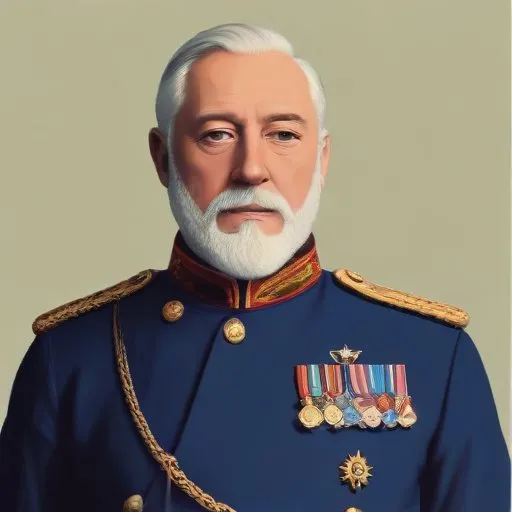
Leopold II, Prince of Anhalt-Dessau: A Military Leader and Ruler of Distinction
A Life of Military Prowess and Royal Heritage
Leopold II, Prince of Anhalt-Dessau, was a German prince of the House of Ascania and ruler of the principality of Anhalt-Dessau from 1747 to 1751. He is renowned for his military expertise and bravery, earning him the respect of
Frederick the Great of Prussia, under whom he served as a general.
Military Career and Achievements
Leopold's military career began at a young age, accompanying his father on military duties for the Prussian army at just nine years old. He rapidly rose through the ranks, becoming Lieutenant Colonel-in-Chief of the Infantry Regiment No. 27 of Stendal in 1715. His leadership skills and strategic thinking were instrumental in several key battles, including the capture of Glogau in 1741 and the battles of Mollwitz, Chotusitz, Hohenfriedberg, and Soor. His exceptional service earned him the title of Generalfeldmarschall on the field of battle.
Inheritance and Rule of Anhalt-Dessau
After the death of his father in 1747, Leopold inherited the principality of Anhalt-Dessau, becoming the ruler of the state. His elder brother, the Hereditary Prince William Gustav, had previously been in line to inherit the throne, but his marriage to a non-noble was deemed invalid, making Leopold the new heir.
Personal Life and Marriage
Leopold married Gisela Agnes, daughter of
Leopold, Prince of Anhalt-Köthen, in Bernburg on 25 May 1737. The couple had seven children, including Leopold III Frederick Franz, who would later become Duke of Anhalt-Dessau.
Legacy and Honors
Leopold's exceptional military service and leadership earned him a lasting legacy. In 1752, Frederick the Great named a newly founded village, Leopoldshagen, in his honor. His contributions to the Prussian army and his role as a ruler of Anhalt-Dessau have ensured his place in history as a remarkable figure of the 18th century.
Children and Succession
- Leopold III Frederick Franz, Prince and from 1807 Duke of Anhalt-Dessau (b. Dessau, 10 August 1740 – d. Luisium bei Dessau, 9 August 1817)
- Louise Agnes Margarete (b. Dessau, 15 August 1742 – d. Dessau, 11 July 1743)
- Henrietta Katharina Agnes (b. Dessau, 5 June 1744 – d. Dessau, 15 December 1799)
A Lasting Impact on History
Leopold II, Prince of Anhalt-Dessau, was a remarkable figure of the 18th century, leaving an indelible mark on the history of Germany and the Prussian army. His military prowess, strategic thinking, and leadership skills earned him the respect of his contemporaries and a lasting legacy in the annals of history.
FAQ
What were Leopold IIs military campaigns?
Leopold II, Prince of Anhalt-Dessau, was a military leader who fought in several important battles, including the War of the Austrian Succession and the Seven Years War. He was known for his bravery and tactical skill.
What were Leopold IIs contributions to the development of Anhalt-Dessau?
Leopold II, Prince of Anhalt-Dessau, played a crucial role in the development of his principality, promoting education, culture, and trade. He founded several schools and encouraged the growth of industry and commerce.
What was Leopold IIs relationship with his family?
Leopold II, Prince of Anhalt-Dessau, came from a prominent German noble family and had several children with his wife, Gisela Agnes of Anhalt-Köthen.
What were Leopold IIs achievements in governance?
Leopold II, Prince of Anhalt-Dessau, was a skilled administrator who implemented important reforms in his principality, including the creation of a new system of government and the promotion of trade and commerce.
How is Leopold II remembered in history?
Leopold II, Prince of Anhalt-Dessau, is remembered as a capable and innovative leader who played a significant role in shaping the history of his principality.