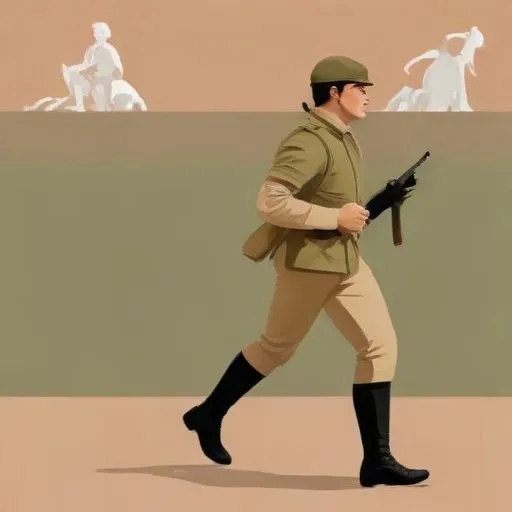
Wyndham Halswelle: The Athletic Trailblazer and War Hero
A Champion on the Track and the Battlefield
Wyndham Halswelle, a British athlete and infantry officer, is best known for being the only athlete to win an Olympic title by a walkover, claiming the gold medal in the 400m race at the 1908 Summer Olympics. This remarkable achievement, however, was only one facet of his remarkable life, which was marked by a stellar athletic career, military service, and ultimately, tragic sacrifice on the battlefield.
Early Life and Athletic Career
Born on May 30, 1882, in London, to Keeley Halswelle, a London-born artist, and Helen Marianna Elizabeth Gordon, Wyndham's maternal grandfather, General Nathaniel J. Gordon, was Scottish, earning him the distinction of being referred to as Scottish by nationality. At Charterhouse School, Wyndham's athletic prowess began to take shape, and he continued to hone his skills at the Royal Military College, Sandhurst. Upon being commissioned into the Highland Light Infantry as a second lieutenant in 1901, Wyndham's athletic career took off, with a notable performance in the 1902 Second Boer War.
Domestic Athletics and Olympic Glory
In 1904, Wyndham became the army champion for 880 yards, and in 1905, he won both the Scottish and AAA 440 yard titles. His impressive performance at the 1906 Athens Intercalated Olympics earned him a silver medal in the 400 metres and a bronze in the 800 metres. Back in Scotland, Wyndham achieved an unprecedented feat, winning the 100, 220, 440, and 880 yards races in a single afternoon at the Scottish championships in Powderhall in 1906, a record that remains unbroken to this day.
Military Service and Ultimate Sacrifice
Wyndham's military career took him to South Africa during the Second Boer War, where he served with distinction. He later fought in World War I, where he distinguished himself as an infantry officer. Tragically, Wyndham's life was cut short on March 31, 1915, when he was killed by a sniper at the Battle of Neuve Chapelle, a casualty of the brutal conflict that ravaged Europe.
Legacy and Impact
Wyndham Halswelle's remarkable life, though cut short, left an indelible mark on the world of athletics and beyond. His athletic achievements, including his Olympic gold medal, remain an inspiration to generations of athletes. His bravery and sacrifice on the battlefield serve as a testament to his unwavering commitment to his country. Today, Wyndham Halswelle is remembered as a true hero, whose remarkable achievements continue to inspire and motivate us all.
Career Highlights and Major Works
- Gold medalist in the 400m race at the 1908 Summer Olympics
- Silver medalist in the 400m race and bronze medalist in the 800m race at the 1906 Athens Intercalated Olympics
- Won the Scottish and AAA 440 yard titles in 1905
- Held multiple Scottish records in various events, including the 100, 220, 440, and 880 yards
Personal Milestones and Key Life Events
- Born on May 30, 1882, in London, England
- Commissioned into the Highland Light Infantry as a second lieutenant in 1901
- Served in the Second Boer War and World War I
- Killed in action at the Battle of Neuve Chapelle on March 31, 1915
FAQ
What was Wyndham Halswelles Olympic achievement?
Wyndham Halswelle was a British athlete who won a gold medal in the 400 meters at the 1908 Summer Olympics in London.
What was Wyndham Halswelles military service like?
Wyndham Halswelle served in the British Army during World War I and was killed in action in 1915.
What was Wyndham Halswelles early life and education like?
Wyndham Halswelle was born in 1882 in London, England. He was educated at Eton College and later attended the Royal Military College at Sandhurst.
What were Wyndham Halswelles athletic achievements outside of the Olympics?
Wyndham Halswelle was a talented athlete who won several championships in the 400 meters and 800 meters events in the UK.
How is Wyndham Halswelle remembered today?
Wyndham Halswelle is remembered as a hero and a talented athlete who made the ultimate sacrifice during World War I. He is commemorated at the Commonwealth War Graves Commission.