


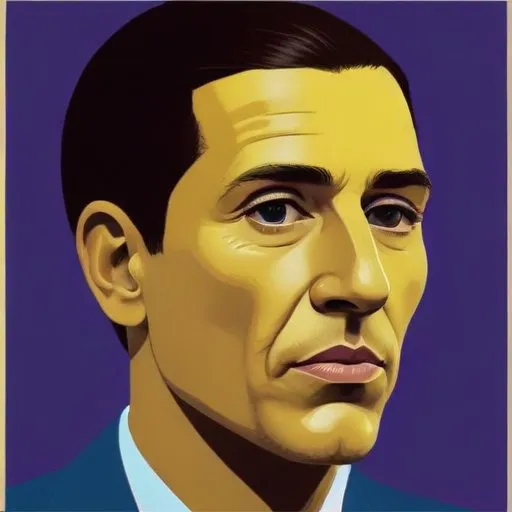
A visionary artist who blended mysticism and futurism in his vibrant, symbolic works, creating a unique visual language that continues to inspire.
Xul Solar, born Oscar Agustín Alejandro Schulz Solari, was a multifaceted Argentine artist, painter, sculptor, writer, and inventor of imaginary languages. He is renowned for his fantastical and dreamlike artwork that blended elements of surrealism, futurism, and symbolism.
Solar's eclectic persona was shaped by his diverse cultural heritage. Born on December 14, 1887, in San Fernando, Buenos Aires Province, to a family of Baltic German, Italian, and Argentine roots, he was exposed to a rich tapestry of influences from an early age. His father, Elmo Schulz Riga, was born in Riga, Latvia, while his mother, Agustina Solari, hailed from Italy.
Solar's early education in Buenos Aires was marked by a passion for music, which he pursued as a freelancer for several years. He later studied architecture, although he never completed his degree. Instead, he took up various jobs, including teaching and working in the municipal bureaucracy.
In 1912, Solar embarked on a transformative journey that would shape his artistic voice. He set sail for Hong Kong but disembarked in London, where he reunited with his mother and aunt. Over the next few years, he traveled extensively, visiting Turin, Paris, Genoa, and Zoagli, among other cities. This period of exploration exposed him to the avant-garde movements of Europe, which would later inform his artistic style.
During World War I, Solar formed a lifelong friendship with Argentine artist Emilio Pettoruti, a key figure in the futurist movement. This connection not only deepened his understanding of modern art but also sparked his own artistic awakening. Solar began to focus on painting, initially with watercolors, which remained his primary medium throughout his career.
In 1916, Solar adopted the pen name Xul Solar, supposedly to simplify the pronunciation of his surname. However, this new moniker also reflected his growing fascination with the mysteries of language and the cosmos.
Solar's artistic talent was first showcased in 1920 at a major exhibition in Milan, where he displayed his work alongside sculptor Arturo Martini. This debut marked the beginning of a prolific career, during which he would create a vast array of paintings, sculptures, and writings that continue to inspire and intrigue audiences today.
Xul Solar's innovative spirit and artistic versatility have inspired generations of Argentine artists. His work has been recognized and celebrated through various retrospectives and exhibitions, cementing his status as a visionary and a pioneer of Argentine modern art.
Born in 1899
A visionary writer who crafted intricate, philosophical tales that blurred reality and fantasy, influencing generations of authors and thinkers. 82
Born in 1890
Argentine writer and intellectual who championed women's rights and cultural exchange between Europe and Latin America through her writing and salons. She was a pioneering figure in Argentine literature and a fierce advocate for social justice.
Born in 1914
A pioneering Argentine writer of fantasy and science fiction, known for his innovative and influential works that blend genres and explore philosophical themes.
Born in 1904
A Chilean poet and diplomat who wrote passionate and evocative poetry that explored love, politics, and the human condition, and was awarded the Nobel Prize in Literature in 1971.
Born in 1898
A Spanish poet, playwright, and director who explored themes of love, death, and Spanish culture through his works, including the famous play "Blood Wedding".
Born in 1889
A leading figure in Mexican literature, known for his poetry, essays, and literary criticism that explored the intersection of Mexican identity and European culture.
